


National Liberal MEP Dan Motreanu, a member of the European People’s Party and of the European Parliament’s regional development committee, says a large share of the new European Competitiveness Fund will not be split by preset national quotas. The money would go through competition among projects filed by companies, universities and organisations across the Union. The warning is in a position paper reported on Sunday by Cotidianul, while Brussels is still negotiating how strategic industries, advanced technologies and innovation will be financed in the 2028–2034 budget period.
“An important part of the funding will be awarded through competition, on the basis of project quality, innovation capacity and European added value, without guaranteed national allocations,” Motreanu writes. He sees a risk that firms in states and regions that are already developed, with stronger infrastructure, capital and research ecosystems, will take a disproportionate share. The Greek outlet Parapolitika describes the same design: the fund does not pass through quotas to the 27 member states, and companies compete with proposals assessed by experts, on the Horizon model.
The Commission proposal for the regulation setting up the fund, including the specific defence research and innovation programme, was presented on 16 July 2025, procedure 2025/0555(COD), according to the European Parliament’s legislative file. The proposed allocation is €398 billion in 2025 prices, equal to €409 billion in current prices. In 2025 prices, the same file splits the sum as follows, with current prices in brackets: Horizon Europe €154 billion (€175 billion), the clean transition and industrial decarbonisation €23 billion (€26 billion), separate from the Innovation Fund of €35 billion (€41 billion), resilience, security, the defence industry and space €116 billion (€131 billion), digital leadership €48 billion (€55 billion), and health, biotech, agriculture and the bioeconomy €20 billion (€23 billion). The paper reported by Cotidianul speaks of “hundreds of billions of euros”, without that breakdown.
Motreanu says the point of the fund is to raise the competitiveness of the whole Union, not to lock in advantages some states already hold. “We must not end up in a situation where a fund meant to increase the competitiveness of the entire European Union contributes to widening the economic and technological gaps between member states and between regions.” He has tabled amendments in the Parliament’s specialised committees and has argued, in debates and in questions to the Commission, for geographically more balanced access.
In the same paper he asks that the fund actually support firms in countries such as Romania, including those in less developed regions, and help them into European industrial and technological chains. He lists stronger participation by SMEs from every member state, industrial and technological development in less developed regions, partnerships between companies from different countries, and monitoring of where the money goes. He asked the Commission what will stop funding from concentrating on large multinationals, at the expense of SMEs and of firms in less developed economies. The reply from Executive Vice-President Stéphane Séjourné, as the paper cited by Cotidianul renders it, pointed to SME support services and to financial instruments meant to make access easier in every member state.
On 2 November, Calea Europeană reported an earlier statement by the same MEP. He said then that the Union is preparing investments of more than €400 billion for competitiveness, research and innovation in 2028–2034, and that the fund’s money is allocated separately and can complement national plans for regional development, agriculture and social policy. He also said he had tabled amendments for Romanian businesses and farmers, and that funds based only on “excellence” had been taken up mainly by states in western Europe. The details on agri-food processing, storage, irrigation and producer organisations belong to that statement, not to the text reported on Sunday.
The Parliament file notes that the rapporteurs published their draft report on 20 April 2026, that 2,287 amendments were tabled, and that the Council agreed its position on 16 October 2026. The Council position keeps the focus on higher-risk projects, gives special attention to SMEs and gives member states a larger role in decisions, including formal opinions on implementing acts. It is not an adopted regulation. Talks continue, and Cotidianul reports Motreanu’s view that 2027 is the decisive year for programmes that would start in 2028.
For Romania, the stake Motreanu sets out is not only the right to file an application. “It is essential that there are mechanisms which make it easier for our businesses to take part in practice, not only the formal possibility of submitting projects,” he writes. He closes by saying that Romanian companies, universities and research centres should get into the Union’s large industrial and technological projects.
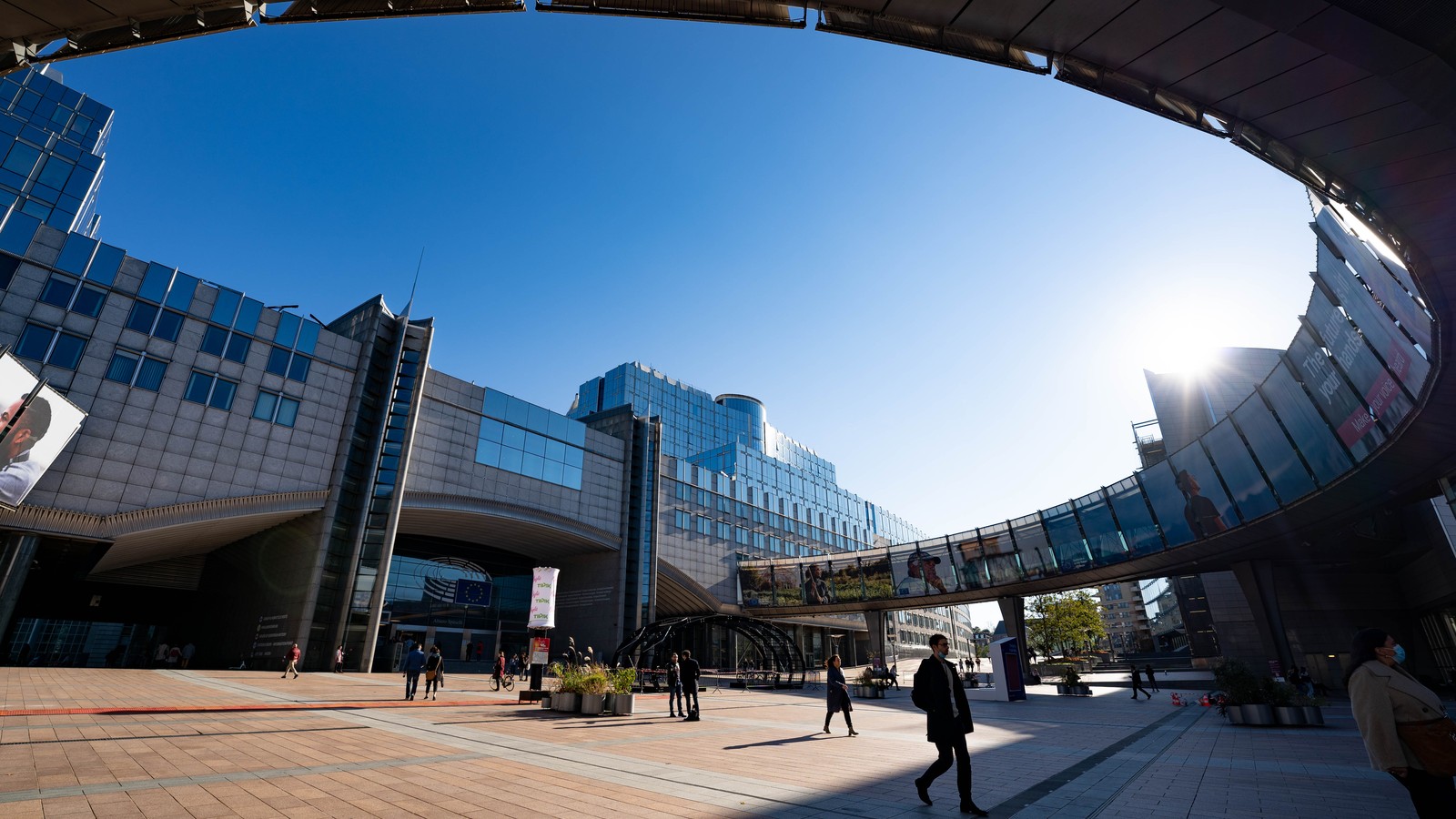
The photograph shows the exterior of the European Parliament in Brussels, not Dan Motreanu and not a negotiating round. The image is by Maximilian Greger and is published on Wikimedia Commons under the CC BY-SA 4.0 licence.
Source consulted: Dan Motreanu avertizează: România riscă să piardă o parte din noile fonduri europene dacă nu poate concura cu statele dezvoltate.









0 Comments
No comments on this article yet. Be the first!