


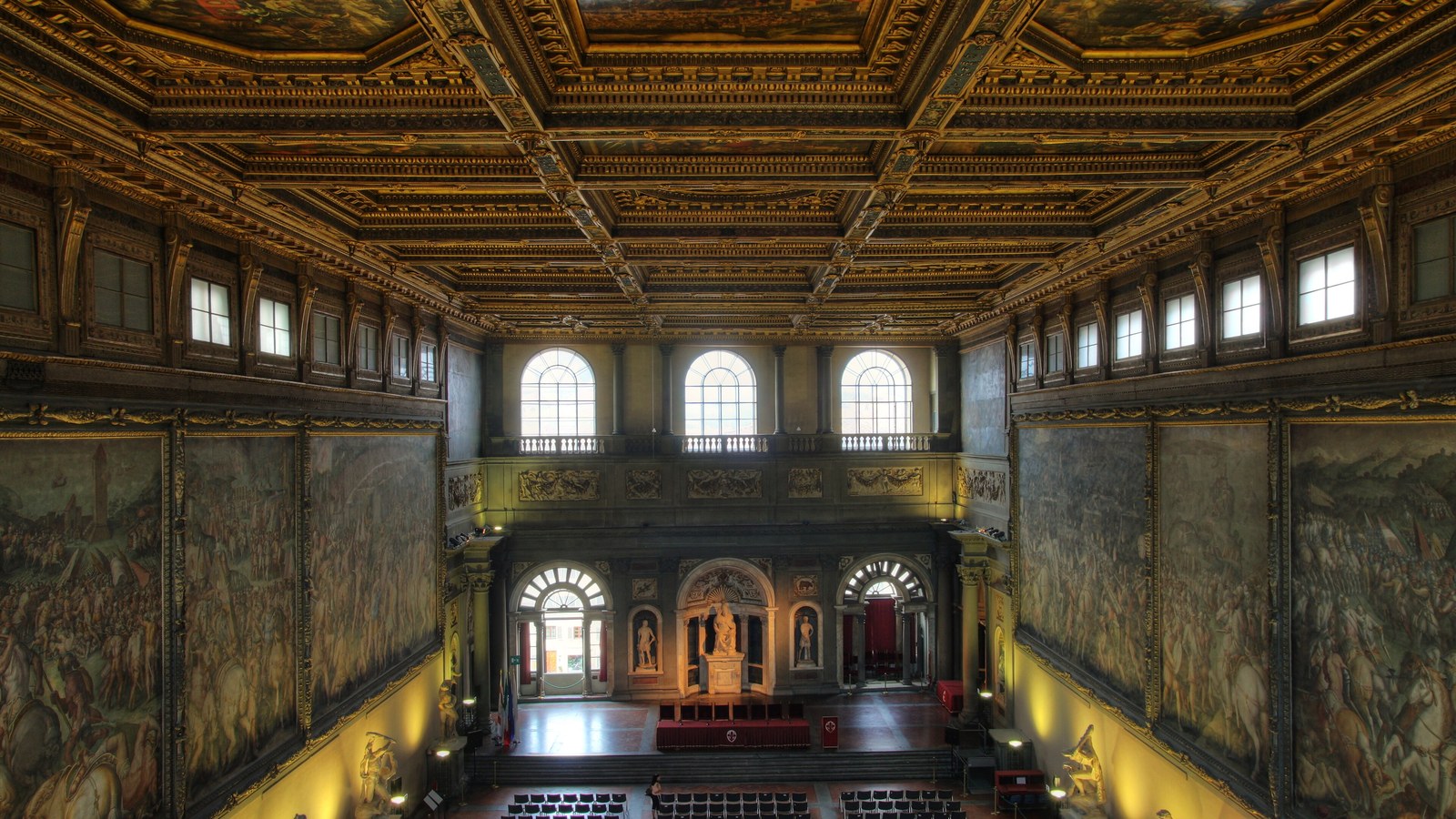
On 20 October 2000, in the Salone dei Cinquecento of Palazzo Vecchio in Florence, the European Landscape Convention (ETS No. 176) was opened for signature by the member States of the Council of Europe. The Committee of Ministers had adopted the text in Strasbourg on 19 July that year. Also called the Florence Convention, it is the first international treaty devoted exclusively to landscape, equally authentic in English and French, deposited with the Secretary General of the Council of Europe.
Eighteen member States signed that day: Belgium, Bulgaria, Croatia, Denmark, Finland, France, Italy, Lithuania, Luxembourg, Malta, Norway, Portugal, the Republic of Moldova, Romania, San Marino, Spain, Switzerland and Turkey. Article 13 reserves signature to Council members; instruments of ratification, acceptance or approval are deposited with the Secretary General. Romania signed then and ratified on 7 November 2002.
Article 1 defines landscape as an area, as perceived by people, whose character is the result of the action and interaction of natural and/or human factors. Landscape protection means conserving significant or characteristic features; management means regular upkeep that guides change; planning means strong forward-looking action to enhance, restore or create landscapes. Article 3 sets the aims: protection, management and planning, and European co-operation on landscape issues.
Article 2 covers the entire territory of the Parties: natural, rural, urban and peri-urban areas; land, inland water and marine areas; outstanding landscapes as well as everyday or degraded ones. It is not a list of elite sites. Article 15 nevertheless lets a Party specify the territory of application; Denmark used that clause for Greenland.
Article 5 requires legal recognition of landscape as an essential component of people’s surroundings and identity, landscape policies for protection, management and planning, procedures for public and local and regional participation, and the integration of landscape into town planning, agriculture, environment, culture and economic policy. Article 4 leaves implementation to each Party’s own division of powers, the principle of subsidiarity and the European Charter of Local Self-government.
Article 6 requires awareness-raising, training, identification and assessment throughout the territory, landscape quality objectives after public consultation, and then the means to put policies into effect. Articles 7–9 organise assistance, exchange of information and joint programmes, including transfrontier landscapes. Article 11 establishes the Landscape Award of the Council of Europe, for local and regional authorities, transfrontier groupings or non-governmental organisations.
Article 13 provides that the Convention enters into force on the first day of the month following three months after ten member States have consented to be bound. It did so on 1 March 2004. Article 14 then allows the Committee of Ministers to invite the European Community and European non-member States to accede. It does not replace the 1972 UNESCO World Heritage Convention, which concerns property of outstanding universal value; here the field is the whole territory, including everyday landscape. The amending Protocol CETS No. 219, opened on 1 August 2016, is a later instrument.
Image: Salone dei Cinquecento, Palazzo Vecchio, Florence, hall of signature; Eusebius, 2010; CC BY 3.0, Wikimedia Commons. Cropped to 16:9.
Source consulted: European Landscape Convention. Treaty text: European Landscape Convention, Florence, 20 October 2000 (ETS No. 176).











0 Comments
No comments on this article yet. Be the first!