


On 10 December 1947, in the city of Panama, the Defense Sites Agreement between the United States and the Republic of Panama was signed. Plenipotentiaries: Frank T. Hines, Ambassador Extraordinary and Plenipotentiary of the United States, and Francisco A. Filos, Acting Minister of Foreign Relations. Authentic texts, equally authentic: English and Spanish, in duplicate, with seals. The preamble invokes the experience of the Second World War and the General Treaty signed at Washington on 2 March 1936: a limited number of sites, temporarily, in territory under Panama jurisdiction. It is not the 18 May 1942 agreement on 134 areas and not the 1977 Torrijos-Carter treaties.
Article I: the defense sites are regulated by the conditions in the following articles. Article II: the Republic designates, in the integral Annex, the areas and the period for each, for defense of the Canal and of the Republic. Article III: a joint commission - the local Commander of the United States Armed Forces or a deputy, and the Minister of Government and Justice; consultation on use of the sites; military matters and command remain exclusively with United States military authorities; recommendations are adopted by an exchange of notes.
Article IV: Panama accords the powers needed for the United States to assume full military, technical and economic responsibility; rights within the sites and the air spaces thereover; contractors may be employed. Article V: Panama maintains sovereignty and civil and criminal jurisdiction; the United States has exclusive jurisdiction over offences committed within the sites by civilian or military personnel employed in connection with them and by members of their families; it may arrest, try and punish persons who act against the security of a site, provided any Panamanian citizen is delivered to the authorities of the Republic; national authorities have access, and other persons may be excluded.
Article VI: annual compensation, on or before 1 February, of 17,250 balboas for lands used in the preceding calendar year, reduced proportionately for shorter periods; excepted: the Rio Hato parcel (Annex No. 1), 10,750 balboas a year, and the entire island of San Jose (Annex No. 2), 15,000 balboas. Panama bears expropriation costs and indemnities for installations and cultivated lands. Payments in balboas as defined in the 2 March 1936 exchange of notes, or the equivalent in dollars. Article VII: when a site is no longer required, use is discontinued on a date set by the United States, with not less than 90 days notice; buildings erected by the United States may be removed before that date; remaining improvements become the property of the Republic without compensation.
Article VIII: temporary character; evacuation no later than the expiry of the period in the Annex, or earlier if both Governments consider the causes have ceased. Article IX: government aircraft of Panama may land at air bases on the sites, under Joint Commission rules; civil aircraft and aircraft of other governments only in emergency or for strictly military purposes; Panama shall not permit hazards to those air bases. Article X: roads used by United States forces shall be properly maintained; the United States may make emergency repairs, with notice; annual contribution of 137,500 balboas, the first on or before the last day of February 1948 for calendar year 1947; free right of transit; public roads crossing the sites remain free or are relocated on the Commission recommendation.
Article XI: existing telegraph, telephone and cable lines; shared use so far as military requirements permit. Article XII: radio-communication facilities within the sites and, under Joint Commission regulations, in territory and waters under the jurisdiction of the Republic. Article XIII: exemption from taxes for personnel, exclusive contractors, families and property destined for the bases; the United States shall prevent sales to persons without right and cooperate against contraband. Article XIV: termination by mutual accord before expiry of the Annex periods. Article XV: enters into force on the day each Government notifies the other in writing of its approval, or, if the notifications fall on different days, on the date of the later one.
The Annex, an integral part, describes thirteen sites on United States Army maps: Rio Hato, Cocle, 7,688.28 hectares, ten years, renewable for ten more at the option of the United States; the other twelve, five years each - San Jose Island, Taboga, Taboguilla, Salud, Rey Island, Jaque, Pocri, Cape Mala, San Blas Point, Isla Grande, Victoria and Las Margaritas. The memorandum was signed in Panama by the same plenipotentiaries. It is not the ten-mile Canal Zone and not a later ratification, which did not take place.
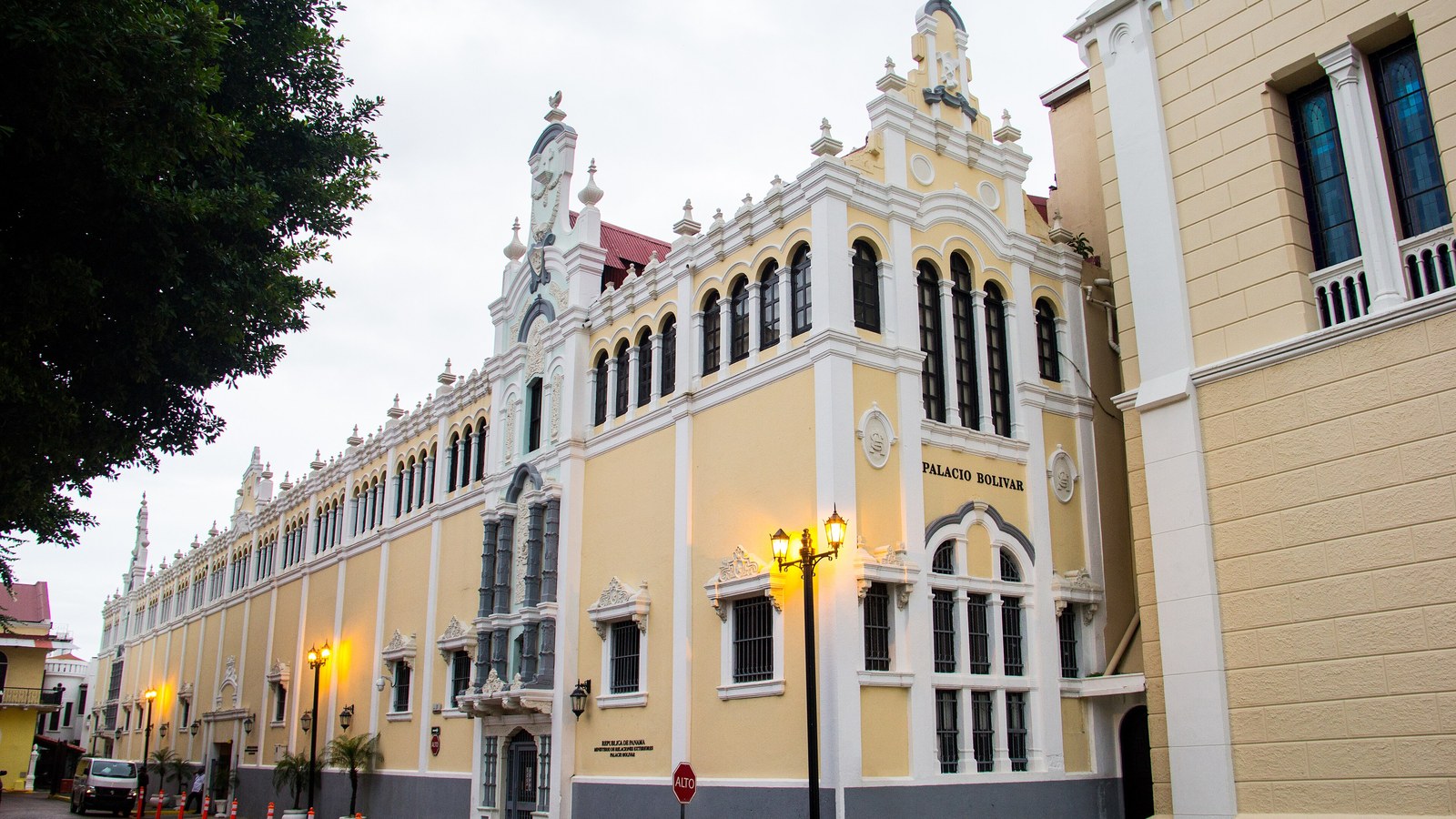
Image: Palacio Bolivar, Panama; Ssaucedoc, 12 September 2016; CC BY-SA 4.0, Wikimedia Commons. Cropped to 16:9.
Source consulted: Filos-Hines Agreement. Treaty text: Defense Sites Agreement between the United States and Panama, 10 December 1947.











0 Comments
No comments on this article yet. Be the first!