


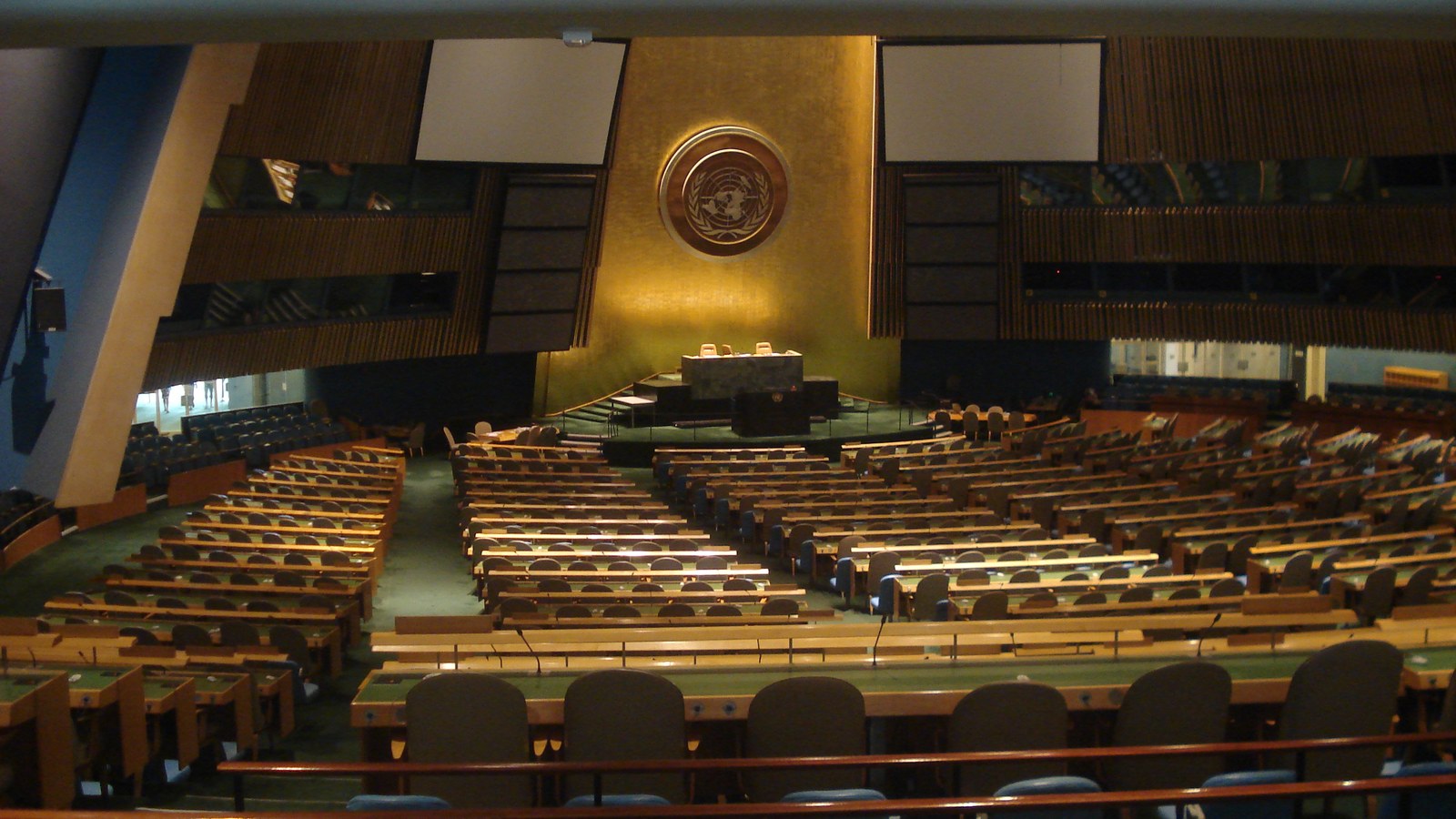
On 16 December 1966 the United Nations General Assembly, meeting in New York, adopted by resolution 2200 A (XXI) the Optional Protocol to the International Covenant on Civil and Political Rights. The same act also contains the two Covenants. The Protocol was opened for signature in New York on 19 December 1966. The authentic texts are Chinese, English, French, Russian and Spanish. The depositary is the Secretary-General.
The Protocol is not the Covenant itself and does not list new rights. It recognizes the competence of the Human Rights Committee, established in Part IV of the Covenant, to receive and consider communications from individuals who claim to be victims of a violation by a State Party of a right set forth in the Covenant. No communication shall be received if it concerns a State Party to the Covenant which is not a Party to the Protocol.
Article 2 allows a written communication from individuals who have exhausted all available domestic remedies. Article 3 declares inadmissible anonymous communications, abuse of the right of submission, and incompatibility with the Covenant. Article 4 requires that, after this filter, the communication be brought to the attention of the State concerned, which shall within six months submit written explanations and the remedy, if any, that may have been taken.
Article 5 provides for consideration in the light of all written information made available by the individual and by the State Party. The Committee shall not consider a communication if the same matter is being examined under another procedure of international investigation or settlement, or if domestic remedies have not been exhausted, except where the application of the remedies is unreasonably prolonged. Meetings are closed. The Committee shall forward its views to the State Party and to the individual. Article 6 requires a summary of this activity in the annual report under article 45 of the Covenant.
Article 7 preserves the right of petition of peoples under General Assembly resolution 1514 (XV) of 14 December 1960 on the granting of independence to colonial countries and peoples. Article 8 opens the Protocol for signature by any State which has signed the Covenant; ratification and accession are reserved to States which have ratified or acceded to the Covenant. Article 10 extends to all parts of federal States without any limitations or exceptions.
Article 9 provides that, subject to the entry into force of the Covenant, the Protocol shall enter into force three months after the deposit of the tenth instrument of ratification or accession. Those conditions were later met; the Protocol entered into force on 23 March 1976, together with the Covenant. For a later State the three-month period runs from its own instrument. Article 11 governs amendments: a conference if at least one third of the Parties favour one, approval by the General Assembly, then acceptance by a two-thirds majority of the Parties. Article 12 allows denunciation by written notification; denunciation takes effect three months later, without prejudice to communications submitted before that date. Article 13 requires the Secretary-General to inform the States referred to in article 48 of the Covenant.
It is not the Second Optional Protocol of 15 December 1989, aiming at the abolition of the death penalty. It is not the Optional Protocol to the International Covenant on Economic, Social and Cultural Rights of 10 December 2008.
Image: United Nations General Assembly Hall, New York; Bouke, 16 July 2007; CC BY-SA 3.0, Wikimedia Commons. Cropped to 16:9.
Source consulted: First Optional Protocol to the International Covenant on Civil and Political Rights. Treaty text: Optional Protocol to the International Covenant on Civil and Political Rights, New York, 16 December 1966.











0 Comments
No comments on this article yet. Be the first!