


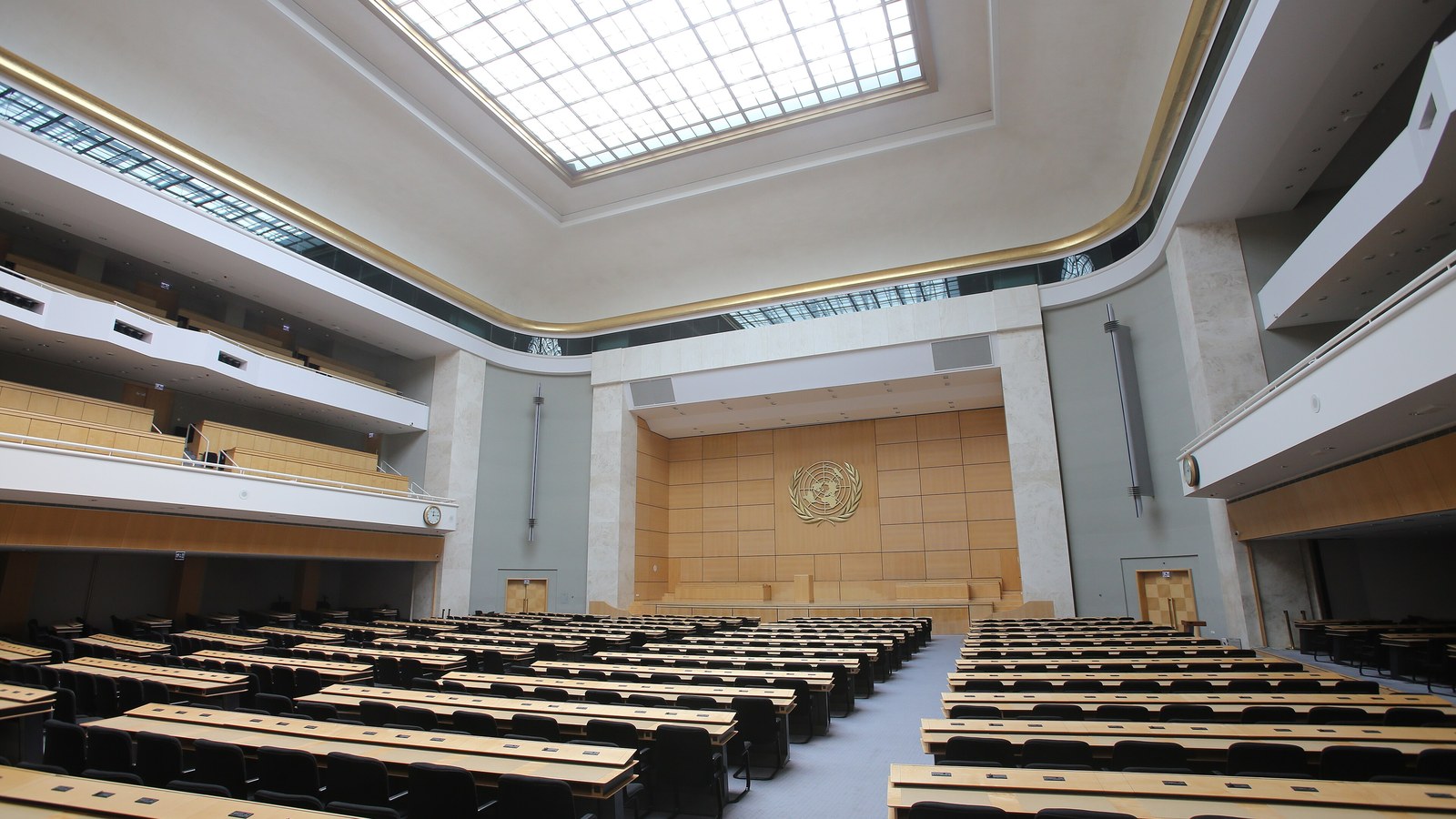
On 30 October 1947, at the Palais des Nations in Geneva, 23 states signed the General Agreement on Tariffs and Trade. Among the signatories are the United States, the United Kingdom, France, China, India, Brazil, Canada, Australia, Belgium, the Netherlands, Czechoslovakia, Cuba, South Africa. The Agreement is in English and French. The Protocol of Provisional Application puts it into force from 1 January 1948, “to the fullest extent not inconsistent with existing legislation”.
The 23 parties sat on the Preparatory Committee of the UN Economic and Social Council, charged with drafting the charter of the International Trade Organization, the third leg beside the IMF and the World Bank. In parallel, from April to October 1947, they held some 123 negotiations and drew up 20 schedules: about 45,000 tariff concessions, covering some $10 billion of trade. Under the most-favoured-nation clause, each concession then ran to all the others.
Article I requires that any customs advantage granted to a product of one country be accorded immediately and unconditionally to the like product of all other parties. Article II binds the schedules of concessions: the listed tariff is not to be raised. Article III requires national treatment in internal taxes and regulations. Government procurement is, from the outset, outside the agreement.
In November 1947, 56 delegations move to Havana. In March 1948 some 53 states authenticate the Havana Charter, but without a commitment to ratify. In 1950 the United States says it will not resubmit the charter to Congress. The ITO is stillborn. GATT remains, de facto, the only multilateral instrument governing world trade.
Later rounds cut tariffs again: Annecy 1949, Torquay 1950–1951, Geneva 1956, Dillon 1960–1962, Kennedy 1964–1967, Tokyo 1973–1979. Kennedy moves from product-by-product bargaining to a linear cut on industrial goods. Part IV, in 1965, gives priority to the exports of developing countries. Uruguay, opened in 1986 at Punta del Este, brings services, intellectual property and agriculture into the same package.
On 15 April 1994, in Marrakesh, 123 states sign the agreements that create the World Trade Organization. The WTO starts on 1 January 1995. GATT 1947 remains in force, with the modifications of GATT 1994, as part of the new framework. The average tariff of the major participants, about 22% in 1947, falls towards 5% after Uruguay.
The WTO secretariat publishes the official chronology of the multilateral system, with the birth of GATT at the Palais des Nations. The 1947 agreement text is on the organisation’s legal site.
Image: Ludovic Courtès, Assembly Hall, Palais des Nations, Geneva, 2015, CC BY-SA 3.0, Wikimedia Commons. Cropped to 16:9.
Source consulted: General Agreement on Tariffs and Trade. Treaty text: Fiftieth Anniversary of the Multilateral Trading System — Chronology of Achievements.











0 Comments
No comments on this article yet. Be the first!