


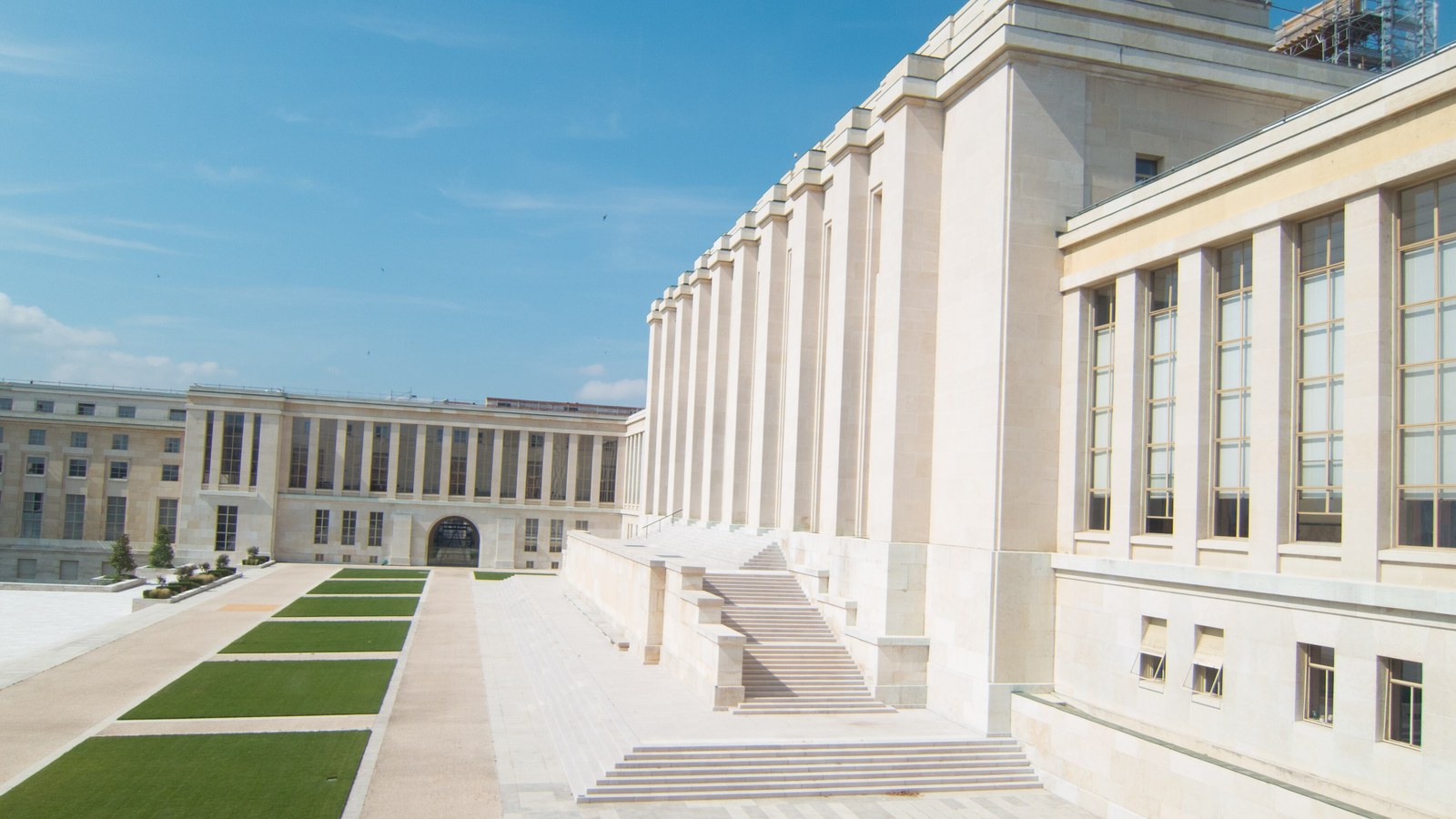
Convention (I) for the Amelioration of the Condition of the Wounded and Sick in Armed Forces in the Field was signed in Geneva on 12 August 1949. The Diplomatic Conference, which opened on 21 April, revised the Convention of 27 July 1929. Sixty-four articles and two annexes, in English and French, equally authentic; depositary the Swiss Federal Council. It is not the Convention of 1864, nor the revisions of 1906 and 1929, and it is not Convention II, III or IV signed the same day.
Article 1: the Convention is to be respected in all circumstances. Article 2: international armed conflicts, occupation, and cases in which one of the Powers is not a Party. Article 3, common to the four Conventions: in conflicts not of an international character, persons taking no active part in the hostilities, including members of armed forces who have laid down their arms, shall in all circumstances be treated humanely — a framework, not an operational handbook. Articles 8–11: Protecting Powers, the International Committee of the Red Cross and other impartial humanitarian organisations, subject to the consent of the Parties concerned.
Articles 12–18: the wounded and sick shall be respected and protected; they shall not be murdered, tortured or subjected to biological experiments; casualties shall be searched for, identified and the information forwarded; the civilian population may bring relief. Articles 19–23: medical units and establishments shall be protected, protection ceasing if they are used to commit acts harmful to the enemy; hospital zones and localities, at the level of principle.
Later articles protect medical and religious personnel, buildings, material and medical transports, and recognise the distinctive emblems. The annexes contain a draft agreement relating to hospital zones and a model identity card — not an evacuation or marking itinerary.
Articles 55–64: equally authentic texts; open for signature until 12 February 1950; ratifications deposited at Berne. Entry into force six months after not less than two instruments have been deposited — 21 October 1950. It replaces, as between the Parties, the Conventions of 1864, 1906 and 1929. Subsequent accession; denunciation takes effect after one year, and is without effect while the denouncing Power is involved in a conflict until the release and repatriation of protected persons have been completed.
Cover: the Palais des Nations in Geneva, the diplomatic-conference building in the years of signature; we do not claim the signing room. Wikimedia Commons, free licence.
Sources consulted: First Geneva Convention; Convention (I) for the Amelioration of the Condition of the Wounded and Sick in Armed Forces in the Field (ICRC).











0 Comments
No comments on this article yet. Be the first!