


On 24 November 2013, at Geneva, EU High Representative Catherine Ashton and Iranian Foreign Minister Mohammad Javad Zarif, together with the Foreign Ministers and Political Directors of the E3+3 (China, France, Germany, the Russian Federation, the United Kingdom and the United States), agreed the Joint Plan of Action. A political first-step document, not a UN-registered treaty. The goal: a mutually agreed long-term comprehensive solution that would ensure Iran’s nuclear programme will be exclusively peaceful. Iran reaffirms that under no circumstances will it ever seek or develop any nuclear weapons. The comprehensive solution would constitute an integrated whole where nothing is agreed until everything is agreed, and would produce the comprehensive lifting of all UN Security Council sanctions, as well as multilateral and national sanctions related to Iran’s nuclear programme. It is not the Joint Comprehensive Plan of Action of 14 July 2015.
The first step would be time-bound, with a duration of six months, renewable by mutual consent. A Joint Commission of E3/EU+3 and Iran would monitor the near-term measures; the IAEA would be responsible for verification of nuclear-related measures. Iran’s voluntary measures: from uranium enriched to 20%, retain half as working stock of 20% oxide for fabrication of fuel for the Tehran Research Reactor; dilute the remaining 20% UF6 to no more than 5%; no reconversion line. Iran will not enrich uranium over 5% for the six months. No further advances of its activities at the Natanz Fuel Enrichment Plant, Fordow, or the Arak reactor designated by the IAEA as IR-40. No new locations for enrichment. No reprocessing or construction of a facility capable of reprocessing. Enhanced monitoring: specified information to the IAEA, including plans for nuclear facilities, mines and mills, within three months; an updated Design Information Questionnaire for Arak.
The E3/EU+3 would undertake reciprocal voluntary measures: pause efforts to further reduce Iran’s crude oil sales; enable the repatriation of an agreed amount of revenue held abroad; suspend specified US and EU sanctions on petrochemical exports, gold and precious metals, and the auto industry, as well as associated services; license spare parts for safety of flight for Iranian civil aviation; no new nuclear-related UN Security Council, EU or US sanctions during the six months; a financial channel to facilitate humanitarian trade.
The comprehensive solution would involve a mutually defined enrichment programme with practical limits and transparency measures, enabling Iran to fully enjoy its right to nuclear energy for peaceful purposes under the relevant articles of the NPT in conformity with its obligations therein. Implementation of the first step began later, on 20 January 2014.
Agreed at Geneva, 24 November 2013.
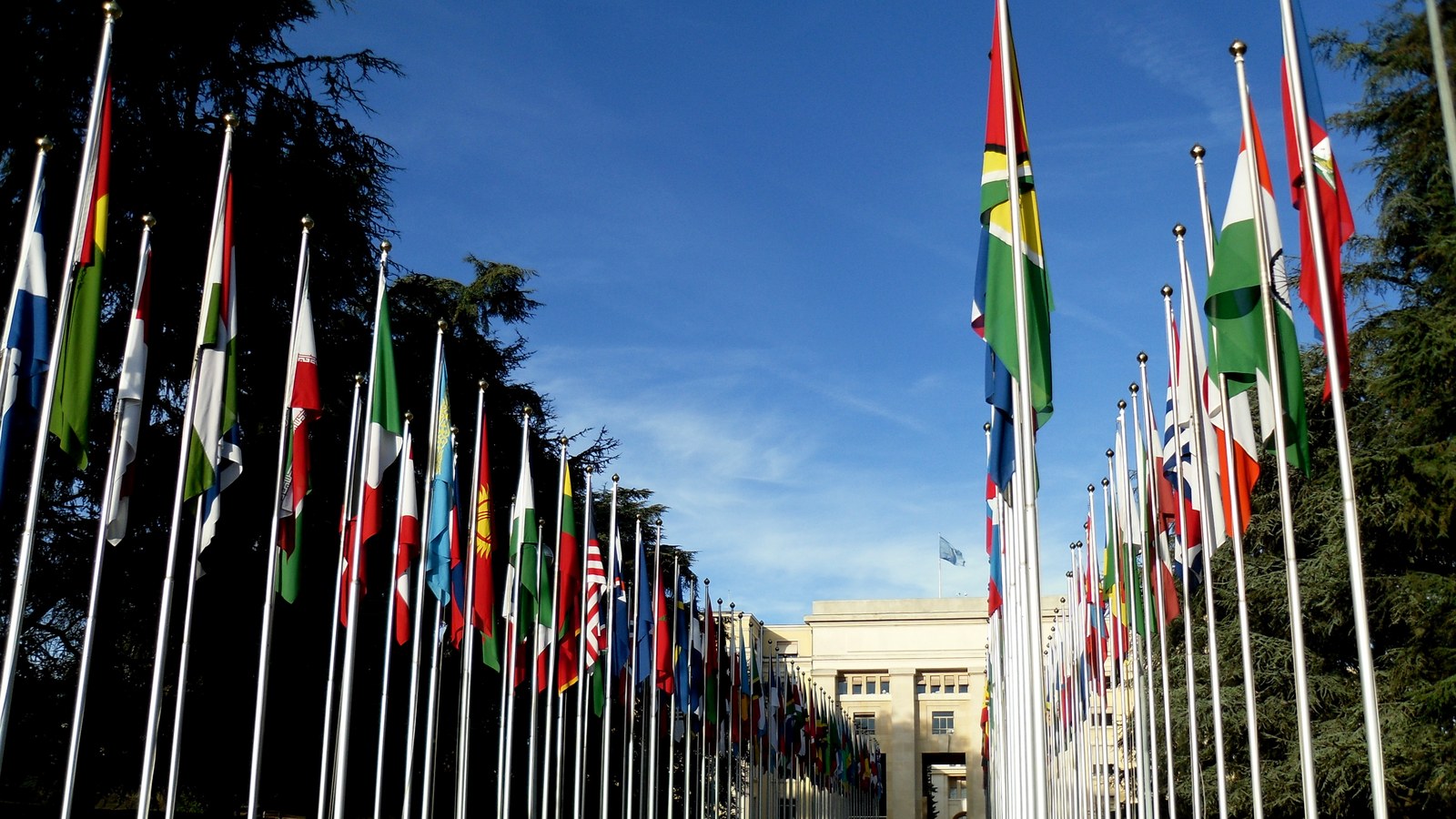
Palace of Nations, Geneva. The city of the talks, not the confirmed hall. Wikimedia Commons, CC BY-SA 4.0.
For context: Joint Plan of Action. The text: OFAC, Joint Plan of Action, Geneva, 24 November 2013.











0 Comments
No comments on this article yet. Be the first!