


The protocols for the reconstruction of Austria were signed at Geneva on 4 October 1922 by the Austrian federal government and the British, French, Italian and Czechoslovak governments, under the auspices of the League of Nations. The French text of the protocols and annexes is authentic. The single original is deposited with the League Secretariat, which registers it without delay. It is not the 1932 Austrian Protocol on a later twenty-year loan.
Protocol No. I is a political declaration. The British, French, Italian and Czechoslovak governments undertake to respect Austria’s political independence, territorial integrity and sovereignty, not to seek special or exclusive economic or financial advantages that would compromise that independence, and to abstain from acts contrary to the reconstruction conventions or to the guarantees demanded for creditors and guarantor States. If need arises they will appeal, under the Covenant, to the Council of the League and will conform to its decisions. Austria, for its part, undertakes, in accordance with Article 88 of the Treaty of Saint-Germain, not to alienate its independence and not to enter into engagements calculated to compromise it; it retains freedom in customs tariffs and commercial agreements, provided it does not grant any State a special regime threatening that independence. The protocol remains open for signature by other States.
Protocol No. II organises the financial assistance. Article 1: Austria may create, under the guarantee of the convention, securities necessary to yield an effective sum of not more than 650 million gold crowns, free of Austrian taxes. Articles 2 to 4: issue expenses are added to the capital; the annuity is assured from the revenues assigned under Protocol No. III; the yield of the loan may be employed only under the authority of the Commissioner-General appointed by the Council of the League. Article 5: the four governments undertake to ask their parliaments without delay for authority to guarantee the service of the annuity up to a maximum of 84 per cent, subject to Austrian parliamentary approval of Protocol No. III.
Articles 6 to 9 establish a Committee of Control of the guarantor States, with votes proportional to the share guaranteed; the method of the guarantee, the loan conditions, the issue price and the annuity are submitted to it, as is any Austrian loan outside the programme in Protocol No. III. Articles 10 to 13: the Committee may require statements on the assigned revenues, require further revenues if the yield is insufficient, and communicate only with the Commissioner-General; decisions are taken by an absolute majority, a two-thirds majority being required under Articles 7 and 8. Articles 14 and 15: in the event of abuse or of a difference as to interpretation, the Council of the League decides. Annexes A and B and the explanatory note apportion the guarantee and earlier advances; they remain a framework, not a quota calculator.
Protocol No. III is the Austrian declaration. The government will ask Parliament to ratify Protocol No. I; within one month, in collaboration with the Commissioner-General or a provisional delegation of the Council, it will draw up a staged programme of reforms designed to restore a permanent budget equilibrium within two years, excluding loans except on the conditions of the programme and prohibiting further monetary inflation under the statutes of the Bank of Issue to be created. It will forthwith lay before Parliament a draft law giving, for two years, any government then in power full authority to take the measures within that programme without further parliamentary approval. Austria accepts the nomination by the Council of a Commissioner-General, responsible to the Council and removable by it, residing at Vienna; he is to ensure that the programme is carried out, present monthly reports and authorise disposal of loan funds. Austria may appeal to the Council against an abuse of that authority; the functions end when the Council ascertains that financial stability is assured.
Paragraph 5 assigns as security the gross receipts of the Customs and of the tobacco monopoly and, if the Commissioner-General deems it necessary, other specific assets agreed with him; the yield is paid into a special account under his control. Paragraph 6: no concession that would compromise the programme; Austria surrenders the right to issue paper money except in conformity with the programme; the Bank of Issue is to have complete autonomy in its relations with the government. Paragraph 7 requires measures necessary to maintain public order. Paragraph 8: obligations relating to the Commissioner-General and to reforms after 1 January 1923 remain conditional until the four governments confirm their guarantees by parliamentary approval; Austria nevertheless undertakes at once to reduce the deficit, to submit the enabling bill and to apply the first measures. Paragraph 9: differences of interpretation are submitted to the Council of the League.
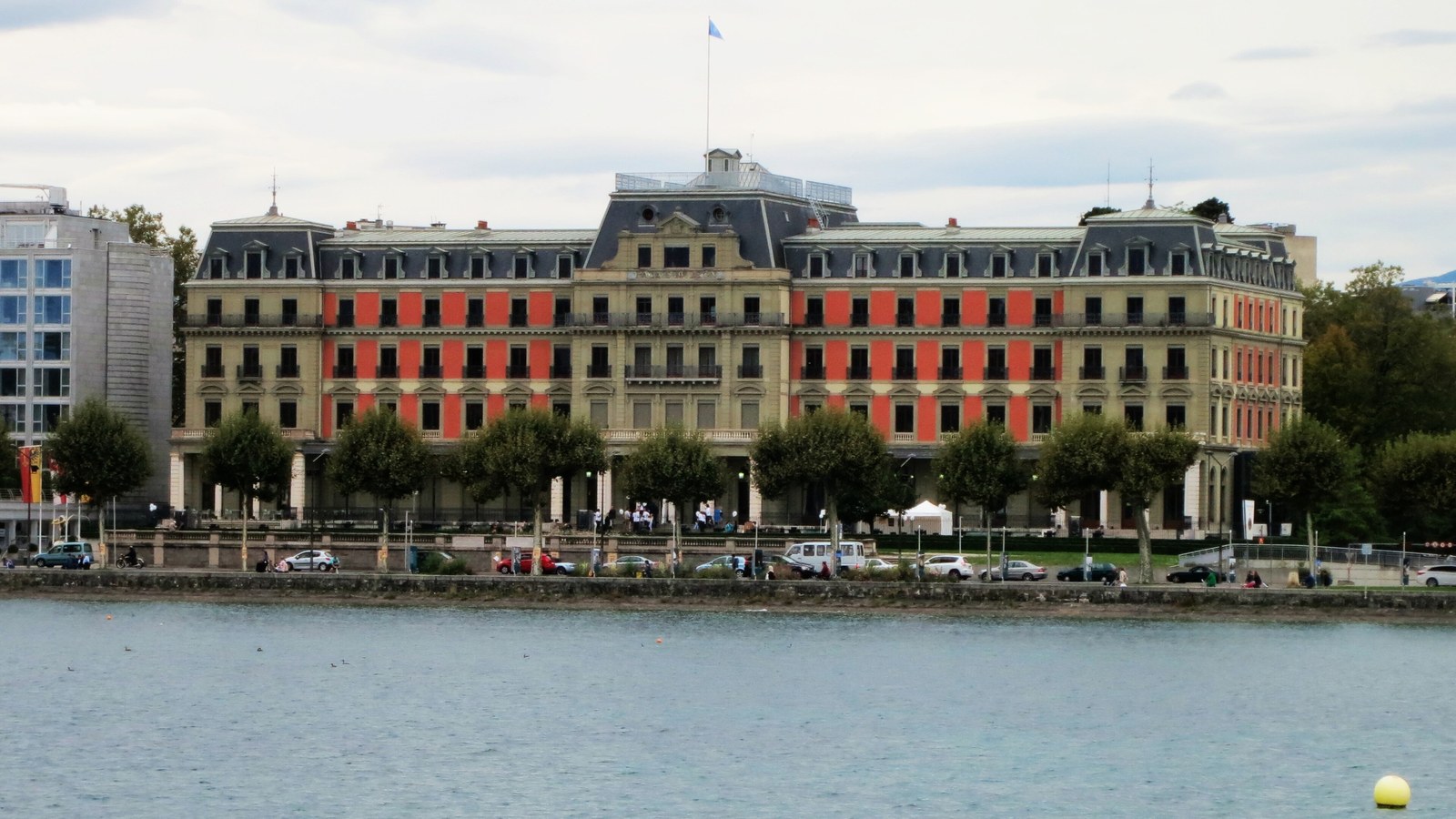
The signatories for the four Powers and for Austria were Balfour, Hanotaux, Imperiali, Pospíšil and Chancellor Seipel. Spain later acceded to Protocol No. I. The cover shows Palais Wilson in Geneva, the League’s headquarters in the 1920s, not a signing hall.
Sources consulted: Protocol for the reconstruction of Austria; official League text, The Restoration of Austria (C.716.M.428.1922.X).











0 Comments
No comments on this article yet. Be the first!