


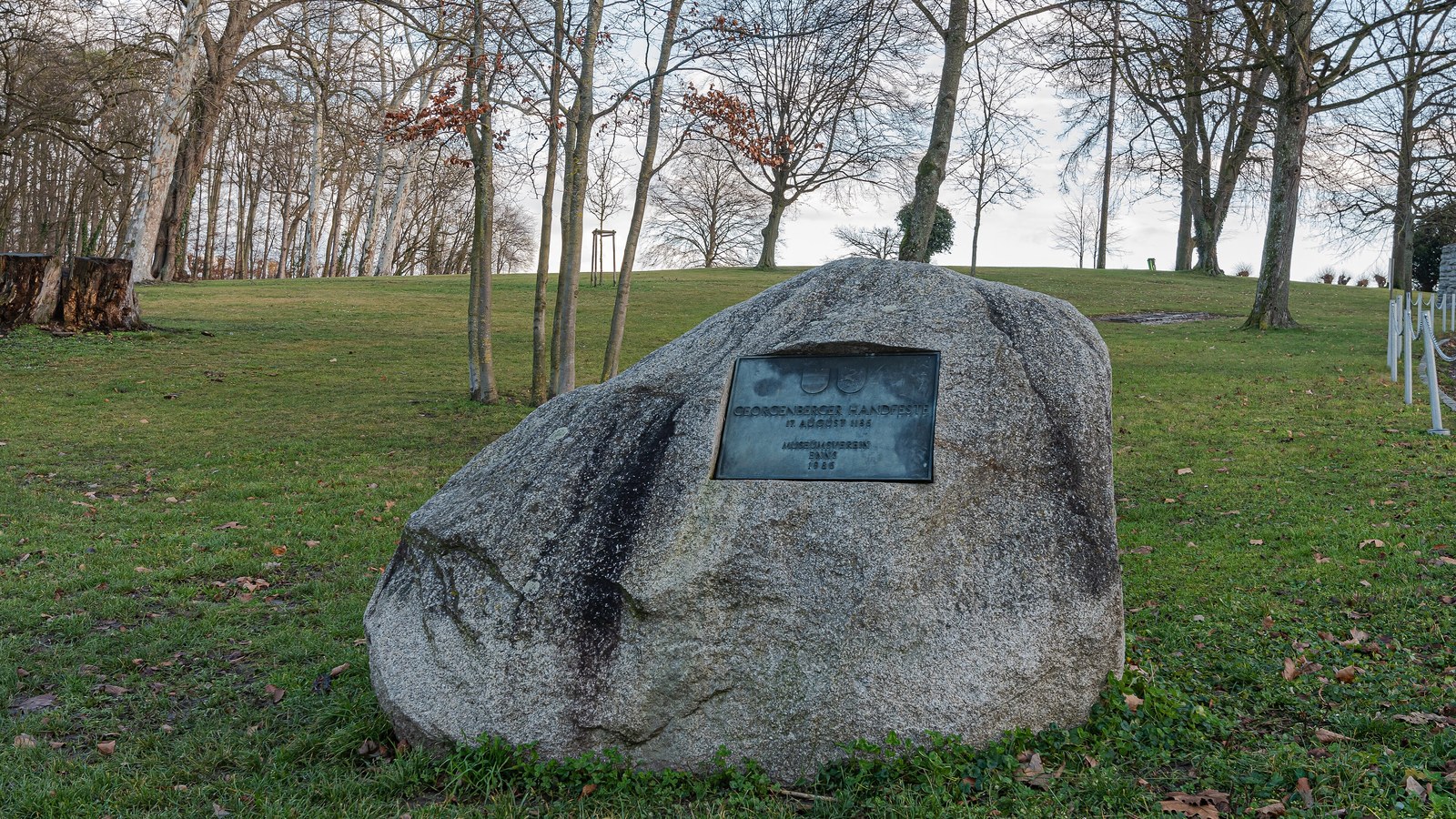
On 17 August 1186, on the hill of St George beside the market of Enns, Ottokar IV, duke of Styria, issued the Georgenberg Handfeste. The Latin dating is the sixteenth of the kalends of September, a Sunday, in the year of the Incarnation 1186, in monte sancti Georgii apud anesim forum. It is one of two charters from that day. The larger, kept with two seals in the Styrian State Archive at Graz, is the inheritance contract. The smaller is at Stift Vorau. Ottokar, of the Traungau house, incurably ill and without an heir, named as successor his kinsman Leopold V of Babenberg, duke of Austria, and Leopold’s son Frederick, should he die without issue. The Styrian duchy, from 1180, then ran far beyond the modern Land: the Traungau around Wels and Steyr, the county of Pitten, and Lower Styria, now in Slovenia.
The text, Urkundenbuch des Landes ob der Enns II, no. 272, opens In nomine Sancte Trinitatis. Otakarius Dux Stire. Having no heir, and on the counsel of his better men, he designates Leobaldus, nobilissimum strenuissimum fidelissimumque ducem Austriae, consanguineum. The provinces adjoin: under one prince, one justice. Whoever holds the duchy of Austria is also to rule the duchy of Styria, the other brothers not litigating. The duke is to keep the advocacies of the monasteries founded by Ottokar’s parents, without subadvocates, and the demesne, forts, land and ministeriales entire.
Then the rights of the estates. Marriages between Styria and Austria: the law of the province where the parties live. A Styrian dying intestate: the nearest of blood. Disputes among Styrians, not by champion but by credible testimony; land complaints before judges, with witnesses. No anevelh on fiefs; without sons, daughters may inherit benefices. Benefices bought into the Austrian duke’s property are not to be taken from the holder. Gifts Ottokar makes before his death remain valid. A Styrian ministerial may sell land to another Styrian ministerial. Entry into the named houses — Garsten, Admont, Seckau, St Paul, Vorau, Lambach, St Lambrecht and the rest of the list — with the duke’s leave.
If a complaint is not closed before Ottokar, it may be renewed before the duke of Austria. Styrian stewards, cupbearers, chamberlains and marshals are to serve the Austrian duke when he enters Styria as they served Ottokar. At the emperor’s court and on expedition, the same weeks, days and costs as the Austrian officers. Styria remains exempt from the exactions of Austrian heralds. If a successor behaves as a tyrant, the estates have an unbreakable licence to go to the emperor’s court with this privilege. These things were done in the time of Emperor Frederick and of Albert, archbishop of Salzburg. Twenty-eight witnesses, from Pilstein, Morlen, Schaunberg, Plankenberg. An addition: whoever wishes to build a church on his land may do so; chaplains keep the seat at table they had from Ottokar’s father.
The succession fell in 1192, on Ottokar’s death. The personal union did not hold at once: after Leopold V died, Styria went to Leopold VI and Austria to Frederick I, though the Handfeste required one prince. Emperor Frederick II reissued and altered the privilege at Enns in April 1237, in his quarrel with Frederick II the Quarrelsome. After the Babenbergs died out in 1246, the line passed, with breaks, to the Habsburgs. Until 1848 the act kept Styrian constitutional rank; it is in Memory of Austria. This is not the Privilegium Minus of 1156, not the Privilegium Maius, not the Peace of Ofen 1254, not Ottokar II of Bohemia.
The cover is the commemorative stone of the Handfeste, on the Georgenberg at Enns, where it was issued.
Sources: Georgenberg Pact; Urkundenbuch des Landes ob der Enns II, no. 272.











0 Comments
No comments on this article yet. Be the first!