


On 10 January 1941, in Moscow, the Soviet Union and Germany signed several instruments, not a single act under the English Wikipedia title. The Moscow press communiqués of the following day, forwarded by Ambassador Steinhardt in FRUS, distinguish: an expanded economic agreement, signed by People’s Commissar for Foreign Trade A. I. Mikoyan and Karl Schnurre of the German Foreign Ministry; a boundary treaty from the Igorka River to the Baltic Sea; and, also in Moscow, an agreement on mutual property claims connected with resettlement, signed by A. I. Vyshinsky and Schnurre. The same day, delegations in Riga and Kaunas signed resettlement agreements. A secret protocol, in two German and two Russian originals, was signed by V. M. Molotov and Ambassador Friedrich Werner von der Schulenburg; it entered into force on signature.
The economic agreement is based on the understanding of 11 February 1940 and regulates trade turnover until August 1942. Mutual deliveries were to exceed substantially the first contractual year. The USSR would deliver industrial raw materials, oil products and foodstuffs, particularly grain; Germany would deliver industrial equipment. This is not a wartime tonnage table: secondary-literature figures are not reproduced here as treaty text. Negotiations had been under way since the end of October 1940.
The boundary treaty, published in Izvestia, provides that, on the indicated sector, the state border runs along the line of the former actual state border between Lithuania and Poland and then along the German–Lithuanian agreements of 29 January 1928 and 22 March 1939. This is not a demarcation itinerary: the full course is in the published instrument. Languages: German and Russian.
The resettlement agreements: German citizens and persons of German nationality from the Lithuanian, Latvian and Estonian Soviet Socialist Republics might move to Germany; Lithuanian citizens and persons of Lithuanian, Russian and White Russian nationality from Germany (former Memel and Suwałki) might move to the USSR, within two and a half months of signature, under the procedure in those instruments. The Moscow agreement regulates the property claims connected with that resettlement. This is not a handbook of population transfer.
The secret protocol: the Reich renounces its claim to the strip of Lithuanian territory mentioned in the Secret Supplementary Protocol of 28 September 1939 and marked on the attached map. The USSR undertakes to compensate Germany with 7,500,000 gold dollars, equal to 31,500,000 Reichsmarks. One-eighth (3,937,500 Reichsmarks) in non-ferrous metal deliveries within three months of signature; the remaining seven-eighths (27,562,500 Reichsmarks) in gold, by deduction from German gold payments due by 11 February 1941 under the Schnurre–Mikoyan exchange of letters linked to the commercial agreement of the same day.
Wikipedia attributes the package to Schulenburg and Molotov; the official texts split the signatures by instrument. Commercial relations ended on 22 June 1941, when Germany attacked the Soviet Union. The later campaign is not set out here.
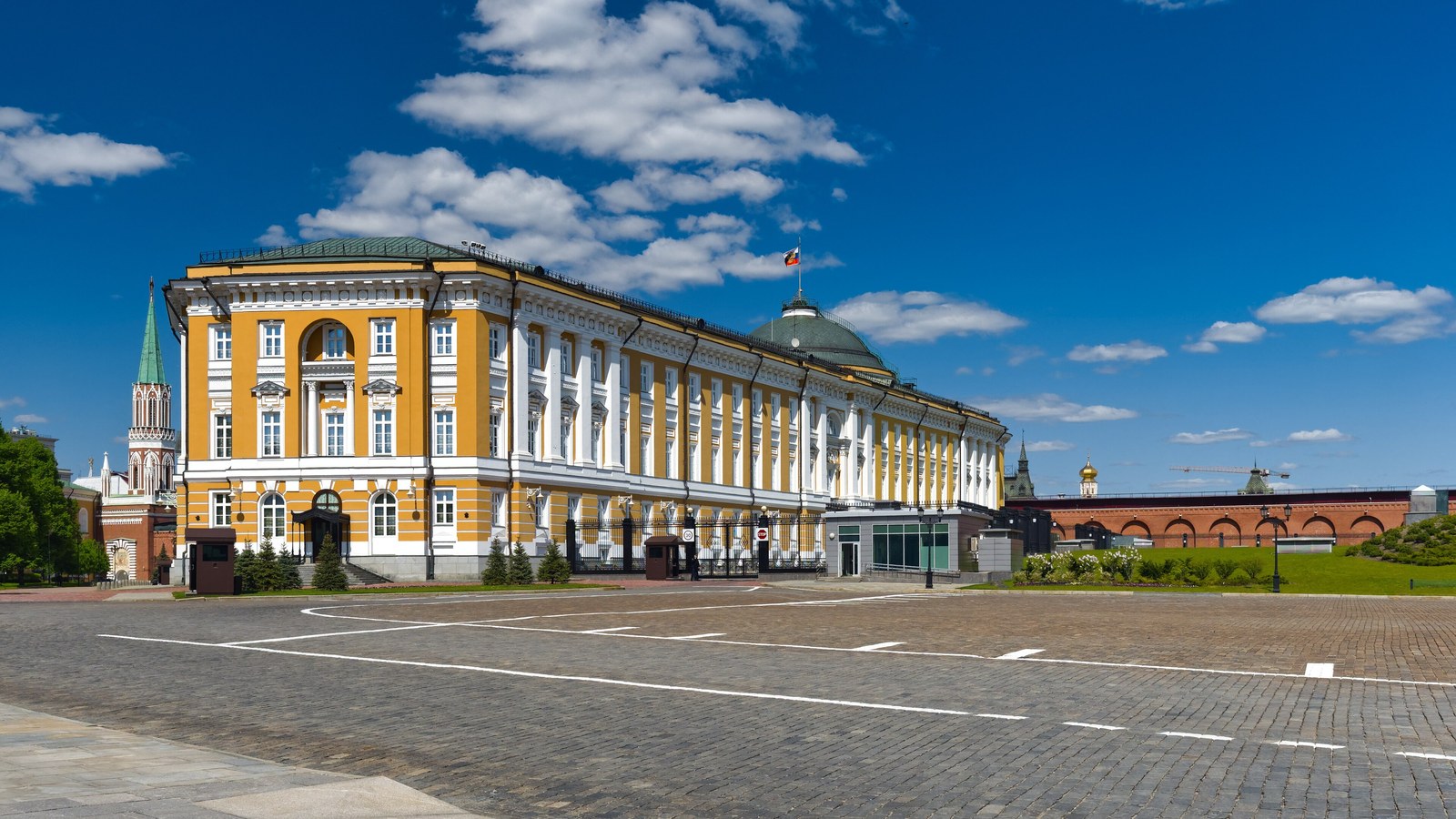
The Senate Palace of the Moscow Kremlin. Wikimedia Commons, free licence.
For context: German–Soviet Border and Commercial Agreement. The communiqués: The Ambassador in the Soviet Union (Steinhardt) to the Secretary of State.











0 Comments
No comments on this article yet. Be the first!