


The Agreement between the Republic of Cameroon and the Federal Republic of Nigeria concerning the modalities of withdrawal and transfer of authority in the Bakassi Peninsula was signed at Greentree, Manhasset, New York, on 12 June 2006 by Paul Biya, President of Cameroon, and Olusegun Obasanjo, President of Nigeria, in English and French, both texts being equally authentic. Witnesses: the United Nations, Germany, France, the United Kingdom and the United States. It is not the ICJ judgment of 10 October 2002; Article 7 states that the agreement shall in no way be construed as an interpretation or modification of that judgment, for which it only sets out the modalities of implementation. Article 1: Nigeria recognizes the sovereignty of Cameroon over the peninsula in accordance with that judgment, and both recognize the land and maritime boundary as delineated by the Court.
Article 2: Nigeria agrees to withdraw all its armed forces from the peninsula within sixty days of signature; the Secretary-General may extend the period, if exceptional circumstances so require, by not more than thirty days, in accordance with Annex I. A military-withdrawal protocol is not set out here. Article 3, after the transfer: Cameroon guarantees to Nigerian nationals living in the peninsula the fundamental rights and freedoms; in particular it shall not force them to leave the Zone or to change their nationality, shall respect their culture, language and beliefs, agricultural and fishing activities, property and customary land rights, shall not levy taxes in a discriminatory manner, and shall take measures against harassment. A customs or immigration guide is not transcribed.
Article 4: Annex I and the map in Annex II form an integral part; no part of the agreement shall be interpreted as a renunciation by Cameroon of its sovereignty. Article 5: implementation in good faith, with the good offices of the Secretary-General if necessary. Article 6: a Follow-up Committee (the parties, the United Nations and the witness States) monitors implementation, with the Mixed Commission observers, and settles disputes of interpretation; its activities cease at the end of the special transitional regime in Annex I.
Annex I, at framework level: a zone with special status; Nigeria may keep its civil administration and a police force for law and order for a non-renewable period of two years after the withdrawal of its forces, then hand over the administration; a special transitional regime of five non-renewable years follows, after which Cameroon fully exercises its rights of sovereignty. The agreement contains no ratification clause and takes effect from the day of signature. UNTS No. 45354, volume 2542. In August 2013 the Security Council welcomed the peaceful end of the special transitional regime.
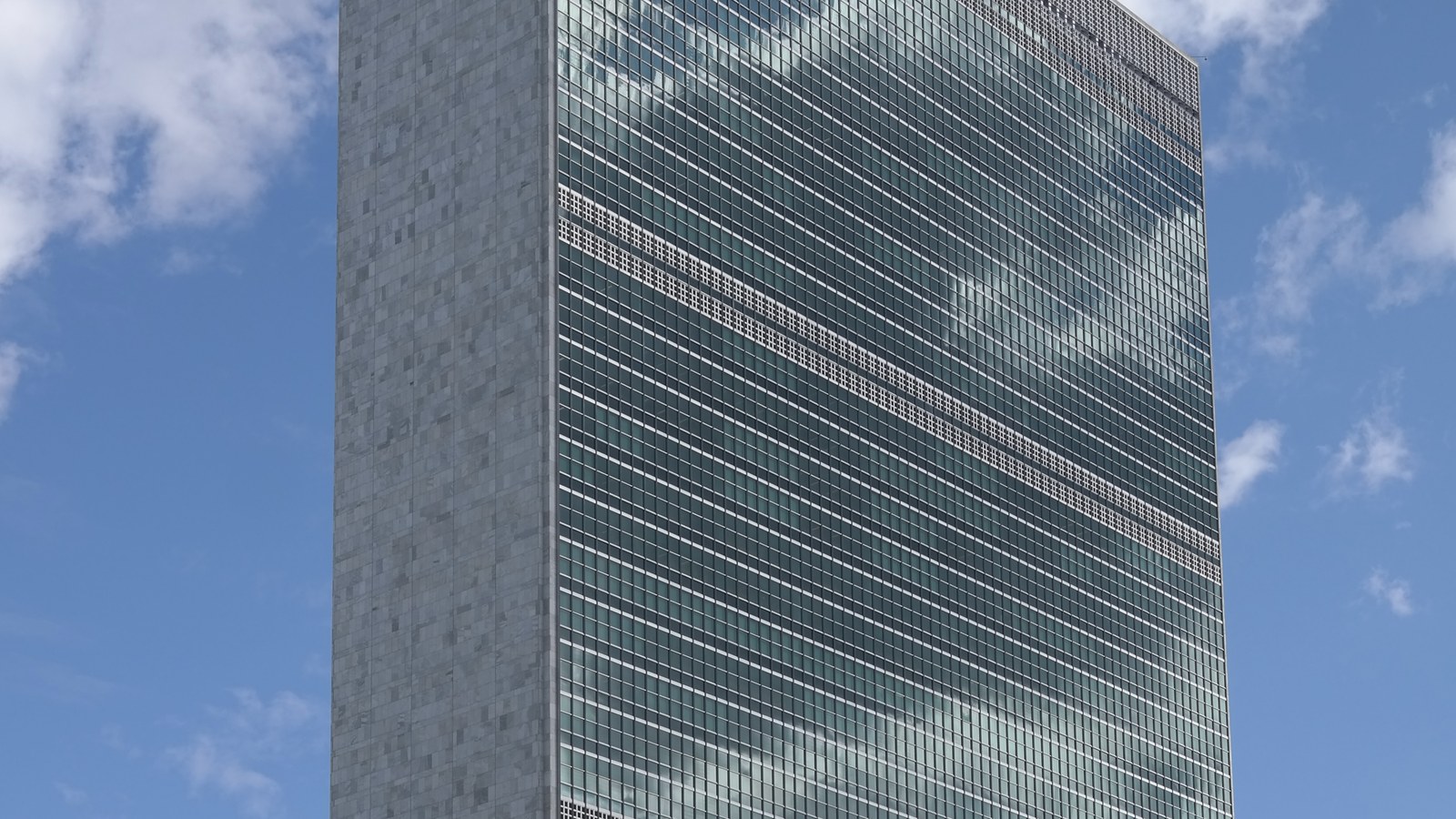
Cover: the United Nations Secretariat Building in New York, the institution that organized the Greentree summit; we do not claim the estate. Wikimedia Commons, free licence.
Sources consulted: Greentree Agreement; Agreement concerning the modalities of withdrawal and transfer of authority in the Bakassi Peninsula (African Union).











0 Comments
No comments on this article yet. Be the first!