


The Convention for the Protection of Cultural Property in the Event of Armed Conflict was concluded at The Hague on 14 May 1954, at the close of the intergovernmental conference that opened on 21 April, with 56 States taking part under UNESCO auspices. It is not the Hague Conventions of 1899 and 1907, which it supplements, nor the Roerich Pact of 1935. The authentic texts are English, French, Russian and Spanish, in a single copy deposited in the archives of UNESCO. The Regulations for execution form an integral part of the Convention. A first Protocol, on cultural property in occupation, was signed with it; the Second Protocol dates from 1999.
The preamble recognises that cultural property has suffered grave damage during recent armed conflicts and that, by reason of developments in the technique of warfare, it is in increasing danger of destruction. Damage to cultural property belonging to any people whatsoever means damage to the cultural heritage of all mankind, since each people makes its contribution to the culture of the world. Such protection cannot be effective unless both national and international measures have been taken to organise it in time of peace. The Convention is guided by the principles of 1899, 1907 and the Washington Pact.
Article 1 defines cultural property, irrespective of origin or ownership: movable or immovable property of great importance to the cultural heritage of every people — monuments, archaeological sites, groups of buildings, works of art, manuscripts, scientific and archival collections; buildings whose main and effective purpose is to preserve or exhibit such property — museums, large libraries, depositories, refuges; and centres containing a large amount of such property. Article 2: protection comprises the safeguarding of and respect for such property. Article 3: the High Contracting Parties undertake to prepare in time of peace for the safeguarding of cultural property situated within their own territory, by taking such measures as they consider appropriate. No operational catalogue is transcribed.
Article 4: the Parties undertake to respect cultural property situated within their own territory as well as within that of other Parties, by refraining from any use of the property, its immediate surroundings or the appliances in use for its protection for purposes likely to expose it to destruction or damage, and by refraining from any act of hostility directed against such property. Those obligations may be waived only where military necessity imperatively requires such a waiver. The Parties further undertake to prohibit, prevent and, if necessary, put a stop to theft, pillage, misappropriation and vandalism; they shall refrain from requisitioning movable cultural property in the territory of another Party and from reprisals against cultural property. No Party may evade these obligations because another has not applied the Article 3 safeguards. No targeting doctrine is transcribed.
Article 5, at the level of principle: a Party in occupation of the whole or part of another Party's territory shall as far as possible support the competent national authorities in safeguarding and preserving cultural property; no occupation handbook is transcribed. Article 8 provides for special protection, by entry in an International Register, of a limited number of refuges, centres containing monuments and immovable property of very great importance, subject to non-military use; Article 9 requires immunity from acts of hostility. Article 16 describes the distinctive emblem — a shield, pointed below, per saltire royal blue and white — used alone or repeated three times, under the conditions of Article 17. No marking playbook is transcribed.
Article 18: apart from the provisions which take effect in time of peace, the Convention applies in the event of declared war or of any other armed conflict between two or more Parties, even if the state of war is not recognised, and in cases of occupation, even if it meets with no armed resistance. Article 19: in an armed conflict not of an international character within the territory of a Party, each party to the conflict shall be bound, as a minimum, by the provisions relating to respect for cultural property; application shall not affect the legal status of the parties. The depositary is the Director-General of UNESCO. The Convention remains open for signature until 31 December 1954 by States invited to the Conference; instruments of ratification are deposited with UNESCO. It enters into force three months after five instruments have been deposited; UNESCO records 7 August 1956. It was registered with the United Nations as UNTS No. 3511, volume 249.
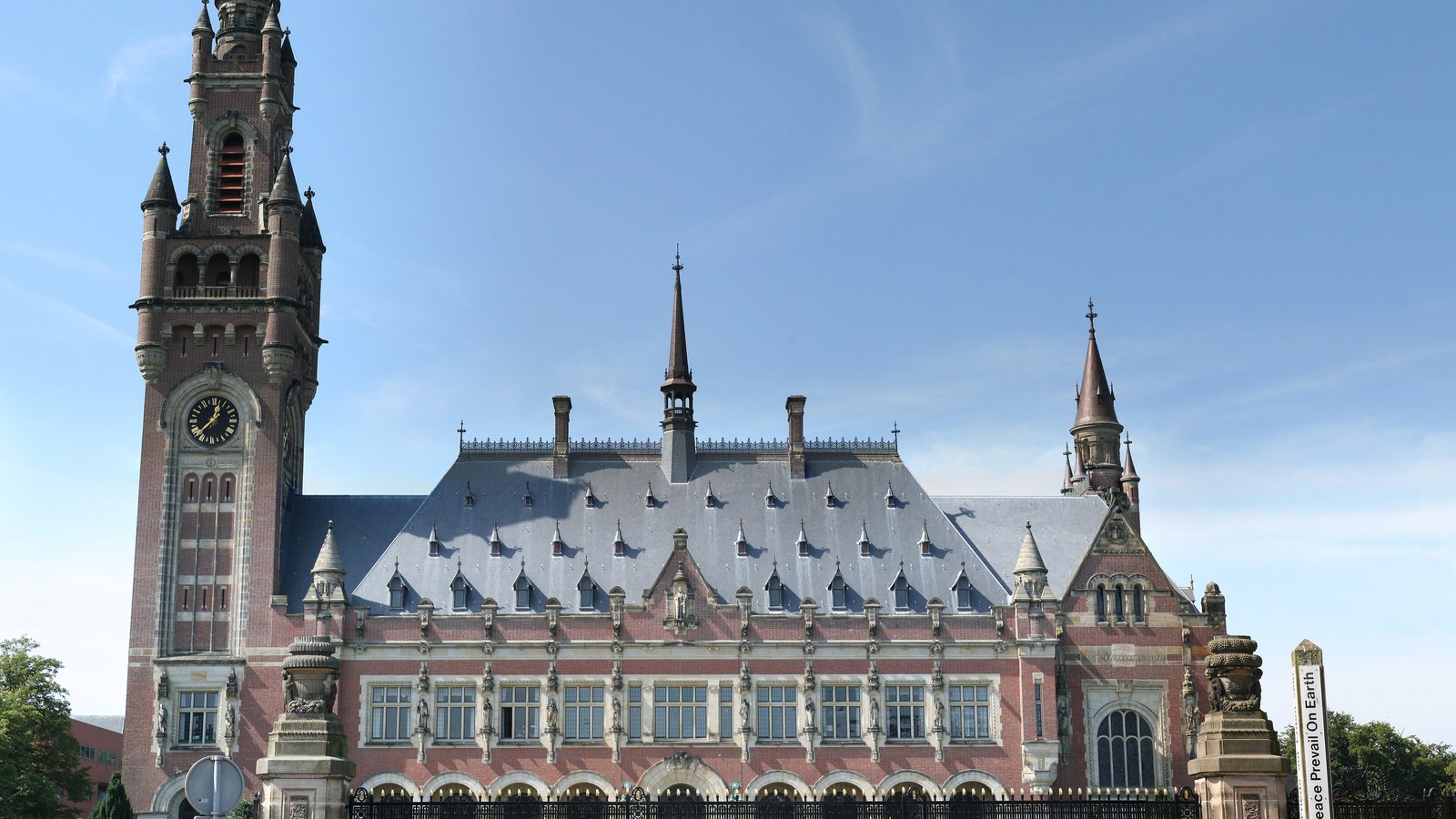
Cover: the Peace Palace in The Hague, the setting of international-law conferences; we do not claim the hall. Wikimedia Commons, free licence.
Sources consulted: Hague Convention for the Protection of Cultural Property in the Event of Armed Conflict; Convention for the Protection of Cultural Property in the Event of Armed Conflict with Regulations for the Execution of the Convention.











0 Comments
No comments on this article yet. Be the first!