


On 18 November 1903, in Washington, John Hay, United States Secretary of State, and Philippe Bunau-Varilla, Envoy Extraordinary of the Republic of Panama, sign the Convention for the Construction of a Ship Canal. The text is in duplicate, with Hay’s and Bunau-Varilla’s seals. No Panamanian signs. The canal is still on paper.
The Colombian Senate had rejected the Hay–Herrán Treaty in August. Roosevelt sends warships to Panama and Colón. On 3 November the isthmus breaks from Colombia. Washington recognises the republic on 13 November. The junta names Bunau-Varilla, a French engineer of the old de Lesseps company, minister plenipotentiary. He had not lived in Panama for seventeen years. The Spooner Act of 28 June 1902 had authorised the President to take control of the necessary land, first in Colombia.
Article I: the United States guarantees and will maintain the independence of Panama. Article II: Panama grants in perpetuity the use, occupation and control of a zone ten miles wide, five miles on each side of the canal axis, from the Caribbean to the Pacific, plus the islands in the zone and the group Perico, Naos, Culebra and Flamenco. The cities of Panama and Colón, with their harbours, stay outside the grant. Article III: in the zone the United States has the rights it would possess if it were the sovereign, to the exclusion of Panama.
Article XIV: ten million dollars in gold on the exchange of ratifications, and an annual payment of $250,000, also in gold, beginning nine years later. Article V: an American monopoly on any canal or railroad between the two seas. Article VIII: the rights of the New Panama Canal Company and the Panama Railroad pass to Washington. Article XVIII: the canal is perpetually neutral, under Hay–Pauncefote of 1901. Article XXIII: the United States may use police, armed forces and fortifications. Article XXV: naval or coaling stations on the Pacific and the Caribbean, at points agreed with the American president.
The junta in Panama ratifies on 2 December 1903. The U.S. Senate advises ratification on 23 February 1904. Roosevelt ratifies on 25 February. The exchange is in Washington on 26 February, the same day as the proclamation. The canal opens in 1914. The Canal Zone remains an American strip through the middle of the republic.
The Panamanian delegation reaches Washington after the signing. For years the text remains an indictment: a perpetual concession negotiated by a Frenchman, not by the government on the isthmus. The Torrijos–Carter Treaties of 1977 end the Zone in 1979. The canal passes to Panama on 31 December 1999.
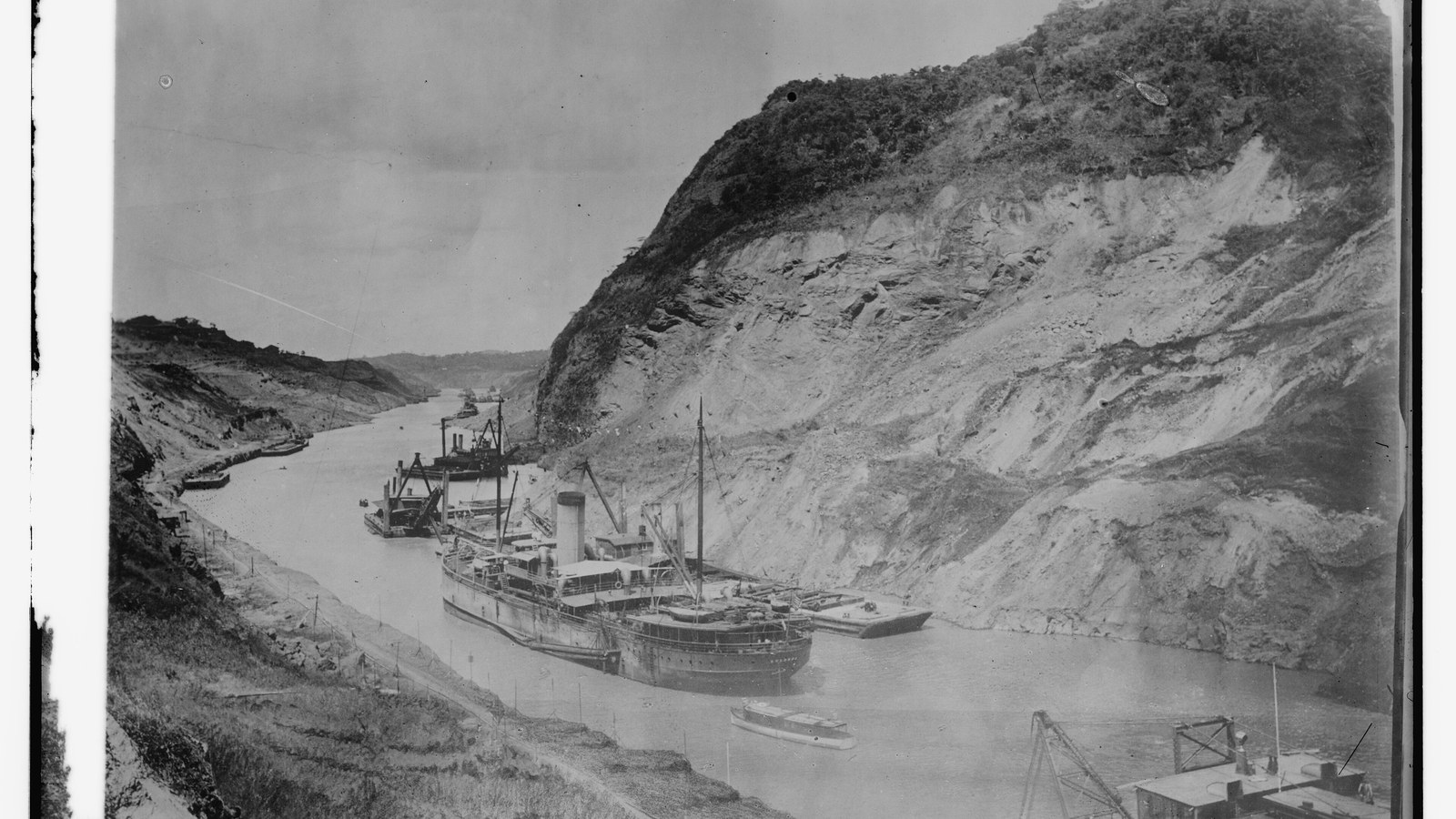
Image: Bain News Service, Culebra Cut, Panama Canal, 1910, public domain, Library of Congress / Wikimedia Commons. Cropped to 16:9.
Source consulted: Hay–Bunau-Varilla Treaty. Treaty text: Convention for the Construction of a Ship Canal (Hay-Bunau-Varilla Treaty), November 18, 1903.











0 Comments
No comments on this article yet. Be the first!