


On 17 January 1997, in Jerusalem, the Protocol Concerning the Redeployment in Hebron was signed, implementing the Israeli–Palestinian Interim Agreement of 28 September 1995 (Oslo II), in particular Article VII of Annex I. The official signatories are D. Shomrom for the Government of the State of Israel and S. Erakat for the PLO — Dan Shomron and Saeb Erekat, not Prime Minister Benjamin Netanyahu and PLO Chairman Yasser Arafat as the Wikipedia lead states. The Israeli Cabinet, the Knesset and the Palestinian leadership had approved the text in the preceding days. The Protocol has no separate ratification clause: it is an implementing instrument. The Note for the Record of 15 January and the letter of U.S. Secretary of State Warren Christopher are distinct acts, not this Protocol.
Point 1: redeployment of Israeli military forces in Hebron, in accordance with the Interim Agreement and this Protocol, is to be completed not later than ten days from signature; it constitutes full implementation of the Interim Agreement with regard to the city unless Article VII of Annex I provides otherwise. Point 2: the Palestinian Police assume responsibilities in Area H-1 similar to those in other West Bank cities; Israel retains all powers for internal security and public order in Area H-2 and, in addition, overall security of Israelis. The parties reaffirm the Interim Agreement’s security articles without reproducing them here as instructions.
Points 3–4: special security arrangements in H-1, between the Palestinian checkpoints marked on the Appendix 1 map and the areas under Israeli security responsibility; a DCO sub-office; joint mobile units and patrols on the routes shown on the map; a Joint Coordination Center headed by senior officers of both sides. Joint units are to carry equivalent types of weapons, not catalogued here. This is not a deployment handbook.
Point 5: Palestinian police stations or posts in H-1, with personnel and equipment limited as specified in the Protocol. Point 6: four Jewish holy sites in H-1 — the Cave of Othniel Ben Knaz/El-Khalil, Elonei Mamre/Haram Er-Rameh, Eshel Avraham/Balotat Ibrahim and Maayan Sarah/Ein Sarah — under protection of the Palestinian Police; visits accompanied by a Joint Mobile Unit. Point 8: the Imara is turned over, upon completion of redeployment, as Palestinian police headquarters. Point 9: the division of security responsibility does not divide the city.
Point 10: the twelve civil spheres not yet transferred, pursuant to Article VII of Annex I, are transferred concurrently with the beginning of redeployment; in H-2, civil powers pass to the Palestinian side except those relating to Israelis and their property. Point 11: the historic character of the city; new construction near the Appendix 3 locations (including Al Haram Al Ibrahimi/the Tomb of the Patriarchs) is coordinated through the DCL. Points 13–16: transportation, plainclothes unarmed municipal inspectors in H-2, and municipal services without discrimination.
Point 7: the Hasbahe wholesale market is to open as a retail market, and vehicle movement on Shuhada Road is to be returned gradually, within four months, to the situation that existed prior to February 1994. Point 17: a Temporary International Presence in Hebron (TIPH), whose modalities were to be agreed separately; the TIPH agreement of 21 January is a different instrument. The appendices, including the redeployment map, form an integral part of the Protocol.
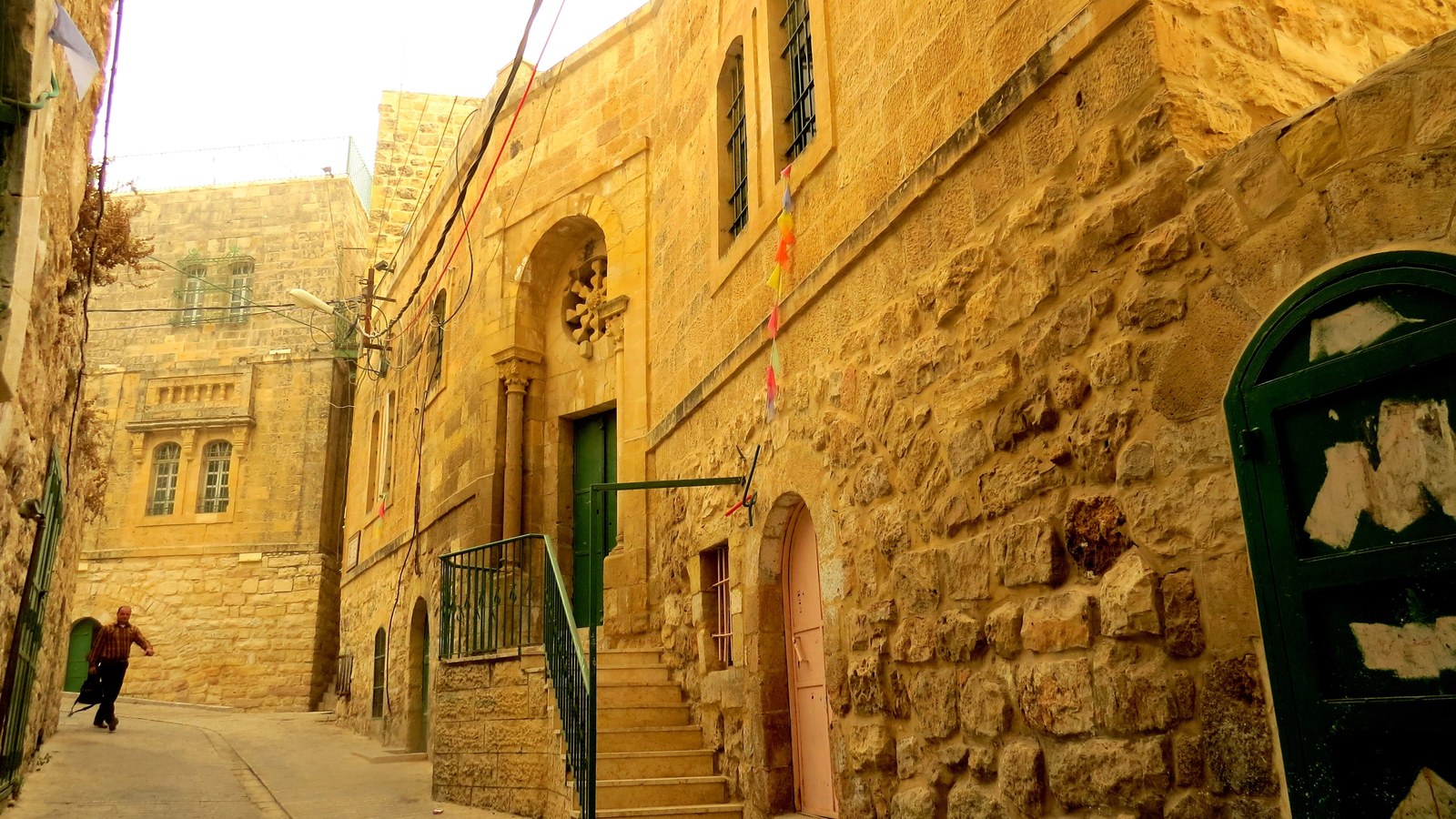
The Old City of Hebron, to which the Protocol refers through Areas H-1 and H-2. Wikimedia Commons, free licence. The signing took place in Jerusalem.
For context: Protocol Concerning the Redeployment in Hebron. The text: Protocol Concerning the Redeployment in Hebron.











0 Comments
No comments on this article yet. Be the first!