
A rechargeable battery does not hold electricity like a liquid. It stores chemical energy and turns it into current through reactions between two electrodes and an electrolyte. On discharge, electrons leave the negative electrode, cannot cross the electrolyte and are forced through the device’s circuit.
In a lithium-ion cell, lithium ions travel between the electrode materials. A porous separator lets ions through, not the metallic contact that would short the cell. The U.S. Department of Energy describes that movement as the heart of the cell’s chemistry.
The charger drives the reactions in reverse. Electronics control voltage, current and temperature. That is why a mismatched charger can be dangerous. The process is not perfectly reversible: each cycle leaves small changes in the electrodes. Heat, storage at charge extremes and deep discharge speed wear, although modern protection limits some of those states.
A swollen, split, hot or oddly smelling cell is not used and not charged. Rechargeable packs do not belong in household waste: terminals can ignite refuse, and materials are recovered at collection points. Britain’s HSE insists on safe use and recycling.
Chemistry differs by type — lithium-ion, nickel-metal hydride, lead-acid. This article describes the shared principle, not a product sheet.
A damaged battery is kept away from combustibles and handed over under local rules.
Charging reverses the chemistry; it does not “fill” a tank of electrons.
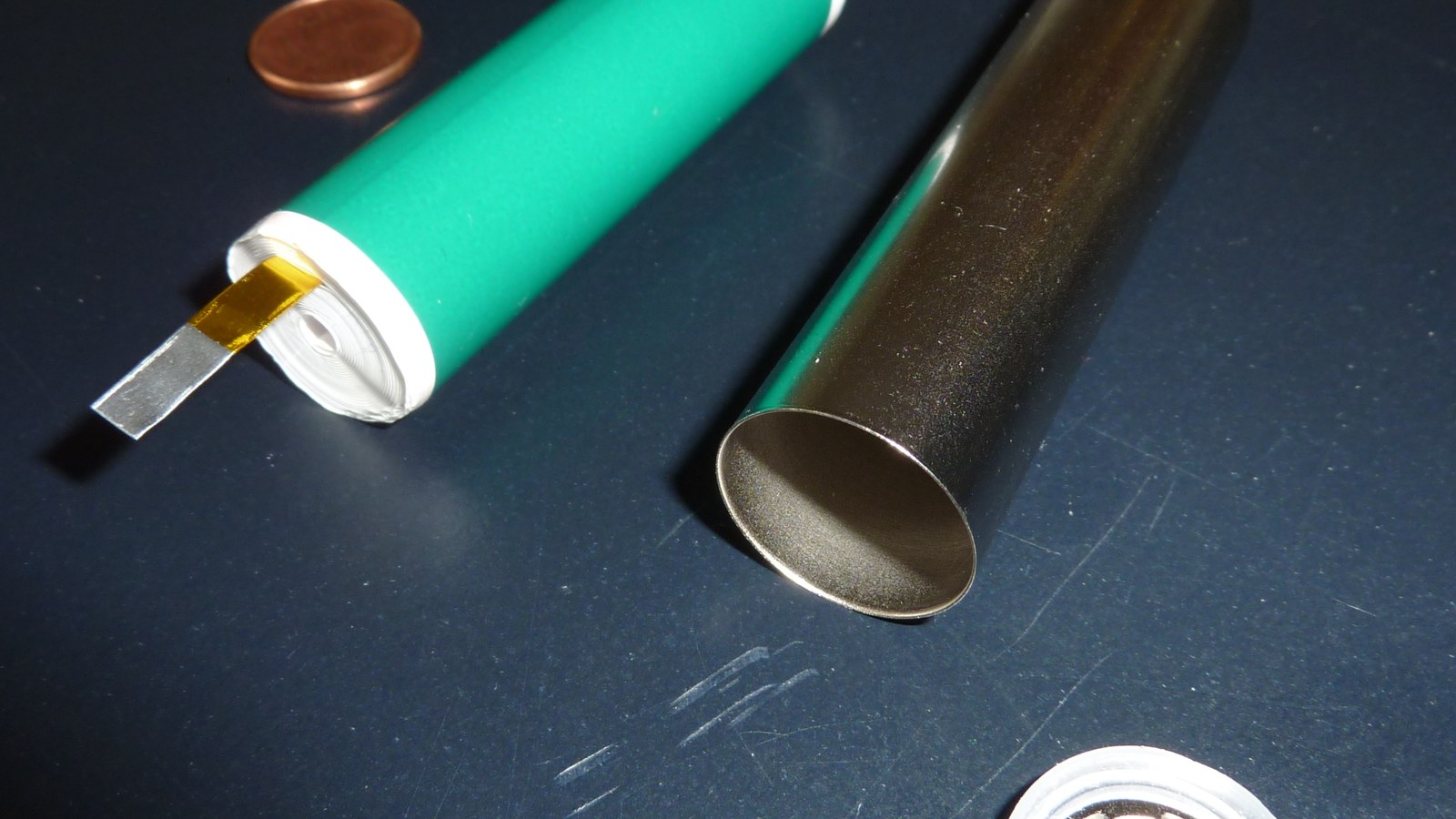
Image: disassembled cylindrical lithium-ion cell / Wikimedia Commons. Electrode roll and can, not an ion diagram. Cropped to 16:9.
Source consulted: DOE Explains…Batteries | U.S. Department of Energy; Using electric storage batteries safely | UK Health and Safety Executive.










0 Comments
No comments on this article yet. Be the first!