
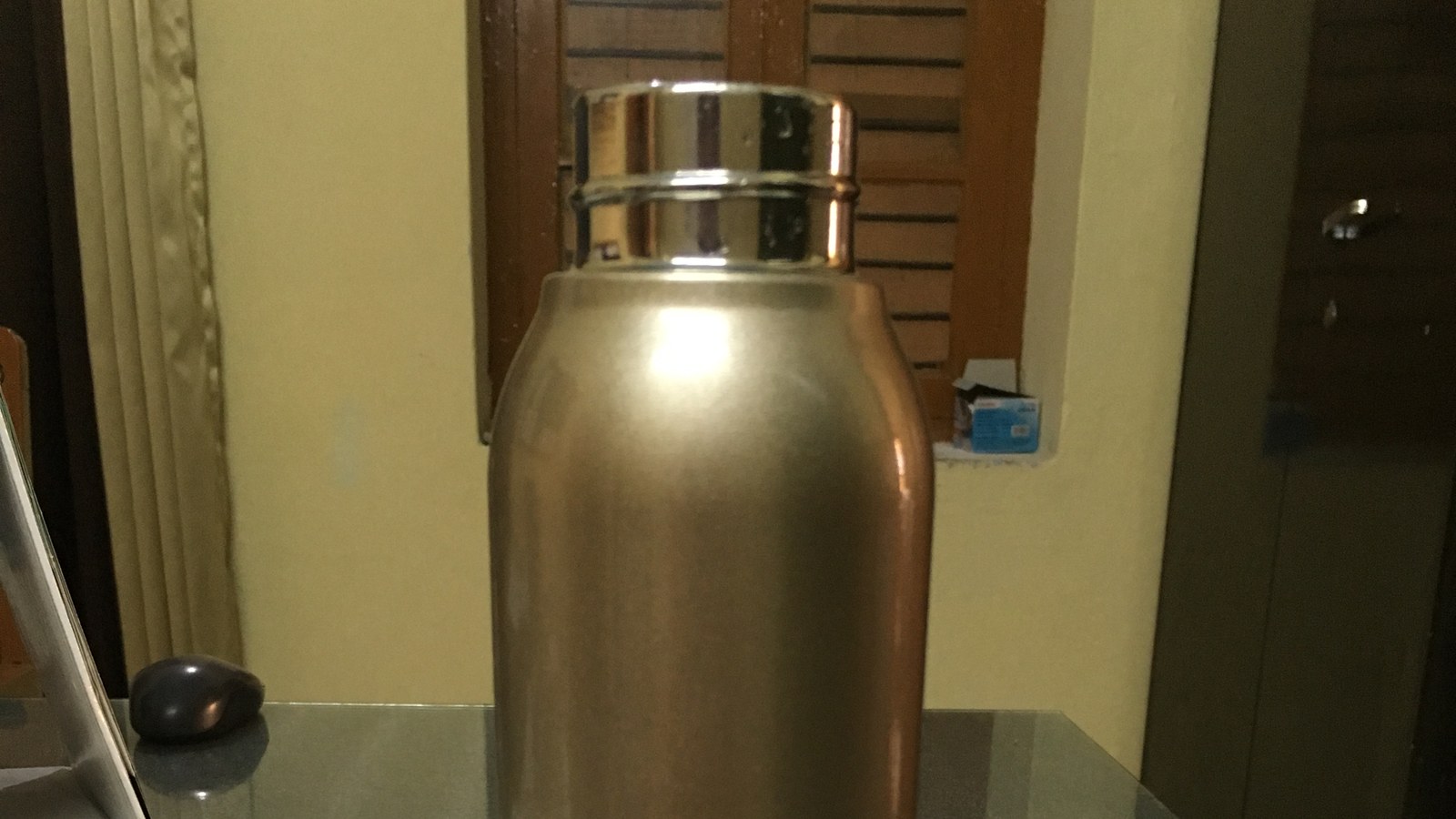
Coffee cools and cold water warms for the same reason: thermal energy moves from hot to cold. A thermos does not create heat or cold. It slows exchange with the surroundings along the three usual paths: conduction, convection and radiation.
The vessel usually has two walls, with most of the air removed between them. In that near-vacuum, very few molecules remain to carry energy by contact or by currents. That is the main advantage over a single-wall cup.
Surfaces facing the gap may be shiny. They reflect some infrared radiation, so they cut transfer that would otherwise cross even a vacuum. The same principle keeps a hot drink hot and a cold drink cold, close to the fill temperature.
The vacuum cannot cover every point. The neck, base and structural bridges still conduct heat. Makers shrink those contacts and use poorly conducting materials. A tight lid limits air exchange and evaporation, another route for heat loss.
A full flask usually changes temperature more slowly than a nearly empty one: it has more thermal mass and less air. Preheating or precooling with water, when the product instructions allow it, can reduce the first shock.
Impacts can ruin the vacuum, and seals wear. If the outer wall heats quickly after a hot fill, the insulation may be damaged. A cracked or leaking flask should not be used.
Performance depends on construction, volume, starting temperature and how often the lid is opened. A thermos delays thermal equilibrium; it does not cancel it.
Image: Shypoetess, open stainless vacuum flask. Indoor shot, not a laboratory Dewar. Wikimedia Commons, CC BY-SA 4.0. Cropped to 16:9. Licence. Original file.
Sources consulted: HyperPhysics — Vacuum Flask; U.S. Department of Energy — Principles of Heating and Cooling.







0 Comments
No comments on this article yet. Be the first!