
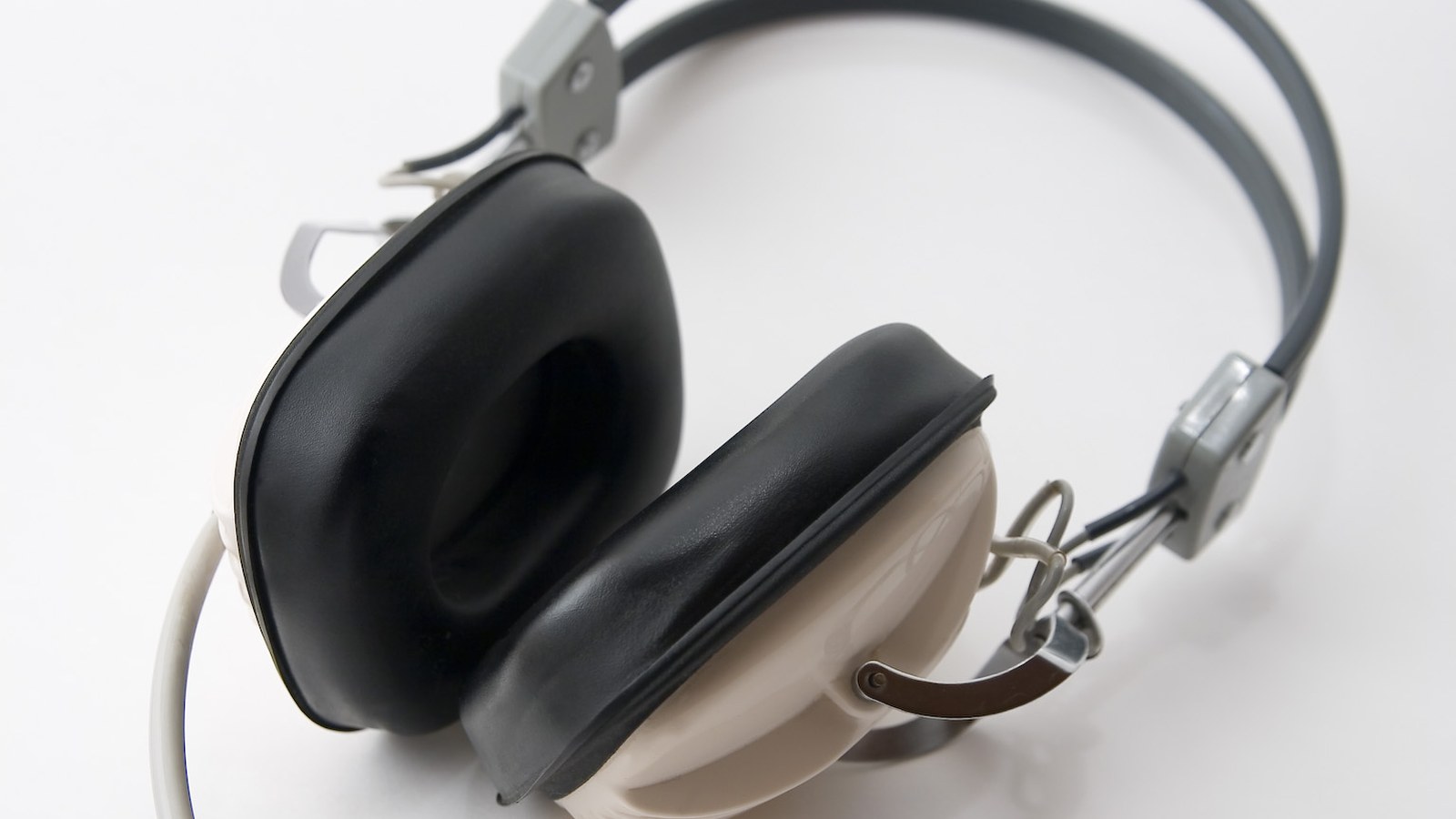
Active noise-cancelling headphones do not rely on padding alone. Microphones measure the noise, a processor calculates a wave of opposite phase, and the speaker plays it at the ear. Peaks of one wave meet troughs of the other: amplitude falls through destructive interference.
The calculation must be fast. If the corrective signal is late or a poor match, cancellation weakens and artefacts can appear. Hybrid models combine an outer (feedforward) microphone with one inside the cup (feedback) to correct leftover error.
The technology works best on low, steady rumble: aircraft, trains, ventilation. Nearby speech and sudden sounds are hard to anticipate. At high frequencies, the cup’s passive isolation matters most.
ANC does not erase sound in a room; it is tuned around the ear. It does not create absolute silence and is not automatically industrial hearing protection unless the maker certifies it. In traffic, cancellation can mask warnings; a transparency mode is safer when vehicles or alarms must be heard.
Acoustic comfort does not replace awareness of the surroundings. Consumer headphones remain a travel aid, not site PPE.
In short: measure, invert phase, superimpose — plus passive isolation for the rest of the spectrum.
Image: PJ, over-ear headphones. Wikimedia Commons, CC BY-SA 3.0. Not certified hearing-protection PPE. Cropped to 16:9. Licence. Original file.
Sources consulted: USC Viterbi Illumin — Engineering Healthy Silence; CDC/NIOSH — Hearing Protection Devices.










0 Comments
No comments on this article yet. Be the first!