
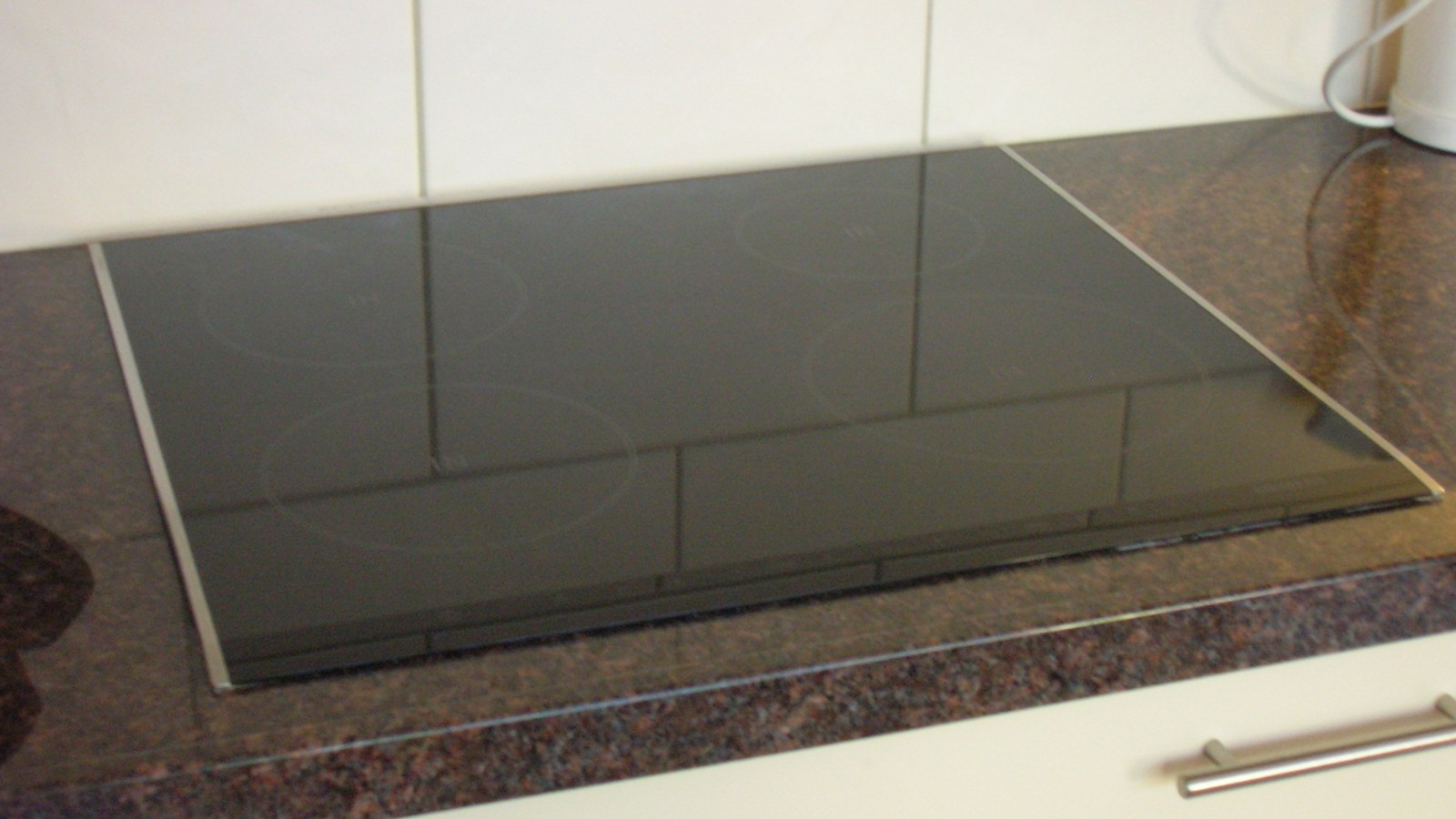
Under the glass of an induction hob there is usually no flame and no glowing element that first heats the air. There is a coil. When alternating current flows through it, the magnetic field rapidly changes direction.
If suitable cookware sits above, the field induces currents in the metal. The material’s resistance turns that energy into heat. Ferromagnetic steels also lose energy through repeated magnetisation. The main heat source is the pan’s base, not the glass.
Cooking can therefore be fast and, in principle, waste less energy to the surrounding air than an open flame. Energy is dissipated where it is needed: in the pot. Compatibility is not universal. Cast iron and many steels work; aluminium, copper or glass needs a ferromagnetic layer. A magnet that sticks to the base is a rough test; the maker’s marking remains decisive.
The hob is not “cold” in the sense that it can always be touched. A hot pan gives heat back to the glass. The residual-heat indicator exists because the surface can burn after switch-off.
The field can induce currents in unsuitable objects as well. Cutlery, foil and lids should not be left on the zone. People with implanted medical devices should follow the appliance instructions and medical advice, not a general article.
Distances, power and allowed cookware differ from model to model. The hob and pan manuals take priority over any summary.
The picture shows a pan on a ceramic-glass surface, with no flame. It illustrates the device, not a physics lab and not a particular brand.
Image: Erik1980, induction hob. Wikimedia Commons, CC BY-SA 3.0. Empty surface, no flame and no brand. Cropped to 16:9. Licence. Original file.
Sources consulted: U.S. Department of Energy — Making the Switch to Induction Stoves; Induction heating | Encyclopaedia Britannica; Electrical Safety First — Induction hob safety.





0 Comments
No comments on this article yet. Be the first!