


The figures are not from the same European pot. They are national indices. In September Hungary’s KSH measured 1.6% annual inflation, after 1.3% in August. Romania’s National Institute of Statistics measured 6.61%, after 6.17% in August. Ziarul Financiar put the two numbers side by side and wrote: four times faster. 6.61 divided by 1.6 is about that. The comparison holds if you stay on national CPI. Switch to Eurostat’s harmonised index and Romania is at 6.5%, Hungary at 2.1%. Still a gap. A different ruler.
The gap is sharper if you look back. In 2022–2023 Hungarian inflation was the highest in the EU, almost 26% at the peak of the wave. That is statistical history, not a government victory. Prices exploded then on the deficit, a weak forint, imported energy. Caps on food and fuel moved the rise onto other shelves. That is ZF’s reading. KSH, today, shows something else: food has been getting cheaper for months. The central bank cut its target to 2.5%, ZF also writes.
In Bucharest the summer cut the peak: from 10.4% in June towards 6.2% in August, as the energy cap and last year’s VAT and excise rises faded. September turned the curve. INS: services +11.12% in a year, non-food goods +7.06%, food +3%. Diesel +37.61%, petrol +28.42%, rents +39.46%. Fresh fruit −16.69%. Coffee +13.78%. That is the shelf, not a theory.
ZF also puts Hungarian politics in the frame: Orbán’s government refined the measures, and “the cabinet led by Péter Magyar kept them”. Retailers want the profit-margin caps lifted. A clear answer, the paper writes, is still missing. We do not check the palace. We check KSH. The forint, again after ZF, has strengthened since the start of the year. That is the exchange rate, not inflation.
On 8 October the National Bank of Romania held the key rate at 6.50%, ZF reports. The home economy expects inflation to rise further into winter, on fuel, energy, commodities. The IMF, also cited by ZF: Romania 8.2% in 2026, Hungary 1.9%. Those are forecasts, not September. September is already counted: 6.61 against 1.6, on national indices.
Hungary came down a mountain. Romania did not climb the same one. It stayed, in September, with the EU’s highest HICP inflation. That is the place. It is not a verdict on who sits in Budapest.
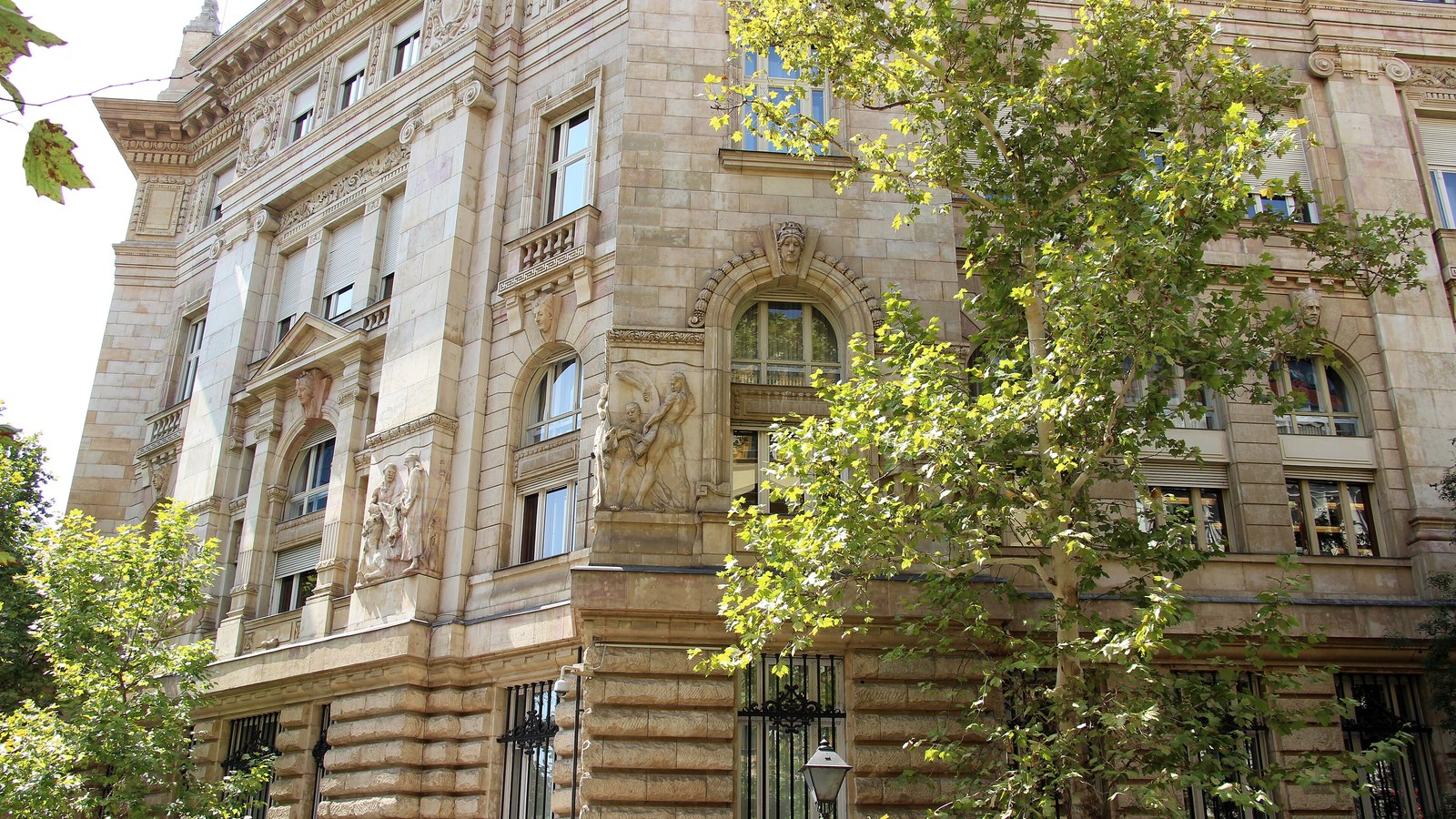
Image: Fred Romero, Hungarian National Bank headquarters, Budapest, 10 August 2017, CC BY 2.0, Wikimedia Commons. The photograph shows the Hungarian bank, not INS and not a Bucharest shelf.
Sources consulted: Ungaria a coborât inflația de la 26% la 1,6%. În România, prețurile cresc acum de patru ori mai repede — Ziarul Financiar; Rata anuală a inflației a urcat la 6,61% în luna septembrie — AGERPRES.











0 Comments
No comments on this article yet. Be the first!