


The Treaty of Peace, Friendship and Cooperation between India and the USSR was signed in New Delhi on 9 August 1971. The plenipotentiaries were Sardar Swaran Singh, India’s Minister of External Affairs, and Andrei Gromyko, Foreign Minister of the Soviet Union. Twelve articles, in Hindi, Russian and English, all equally authentic. It is not the 1993 Treaty of Friendship and Cooperation signed after the dissolution of the USSR, and it is not the renewal of 8 August 1991.
The preamble invokes peaceful coexistence between States with different political and social systems, the relaxation of international tensions, the elimination of the remnants of colonialism, and the United Nations Charter. Article I: enduring peace and friendship, respect for independence, sovereignty and territorial integrity, non-interference in internal affairs, equality and mutual benefit. Article II: efforts to strengthen peace in Asia and throughout the world, to halt the arms race and to achieve general and complete disarmament, nuclear and conventional, under international control — a framework, not an operational handbook.
Article III condemns colonialism and racialism. Article IV: India respects the Soviet Union’s peace-loving policy of friendship with all nations; the USSR respects India’s policy of non-alignment as a factor in universal peace. Article V: regular contacts on major international problems through meetings, official delegations and diplomatic channels. Articles VI–VII: economic, scientific and technological cooperation, and expanded trade, transport and communications on a most-favoured-nation basis, subject to the Indo-Soviet Trade Agreement of 26 December 1970; contacts in science, art, education, the press and tourism.
Articles VIII–X, at the level of principle: neither Party shall enter a military alliance directed against the other, commit aggression, or allow its territory to be used for an act which might inflict military damage on the other; neither shall assist a third party engaged in armed conflict with the other; in the event of an attack or a threat thereof, they shall immediately enter into mutual consultations in order to remove such a threat. No obligation incompatible with the Treaty. Not a defence itinerary.
Article XI: a duration of twenty years, automatically extended for successive five-year periods unless terminated on twelve months’ notice; ratification, and entry into force on the exchange of instruments in Moscow within one month of signature. Article XII: differences of interpretation shall be settled bilaterally by peaceful means.
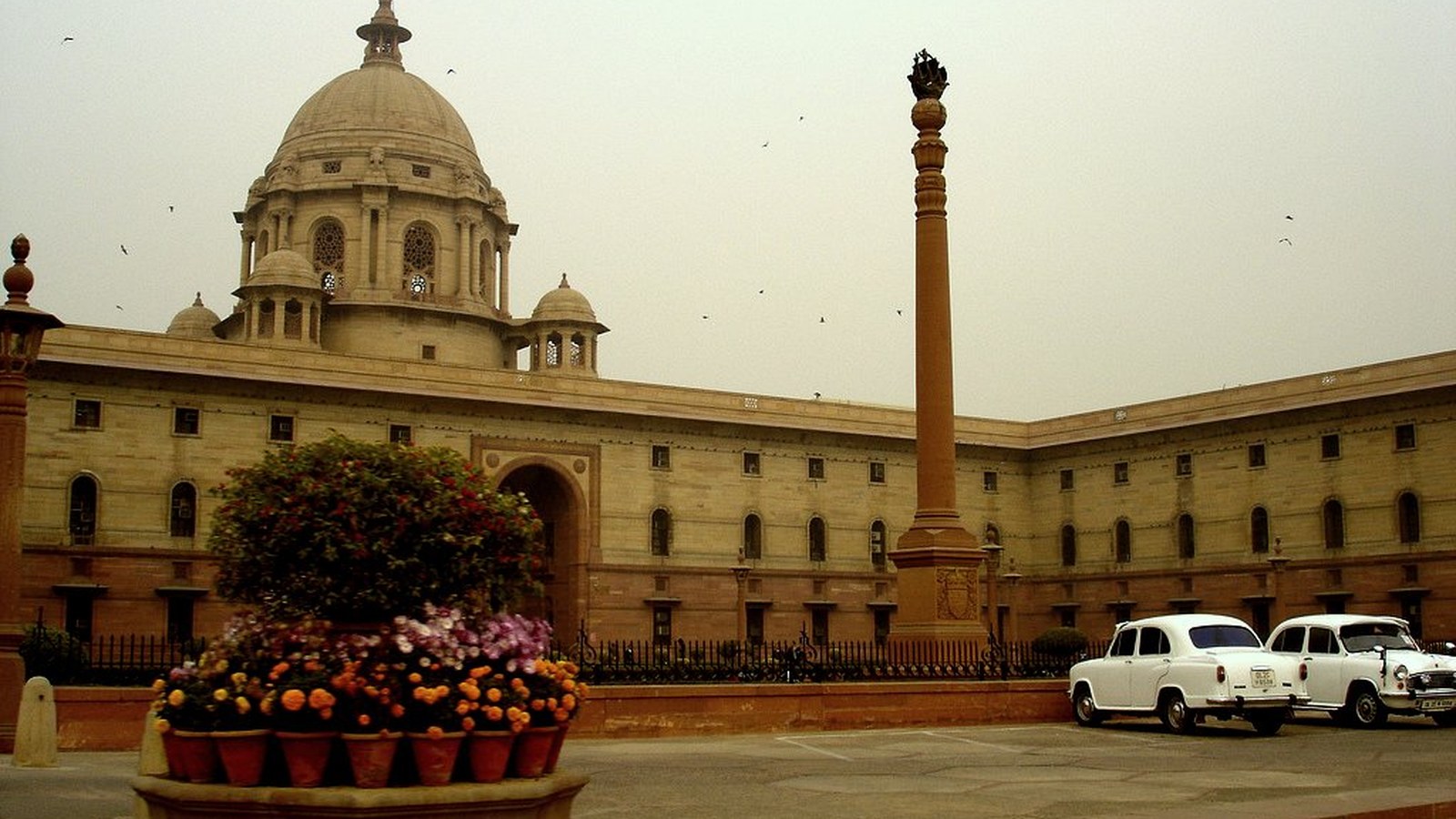
Cover: the Secretariat in New Delhi (South Block), the External Affairs building in the years of signature; we do not claim the signing room. Wikimedia Commons, free licence.
Sources consulted: Indo-Soviet Treaty of Friendship and Cooperation; Treaty of Peace, Friendship and Co-operation (MEA India).











0 Comments
No comments on this article yet. Be the first!