


On 6 December 1951, in Rome, the International Plant Protection Convention was concluded, in a single copy in English, French and Spanish, equally authentic, to be deposited in the archives of FAO. The FAO Conference (Sixth Session) approved it by Resolution 85/51. Article XII: open for signature by all Governments until 1 May 1952; instruments of ratification deposited with the Director-General of FAO. Article XIV: it comes into force between the first three signatory Governments which ratify. Entry into force: 3 April 1952, between Ceylon, Spain and Chile. FAO registered it with the United Nations on 29 November 1952 (UNTS I-1963, vol. 150). It is not the 1979 revised text (in force 4 April 1991) nor the 1997 new revised text (in force 2 October 2005).
The preamble: international co-operation in controlling pests and diseases of plants and plant products and in preventing their introduction and spread across national boundaries. Article I: legislative, technical and administrative measures specified in the Convention and in supplementary agreements pursuant to Article III; each contracting Government assumes responsibility for fulfilment within its territories. Article II: “plants” means living plants and parts thereof, including seeds so far as import supervision or phytosanitary certificates may be deemed necessary; “plant products” means unmanufactured and milled material of plant origin. The provisions may be deemed to extend to storage places, containers, conveyances, packing material and soil. Particular reference to pests and diseases of importance to international trade.
Article IV: as soon as possible and to the best of its ability, an official plant protection organization: inspection of growing plants and of international consignments, disinfestation, phytosanitary certificates, distribution of information, research. A description of that organization to the Director-General of FAO. Article V: certificates issued only by or under the authority of technically qualified and duly authorized officers; material intended for planting or propagation worded as in the Annex, with no alterations or erasures. Article VI: full authority to regulate, prohibit, inspect, treat, destroy or refuse entry; such measures only when made necessary by phytosanitary considerations; publication and immediate communication to other plant protection services and FAO; points of entry selected so as not unnecessarily to impede international commerce; inspection as promptly as possible, with due regard to perishability. The measures shall not apply to goods in transit unless necessary for the protection of the Party’s own plants.
Article VII: co-operation, including a world reporting service through FAO. Article VIII: regional plant protection organizations. Article IX: a dispute may go to a committee of experts appointed by the Director-General; the recommendations are not binding, but become the basis for renewed consideration; expenses shared equally. Article X: between contracting Governments the Convention terminates and replaces the International Convention respecting measures against Phylloxera vastatrix of 3 November 1881, the additional Convention signed at Berne on 15 April 1889, and the International Convention for the Protection of Plants signed at Rome on 16 April 1929. Article XIII: amendments through the FAO Conference; in force from the thirtieth day after acceptance by two-thirds; new obligations only for each Government that accepts them. Article XV: denunciation takes effect one year after receipt.
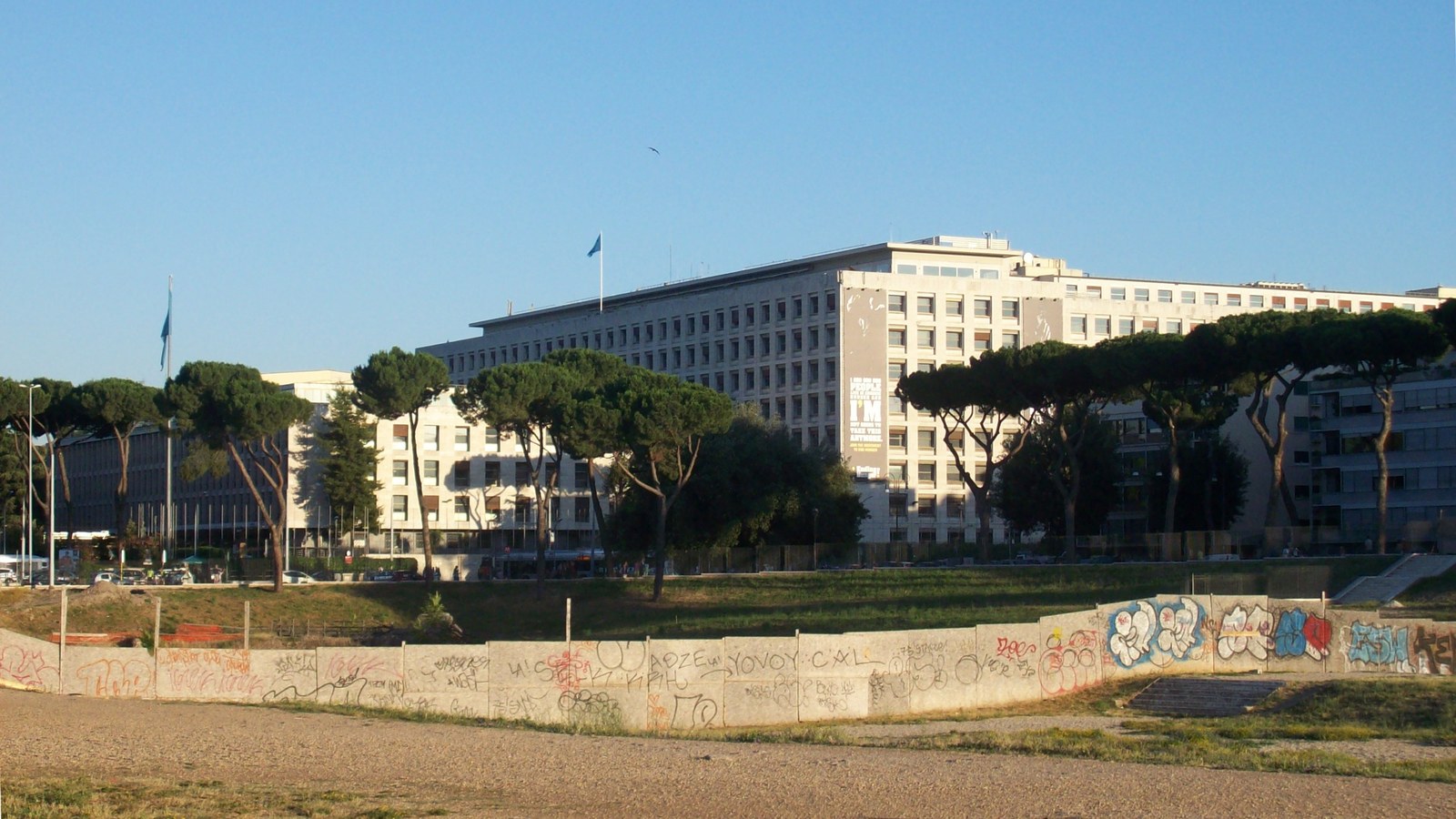
Palazzo FAO, Rome, beside the Circus Maximus. The depositary of the Convention, not the signing hall. Wikimedia Commons, CC BY-SA 3.0 it.
For context: International Plant Protection Convention. The text: UNTS, International Plant Protection Convention.











0 Comments
No comments on this article yet. Be the first!