


On 28 October 1933, at Geneva, the Convention relating to the International Status of Refugees was signed (159 LNTS 199, No. 3663). The official text is French; the English version is a League Secretariat translation, for information. It is not the 1951 Convention, nor the Convention of 10 February 1938 concerning refugees coming from Germany. Plenipotentiaries on the day of signature: Belgium (Meyers, Deltenre), Bulgaria (Mikoff), Egypt (Assal Bey), France (de Navailles), Norway (Birkeland). Article 1: it applies to Russian, Armenian and assimilated refugees, as defined by the Arrangements of 12 May 1926 and 30 June 1928, subject to such modifications as each Party may introduce at signature or accession. The preamble invokes the League Covenant (justice; Article 23(a) on labour) and the Arrangements of 5 July 1922, 31 May 1924, 12 May 1926 and 30 June 1928, and the Nansen International Office (Assembly of 4 September 1930).
Article 2: Nansen certificates valid for not less than one year, with a formula authorising exit and return; bearers may leave and return without an exit authorisation or a consular visa on return; consuls may extend them for not more than six months; visa fees at the lowest tariff applied to foreign passports, free for the indigent. Article 3: each Party undertakes not to remove or keep from its territory, by police measures such as expulsion or non-admittance at the frontier (refoulement), refugees authorised to reside there regularly, unless the measures are dictated by national security or public order; in any case not to refuse entry to refugees at the frontiers of their countries of origin; it reserves internal measures against those expelled who cannot leave for want of visas. It is the first treaty clause of non-refoulement; it is narrower than Article 33 of 1951 (only regularly authorised residents; a public-order exception). The United Kingdom, ratifying later, did not accept the second paragraph.
Article 4: personal status is governed by the law of domicile or, failing that, of residence; acts of religious authorities are recognised where those authorities are competent; rights acquired under the former national law, especially matrimonial rights, are respected. Article 5: dissolution of marriage follows the same law. Article 6: free and ready access to the courts; in the country of domicile or regular residence, the same rights as nationals, legal assistance and exemption from cautio judicatum solvi. Article 7: restrictions protecting the national labour market shall not be applied in all their severity; they are automatically suspended after three years’ residence, or if a spouse or child possesses the nationality of the country, or if the refugee is an ex-combatant of the Great War.
Article 8: industrial accidents, the most favourable treatment accorded to nationals of a foreign country. Articles 9–11: relief (the unemployed, the sick, the aged, children, pregnant women) and social insurance, the same most favourable treatment; mutual-aid associations. Article 12: schools and universities, treatment as favourable as other foreigners in general, including fee remissions and scholarships. Article 13: no duties or taxes other or higher than those on nationals; the Nansen stamp remains; this is the only fiscal article. Article 14: rights and favours made subject to reciprocity shall not be refused to refugees for want of reciprocity. Article 15: central committees for employment and assistance; they collect the Nansen stamp where there is no League representative.
Article 16: the earlier Arrangements remain in so far as compatible. Article 17: open for signature until 15 April 1934. Article 19: accession from 16 April 1934. Article 20: it comes into force thirty days after at least two ratifications or accessions — 13 June 1935 (LNTS registration). Denunciation after five years, taking effect one year later. Depositary: the Secretary-General of the League. Bulgaria ratified on 19 December 1934; Czechoslovakia acceded on 14 May 1935, with reservations to the definition, Nansen certificates, and Articles 3, 7, 14 and 15; Denmark and Italy later, with reservations. It is not the 1951 Convention, which, as between its parties, replaces it (Article 37).
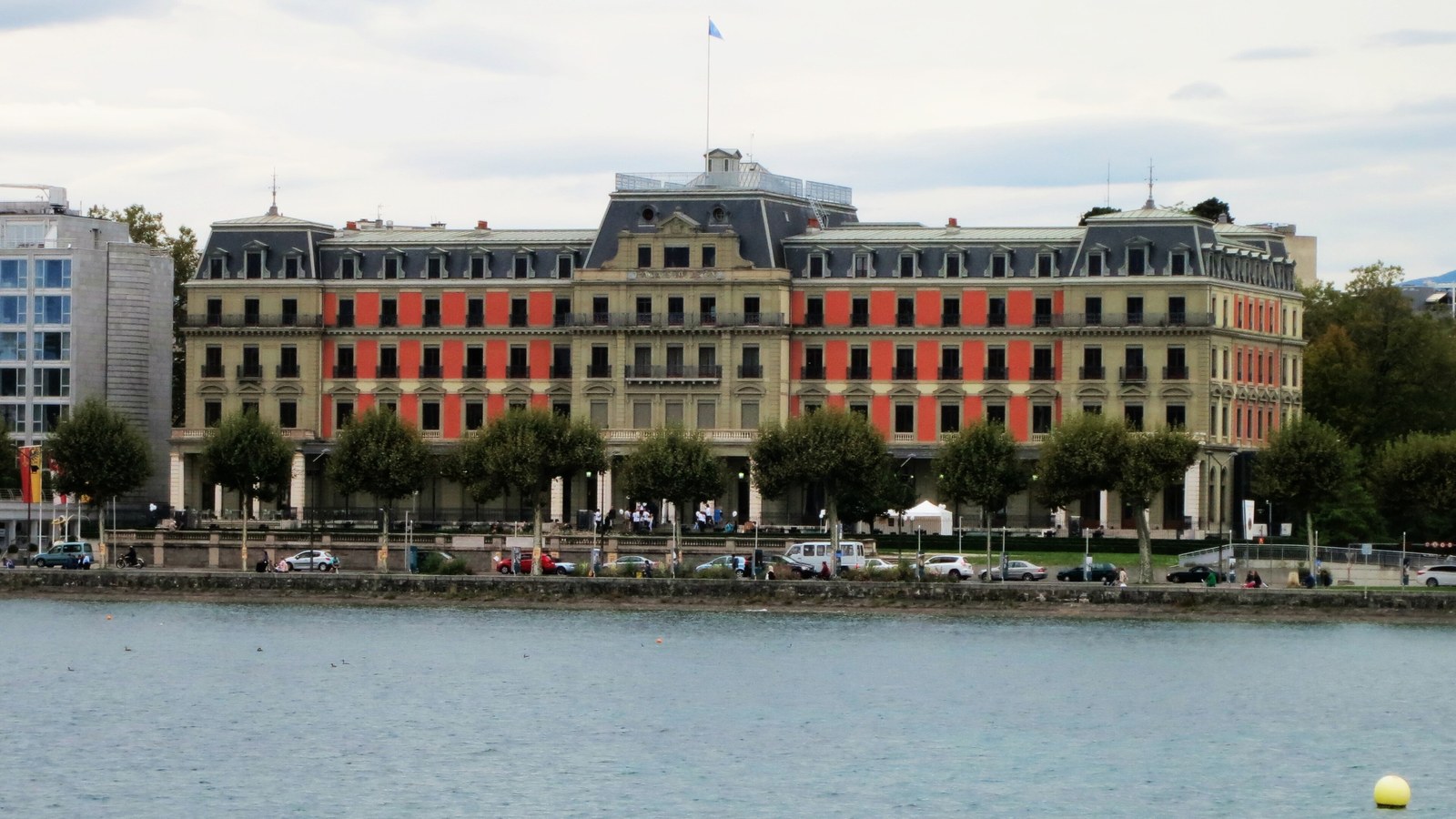
Palais Wilson, Geneva, formerly the Hôtel National, the League of Nations headquarters in 1933. Façade, not the signing table. The Palais des Nations was not yet open. Wikimedia Commons, CC BY-SA 3.0.
For context: Convention Relating to the International Status of Refugees. The text: Convention on the International Status of Refugees (League of Nations, Geneva, 28 October 1933).











0 Comments
No comments on this article yet. Be the first!