


On 18 November 1983, at Geneva, the International Tropical Timber Agreement, 1983, with annexes, was concluded at the United Nations Conference on Tropical Timber. Arabic, Chinese, English, French, Russian and Spanish, equally authentic. Depositary: the Secretary-General of the United Nations. It is not ITTA 1994 and not ITTA 2006.
The preamble: the Declaration and the Programme of Action on the Establishment of a New International Economic Order; UNCTAD resolutions 93 (IV) and 124 (V) on the Integrated Programme for Commodities; proper conservation and development of tropical timber forests, optimum utilization and ecological balance; the importance of tropical timber to producing members’ exports and to consuming members’ supply. Article 1: a framework for co-operation and consultation; expansion and diversification of trade, prices remunerative to producers and equitable for consumers, improved market access; research to improve forest management and wood utilization; market transparency; increased further processing in producing countries; industrial reforestation; marketing; national policies aimed at sustainable utilization and conservation of tropical forests and their genetic resources. Sovereignty of producing members over their natural resources.
Article 2: “tropical timber” means non-coniferous tropical wood for industrial uses, grown or produced between the Tropic of Cancer and the Tropic of Capricorn; logs, sawnwood, veneer sheets and plywood; plywood including some tropical conifers is covered. Producing member: a country with tropical forest resources and/or a net exporter, annex A. Consuming member: annex B. Article 3: the International Tropical Timber Organization (ITTO) is established, functioning through the Council, committees (article 24) and the Executive Director; the Council shall, at its first session, decide the location of headquarters, always in the territory of a member. Article 4: two categories of membership — producing and consuming. Article 5: the European Economic Community and other intergovernmental commodity organizations vote with the total votes of their member States, which then shall not vote individually.
Article 6: the Council is the highest authority. Article 10: producing members together hold 1,000 votes and consuming members 1,000. Article 34: open for signature at United Nations Headquarters from 2 January 1984 until one month after entry into force, by Governments invited to the Conference; definitive signature or ratification. Article 37: definitive entry into force on 1 October 1984 or any date thereafter if 12 producing Governments holding at least 55 per cent of the votes in annex A and 16 consuming Governments holding at least 70 per cent of annex B have signed definitively, ratified, accepted, approved or acceded; otherwise provisional force at lower thresholds (10 and 14; 50 per cent and 65 per cent). The United Nations Treaty Series records provisional entry into force on 1 April 1985, No. 23317, volume 1393, p. 67. Article 42: five years, with not more than two extensions of two years each, by special vote; terminated on 31 March 1994. Article 43: no reservations.
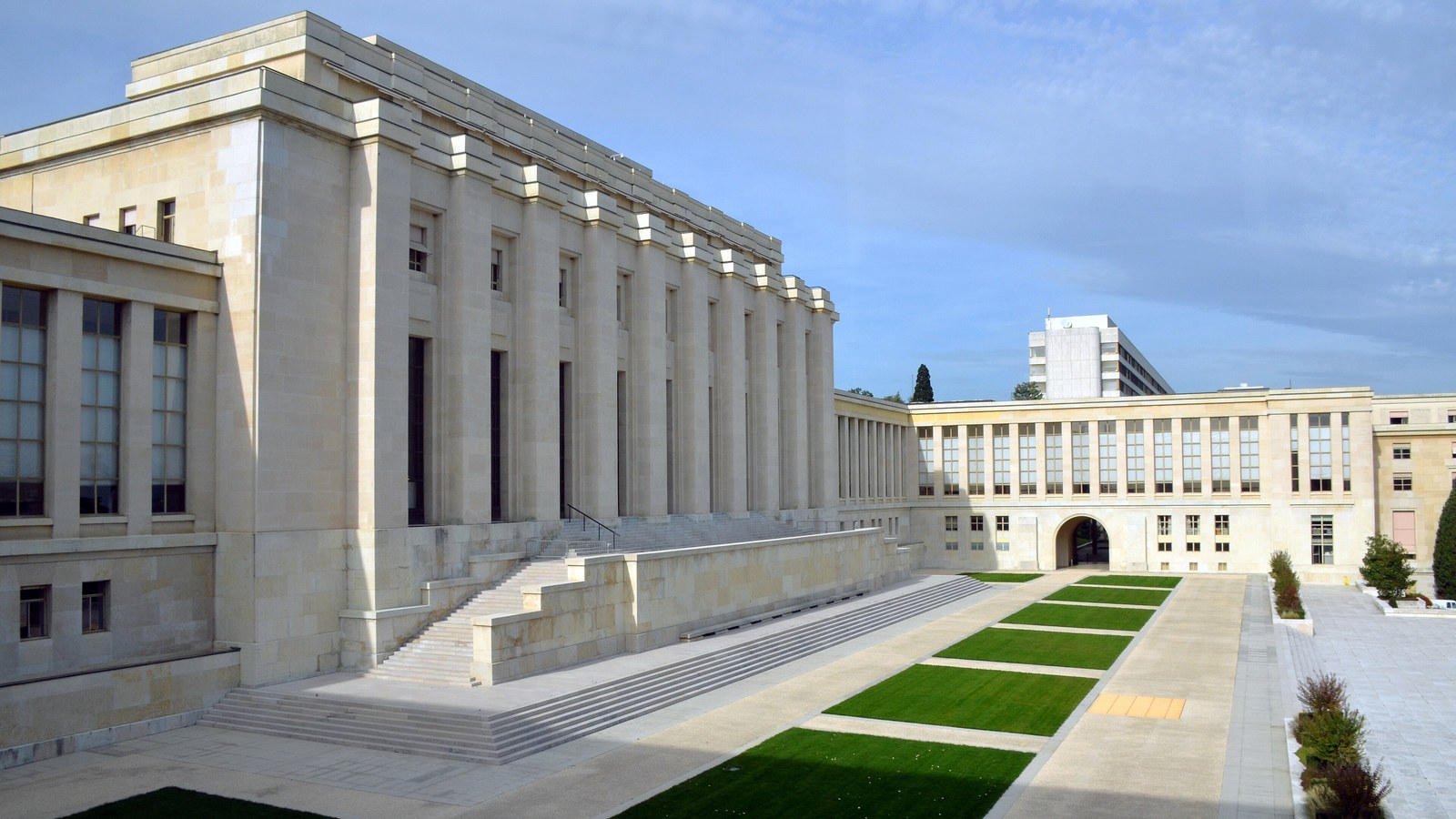
Palais des Nations, Geneva. The seat of United Nations conferences, not the confirmed signing hall. Wikimedia Commons, CC0.
For context: International Tropical Timber Agreement. The text: UNTS vol. 1393, No. 23317.











0 Comments
No comments on this article yet. Be the first!