


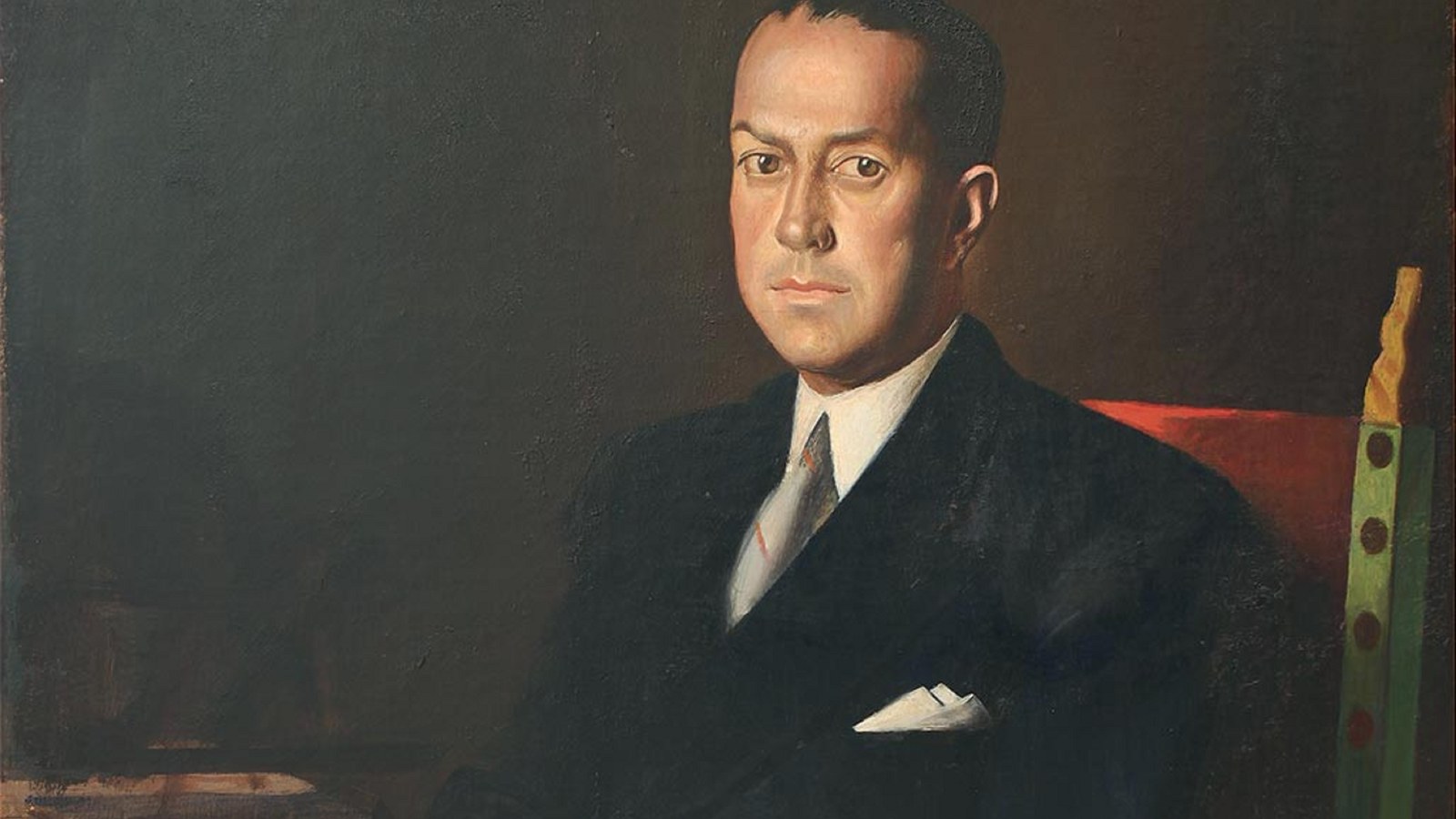
On 23 October 1936, in Berlin, Galeazzo Ciano and Konstantin von Neurath signed a nine-point protocol, in parallel German and Italian columns, equally authentic. The Italian text also carries year XIV of the Fascist era. It is not the Anti-Comintern Pact, initialed the same day by Ribbentrop and Mushanokōji for Germany and Japan and signed only on 25 November. Nor is it the Pact of Steel of 1939. The contents were not given to the public at the time. Ciano, on his first outing as foreign minister, had talked with Neurath from 21 October; after the signing he went to Berchtesgaden, to Hitler.
Point 1: in the negotiations for a Western Pact, the two governments proceed, as hitherto, in the closest contact. Point 2: so long as Italy remains in the League of Nations — Germany had already left — Rome has full regard to the common interests and consults Berlin in each case on taking part in conferences or commissions. Should Italy withdraw, that would be a new factor calculated to release Germany from the offers of 7 and 31 March; in that case too the future attitude towards the League would be coordinated, so far as possible. Point 3: Communism is, for them, the greatest danger threatening the peace and security of Europe; Communist propaganda is to be combated with all their strength.
Point 4, Spain: the Nationalists occupy the greater part of the country, and Germany and Italy have considerable economic interests there. De facto recognition of the National Government as soon as possible, then de jure in touch with one another. When they announce it, the two governments confirm the principle of non-intervention and respect for the integrity and territorial unity of Spain, her protectorates and her colonies. After de facto recognition they jointly examine when the agreed arms embargo is to be treated as invalidated. Military cooperation in Spain had only recently begun, through talks between Mario Roatta and Wilhelm Canaris on 28 August.
Point 5: the Italian government expresses its satisfaction over the policy of normalisation of German-Austrian relations inaugurated by the agreement of 11 July, and both governments wish that policy to prove fruitful. This is not the July accord itself, but a written adhesion to it. Point 6: prior to any international conference on economic and financial questions, Berlin and Rome come to an understanding beforehand and, so far as possible, follow a joint line.
Point 7: Italy will give diplomatic support to Germany’s efforts to obtain colonies as a source of raw materials of her own; apart from the colonial question, both strive to facilitate the supply of raw materials. Point 8: they keep each other informed of the basic principles of their commercial policies in the Danubian region; the nature and extent of cooperation are left to the technical bodies. They confirm their opposition, in future too, to new economic organisations there without them — for example an economic integration of the Little Entente, or an integration in the sense of the Tardieu Plan. Point 9, on the occasion of the German recognition of the incorporation of Abyssinia: the commercial treaty of 31 October 1925, the clearing agreement of 26 September 1934 and the later supplementary agreements are extended to the Italian colonies and possessions, including Abyssinia; there will be concluded, for those territories, agreements of the kind contained in the German-Italian goods-exchange agreement of 16 April 1935. Italy will, so far as possible, promote German trade and industry in the economic exploitation of Abyssinia, and is prepared to enter at once into conversations, in a benevolent and friendly spirit, on concessions legally acquired by German Reich nationals before 3 October 1935; as to later concessions, it reserves its views on each case. The treaties needed to carry the points out are to be concluded as soon as possible, through the government committees on German-Italian economic relations.
On 1 November, in Milan, Mussolini named the Berlin encounters a “vertical axis Berlin–Rome”. The protocol is not a military alliance: it has no assistance clause. It is coordination on the Western Pact, the League, Spain, the Danube, colonies and Abyssinia.
Galeazzo Ciano, the Italian signatory. Portrait by Gregorio Sciltian, 1943, not the table in Berlin. Wikimedia Commons, CC BY-SA 3.0.
For context: Italo-German protocol of 23 October 1936. The Italian diplomatic edition: Documenti Diplomatici Italiani, ottava serie, volume V.











0 Comments
No comments on this article yet. Be the first!