


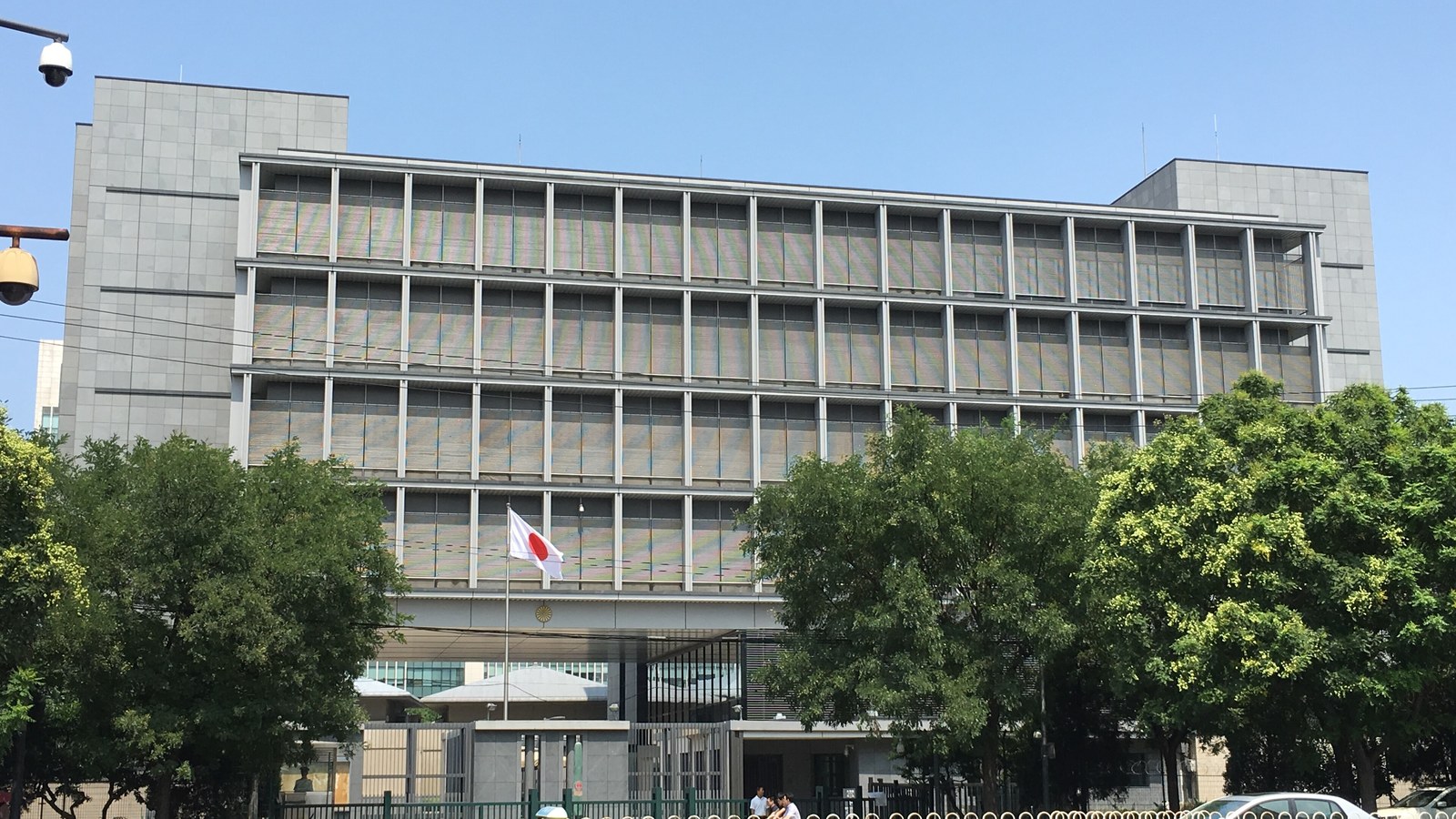
On 5 January 1974, in Beijing, Japan’s Foreign Minister Masayoshi Ōhira and the Foreign Minister of the People’s Republic of China, Ji Pengfei, signed the Agreement on Trade between Japan and the People’s Republic of China. Two originals, Japanese and Chinese, equally authentic. The preamble invokes the Joint Statement of the two governments issued in Beijing on 25 September 1972, respect for the results accumulated by previous private trade, and the wish to develop trade further on the principle of equality and mutual benefit.
Article 1(1): the parties accord each other most-favoured-nation treatment in respect of all kinds of customs duties, internal taxes and other charges, the methods of levying them, and customs rules and procedures. Article 1(2): the requirements applicable to goods are the same as when a party grants that treatment to a third country. Article 1(3): the clause does not apply to special advantages granted to a neighbouring country to facilitate border trade.
Article 2: most-favoured-nation treatment, in accordance with domestic law, for exemption from duties on goods brought in temporarily: commercial samples in quantities customary in trade; goods for tests and experiments; goods for exhibitions, fairs and shows; tools used by assemblers to install equipment; goods to be processed or repaired and materials needed for that work; containers of exported or imported cargo. Article 3: the same treatment for goods in transit to a third country.
Article 4(1): all payments are made, in accordance with each party’s foreign-exchange laws, in Japanese yen, in renminbi, or in other convertible currencies recognised by both. Article 4(2): the parties welcome the effective operation of settlement arrangements between the banks concerned. Article 4(3): legal persons (including foreign-trade organisations) and natural persons of either party shall not receive, as regards payments, remittances and transfers of funds or securities, treatment less favourable than that accorded to those of any third country. Article 5: trade is conducted under contracts concluded, on the basis of reasonable international market prices, between Japanese legal or natural persons authorised under Japanese law and Chinese foreign-trade organisations.
Article 6: the parties actively promote industrial technical exchange, again on equality and mutual benefit. Article 7: they encourage trade-related exhibitions and give, in accordance with domestic law, such support as they can. Article 8: disputes arising from commercial contracts are first to be settled by friendly consultation; if that fails, they may go to arbitration under a clause in the contract or in a separate agreement; the parties encourage use of the arbitration organs of both countries and undertake to enforce awards on the conditions laid down by the law of the place where enforcement is sought. This is not an arbitration handbook.
Article 9: a Mixed Committee of government representatives is established to review implementation and trade issues (including the outlook for trade relations) and, where necessary, to make recommendations to the two governments; it meets at least once a year, alternately in Tokyo and in Beijing. Article 10(1): the Agreement enters into force on the thirtieth day after the exchange of notifications that the domestic procedures required for that purpose have been completed; it remains in force for three years and thereafter until terminated. Article 10(2): either party may terminate it, by three months’ written notice, at the end of the first three years or at any time thereafter. In the Japanese register: Treaty No. 4 of Shōwa 49, published in the Kanpō; it took effect on 22 June 1974.
The Agreement is the first of the working governmental instruments that followed the 1972 normalisation (civil aviation, shipping, fisheries, trademarks). The signatories are the two foreign ministers, not the premiers. The English Wikipedia lead attributes the talks to Zhou Enlai and Tanaka Kakuei; the official text bears Ōhira’s and Ji’s signatures.
The Embassy of Japan in Beijing, opened after the 1972 normalisation. Wikimedia Commons, free licence.
For context: Japan–China Trade Agreement (1974). The text: 日中貿易協定(日本国と中華人民共和国との間の貿易に関する協定).











0 Comments
No comments on this article yet. Be the first!