


The Agreement between Japan and Korea was signed in Seoul on 22 August 1904, in Japanese and Korean. Signatories: Hayashi Gonsuke, Envoy Extraordinary and Minister Plenipotentiary of Japan, and Yun Chi-ho, Acting Minister of State for Foreign Affairs of the Korean Empire. Articles I–II had been signed on 19 August by Hayashi, Yi Ha-yeong and Pak Jeong-yang; Article III was added on the day of the complete signature. It is not the protocol of 23 February 1904, nor the coast-trade agreement of 13 August 1905, nor Eulsa of 17 November 1905, nor the annexation of 22 August 1910.
Article I: the Korean Government engages a Japanese financial adviser recommended by Tokyo and deals with financial matters after taking his counsel. Article II: a diplomatic adviser, a foreigner recommended by Japan, is engaged at the foreign office for important foreign-relations business. Article III: Korea consults Japan before concluding treaties or conventions with foreign powers and before granting concessions or contracts with foreigners.
The official text consulted is Takahira Kogorō’s note to John Hay of 30 August 1904, reproduced in FRUS, which transmits the agreement and presents it as a development of the February protocol. The same text appears in Kyūjōyakuisan and in the Korean gazette of Gwangmu 8, 9 September 1904. Japanese publication followed on 25 July 1907.
The 1965 Treaty on Basic Relations between Japan and the Republic of Korea confirms that treaties and agreements concluded between the Empire of Japan and the Empire of Korea on or before 22 August 1910 are already null and void. The Korean Mission to the 1921 Washington Conference called it an “alleged treaty” and contested its coercive character.
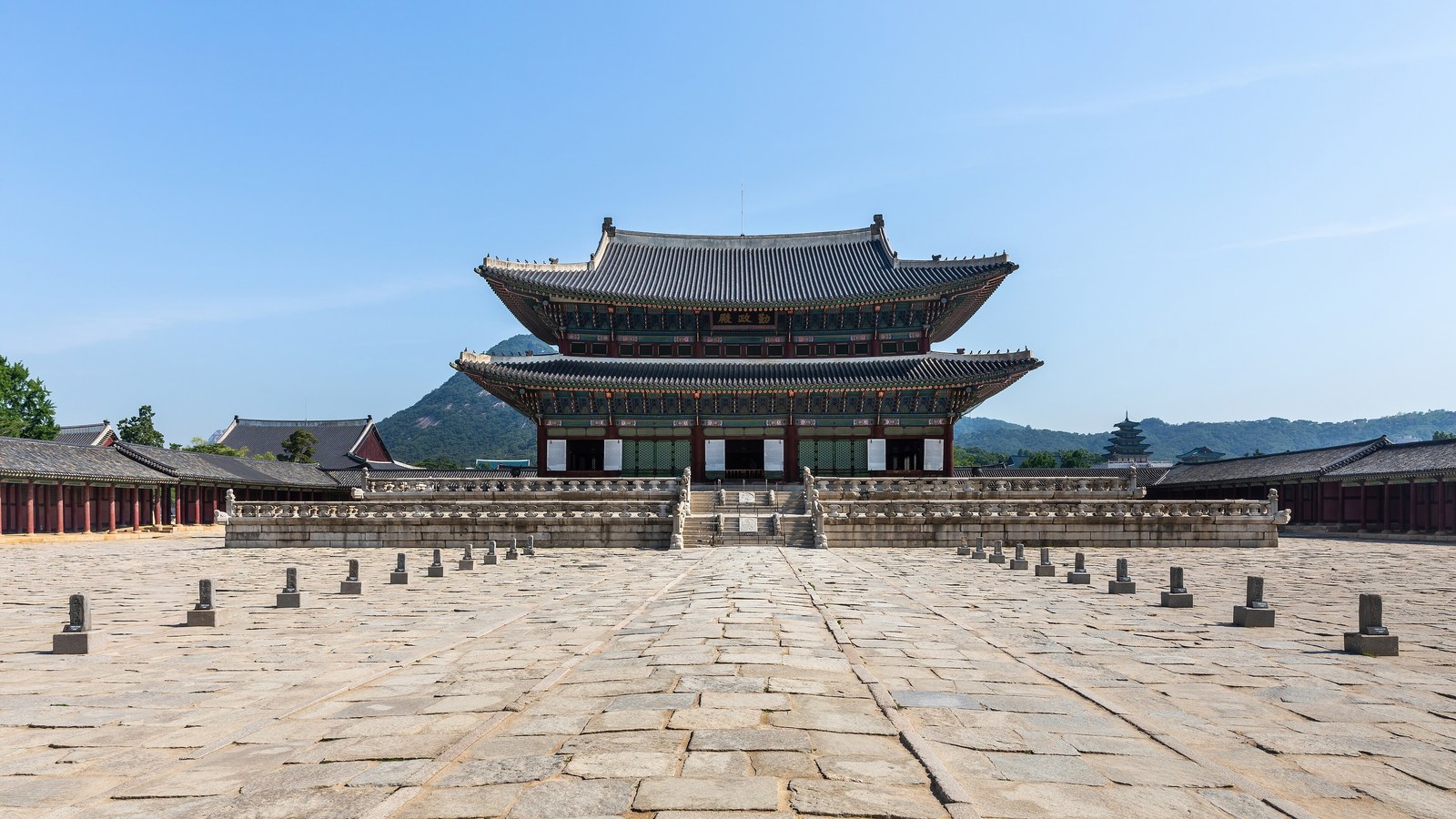
Cover: Gyeongbokgung Palace in Seoul, a Korean imperial residence of the period; we do not claim the hall. Wikimedia Commons, free licence.
Sources consulted: Japan–Korea Agreement of August 1904; FRUS 1904, document 432.











0 Comments
No comments on this article yet. Be the first!