


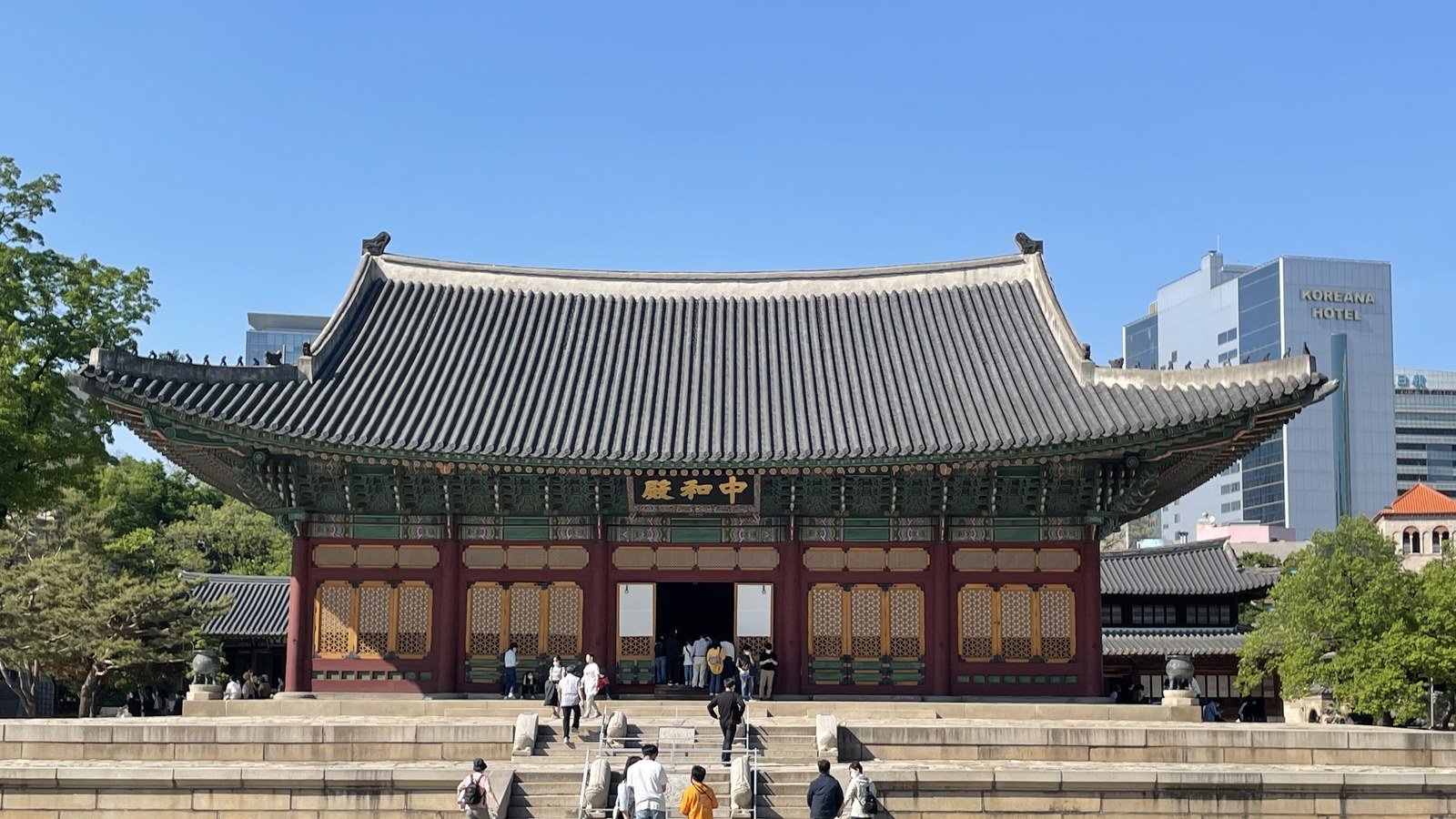
On 17 November 1905, at Jungmyeongjeon Hall of Gyeongungung (Deoksu) Palace in Hanseong, Hayashi Gonsuke, Envoy Extraordinary and Minister Plenipotentiary of Japan, and Pak Che-soon, Minister of State for Foreign Affairs of the Korean Empire, signed the convention between the two Empires, in Japanese and Korean. Emperor Gojong does not appear among the signatories. It is not the Protocol of 23 February 1904, not the Agreement of 22 August 1904 and not the annexation treaty of 22 August 1910. The preamble: the stipulations are to serve until it is recognized that Korea has attained national strength.
Article I: the Government of Japan, through the Department of Foreign Affairs at Tokyo, shall hereafter have control and direction of the external relations and affairs of Korea, and the diplomatic and consular representatives of Japan shall have charge of the subjects and interests of Korea in foreign countries. Article II: Japan undertakes to see to the execution of the treaties actually existing between Korea and other Powers; the Government of Korea engages not to conclude hereafter any act or engagement of an international character except through the medium of the Government of Japan.
Article III: Japan shall be represented at the Court of His Majesty the Emperor of Korea by a Resident General, who shall reside at Seoul, primarily to take charge of and direct diplomatic affairs; he shall have the right of private and personal audience of the Emperor. The Japanese Government shall also have the right to station Residents at the several open ports and such other places in Korea as they may deem necessary. Such Residents, under the direction of the Resident General, shall exercise the powers hitherto appertaining to Japanese Consuls in Korea and perform such duties as may be necessary to carry the agreement into full effect.
Article IV: the stipulations of all treaties and agreements existing between Japan and Korea, not inconsistent with this Agreement, shall continue in force. Article V: the Government of Japan undertakes to maintain the welfare and dignity of the Imperial House of Korea. In faith whereof the undersigned, duly authorized by their Governments, signed and affixed their seals: Hayashi, the 17th day of the 11th month of the 38th year of Meiji; Pak Che-soon, the 17th day of the 11th month of the 9th year of Kwang-Mu. The text was published on 23 November.
The convention does not open a list of ratifications and does not provide for a third-party depositary. It does not name the Hague Conference of 1907 and does not transfer Korea’s internal administration, which was reserved to the agreement of 24 July 1907. The Resident General provided for in Article III is a diplomatic post at Seoul, not the colonial governor of 1910.
It is not the Anglo-Japanese Alliance, not the Taft-Katsura understanding and not the Treaty on Basic Relations between Japan and the Republic of Korea of 22 June 1965, which later confirmed that treaties concluded on or before 22 August 1910 are already null and void.
Image: Jungmyeongjeon Hall, Deoksu Palace, place of signature; Nicealstn, 5 May 2022; CC BY-SA 4.0, Wikimedia Commons. Cropped to 16:9.
Source consulted: Japan-Korea Treaty of 1905. Treaty text: Convention between Japan and Korea, Seoul, 17 November 1905.











0 Comments
No comments on this article yet. Be the first!