


On Tuesday 20 October, at 4:41:03 Japan time, JAXA intends to send the MMX spacecraft — Martian Moons eXploration — off Tanegashima on an H3 (flight 10). In London that is still Monday evening, 19 October, 20:41. The reserve window runs to 7 November. The rocket has not lifted off. This is the posted time, not a success.
The target is not Mars itself but Phobos, the larger moon, “fear”. MMX is meant to be the first mission to take dust and rock from there and bring them to Earth. The origin of the two moons, Phobos and Deimos, is still open: captured asteroids, or debris from a giant impact on Mars. Without samples, we are left with guesses from a handful of flybys.
The craft has three modules. The exploration module stands on four legs; Phobos’s gravity is about one two-thousandth of Earth’s. Development cost, NHK says, is 55.3 billion yen, roughly $350 million. On board: instruments, two sampling devices, two super hi-vision cameras built with NHK. The Idefix rover, 25 kilograms, will weigh the equivalent of 15 grams on Phobos. Its job is to feel the ground before the main craft lands.
The road is long. ESA puts arrival in Mars orbit in August 2027, and Phobos orbit from September. Idefix would be released in early 2029. The main landing and the collection — at least 10 grams, from 2 centimetres down or more — are set for 2030. The return capsule is due to fall in Australia in 2031, in the Japanese fiscal year that ends in March 2032. From there the samples go to Japan, then to partners.
JAXA leads. NASA, CNES, DLR and ESA sit at the table. Elliot Sefton-Nash, of ESA, says the data and samples are a window on the evolution of Mars and the Solar System; labs on Earth can do more than any instrument sent there. No spacecraft has lingered near Phobos for long. MMX would also be the first to orbit the moon, in a quasi-satellite orbit, and the first to come home after time in the Martian system.
If the H3 goes at the posted minute, the mission still has five years ahead. If weather or the rocket force a slip, JAXA has until 7 November. Until then, MMX is a scheduled departure, not a sample in hand.
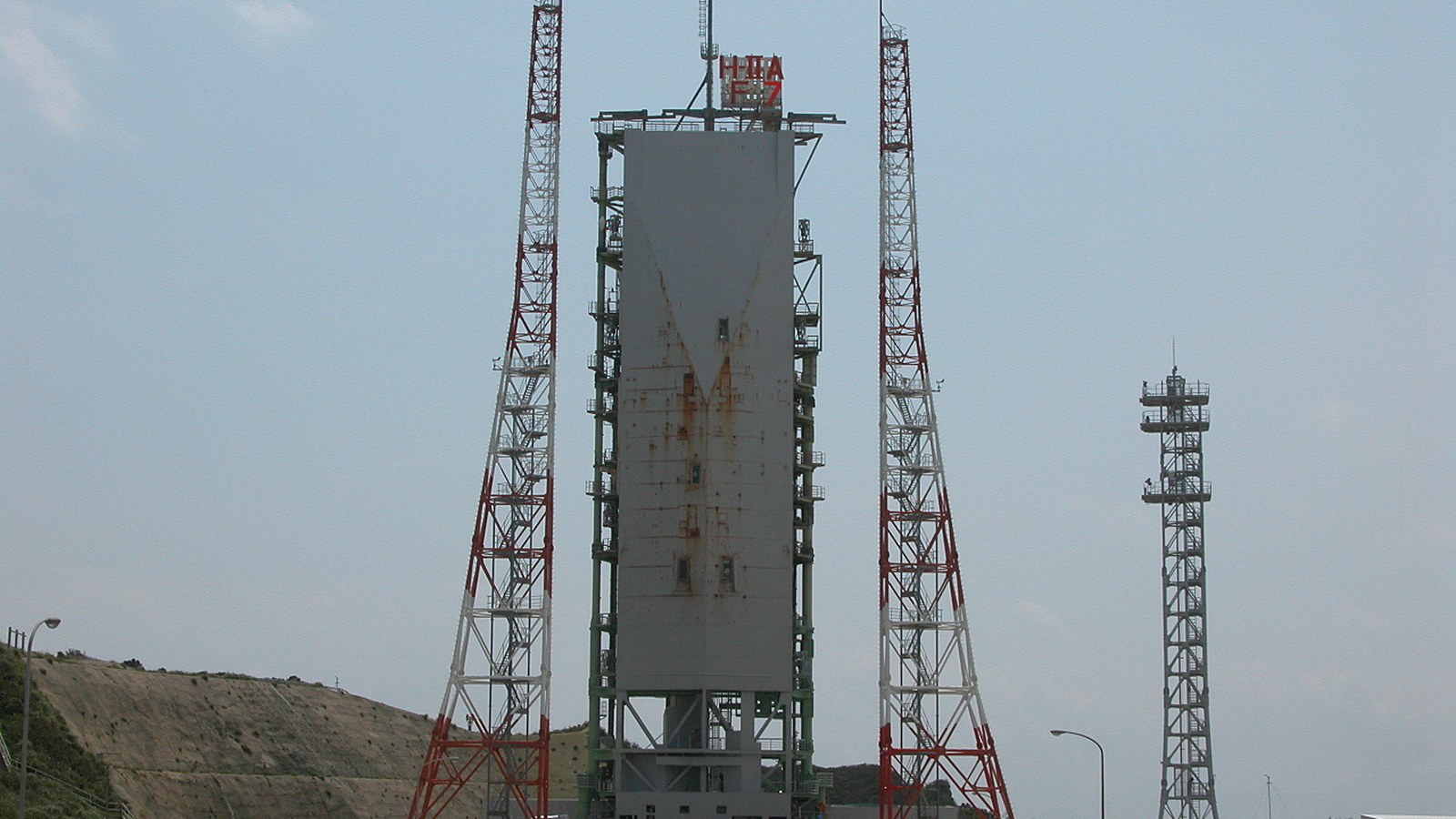
Image: Naritama (NARITA Masahiro), Yoshinobu LP1, Tanegashima, 24 April 2005, CC BY-SA 3.0, Wikimedia Commons. The photograph shows the launch complex, not H3 F10, which has not yet flown.
Sources consulted: Japan to launch Martian moon mission on Tuesday — NHK World; Mars moon lander set to launch on 19 October — ESA; Launch schedule of the MMX spacecraft aboard H3 F10 — JAXA.











0 Comments
No comments on this article yet. Be the first!