


Donald Trump’s peace envoys for Ukraine — Jared Kushner and Steve Witkoff — have put on the table, these past months, an idea that turns post-2022 American energy policy on its head: Europe should buy more Russian gas again. People familiar with the talks told the New York Times the proposal was raised with Volodymyr Zelensky in Kyiv in September. The incentive, in Washington’s reading, is double: transit revenue for Ukraine and an economic gain for Moscow, to accept an end to the war. It is not a signed deal. It is a diplomatic track. European officials in the room recoiled.
Ukraine stopped transiting Russian gas in January 2025, when the contract expired, and lost about a billion dollars a year in fees. The European Union has pledged to cut all Russian gas imports by 2027. Russia’s share of EU gas imports fell from 45% in 2021 to 13% in 2025. Restarting the pipes would, on paper, undo those years. The White House, in a statement, said the war is driving up energy prices in Europe and creating hardship in Russia and Ukraine, and that it is working on a peace proposal with economic incentives for both sides.
Germany, Europe’s biggest buyer of Russian gas before the invasion, is leading the refusal. Last week, at the Florida talks hosted by Witkoff and Kushner, Günter Sautter — security adviser to Chancellor Friedrich Merz — pushed back hard, two people said. A European official summed up Berlin’s line: Russian gas sold through an intermediary is still Russian gas, so it is not bargainable as a peace chip. Robert Habeck, a former economy minister, told the Times: “Europe, and especially Germany, should never again be dependent on Russian gas. Because we have seen how unreliable Russia was.”
Domestic German pressure runs the other way. Alternative for Germany, close to 30% in the polls, wants Russian gas and crude. Alice Weidel said in the Bundestag this week that she wants gas and oil from Russia for consumers and firms, and that sanctions are “ruining our own economy.” In Saxony-Anhalt, where the AfD this month elected the first far-right statehouse speaker since 1945, lawmakers passed a symbolic text: end sanctions, end military aid to Ukraine. The AfD and the Sahra Wagenknecht Alliance voted for it.
Nord Stream 2 sits in the background. An American investor, Stephen P. Lynch, tried from the Biden years to buy the sabotaged pipeline. He said he is not in talks now and has no Treasury licence. Reuters reported this month U.S.–Russia discussions about an American investor in Nord Stream. The White House wrote that the pipeline “had not been a subject of recent discussions” and that any arrangement would need coordination with Europeans. A Times source still called a restart “low-hanging fruit” if a peace deal came.
Kirill Dmitriev, Putin’s economic envoy, said in Moscow on Friday that the ice had broken and that they would announce “important initiatives.” Among the topics: data centres on Russian nuclear power and the sale of Lukoil’s international assets to a group that includes the U.S. government. Dmitri Peskov, to the Times: resuming energy cooperation is in Russia’s interest, “but right now, it may even more be in the interest of the Europeans themselves.” Zelensky, to the Financial Times: “The question will be when will the next deal be? Maybe it will be gas. Definitely it will be gas.” The proposal runs through Europe. For now, Europe says no.
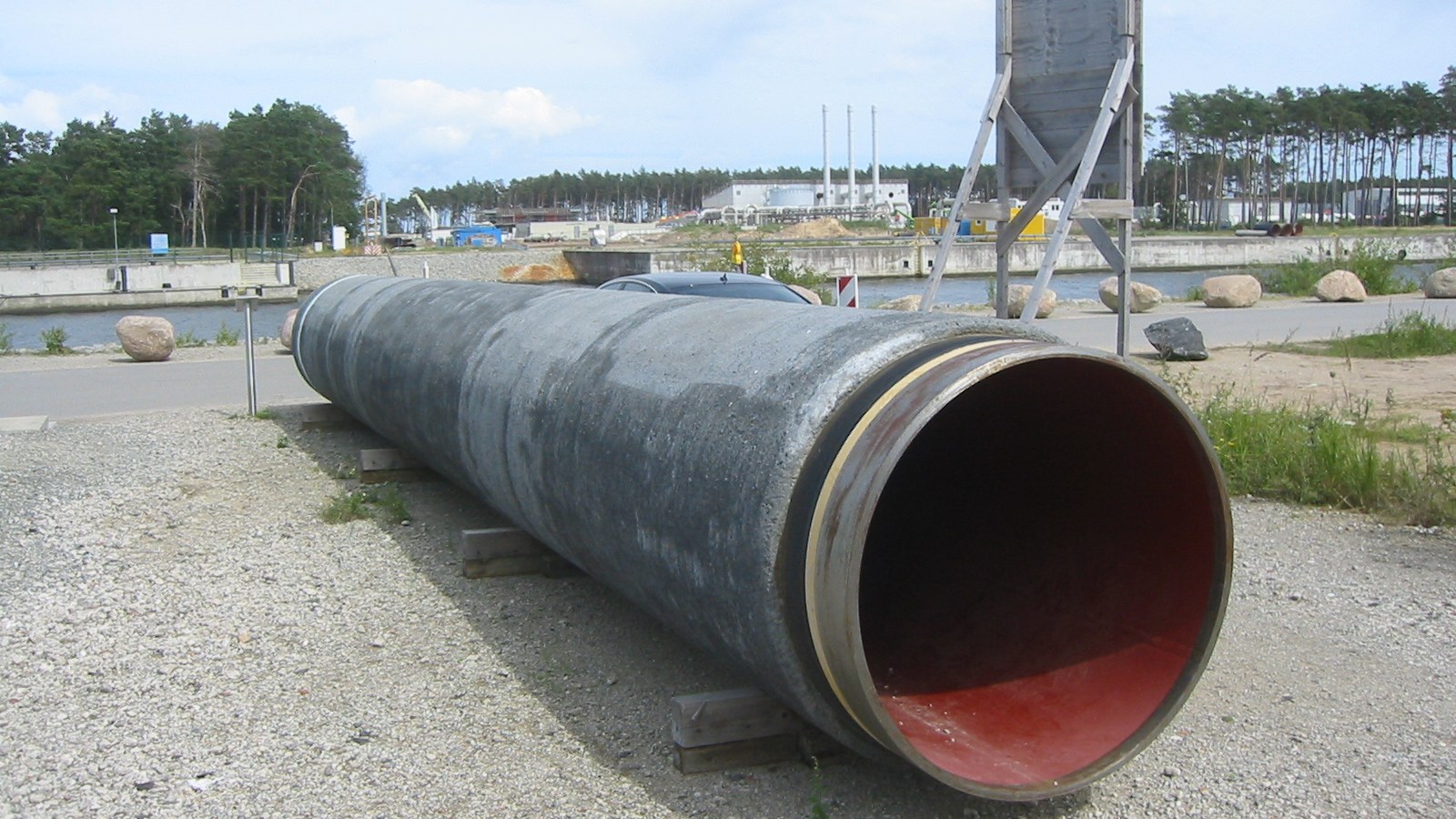
Image: Assenmacher, a Nord Stream pipe at Lubmin, 10 August 2011, CC BY-SA 3.0, Wikimedia Commons. The photograph shows the German landfall, not a signed deal.
Sources consulted: Europa să cumpere din nou gaz rusesc, propune Donald Trump — Libertatea; U.S. Floats Another Lifeline to Russia: Allowing It to Sell More Gas to Europe — The New York Times.











0 Comments
No comments on this article yet. Be the first!