


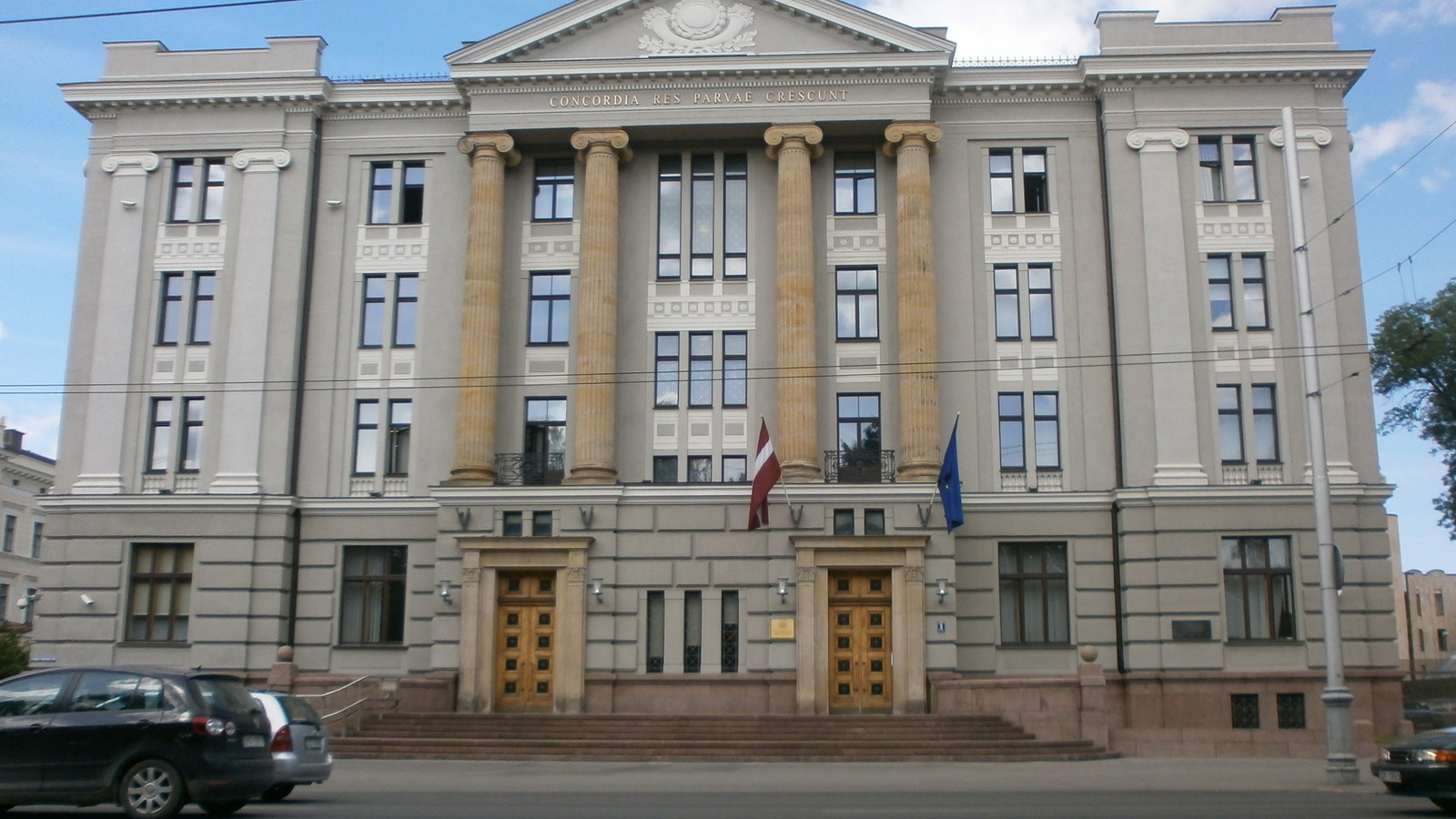
In Riga, at the Ministry of Foreign Affairs on 3 Krišjāņa Valdemāra Street, the Latvian and Soviet Russian delegations sign the peace that closes Latvia’s war of independence. The text, first worked in Moscow, is completed and sealed here; the instrument is dated 11 August 1920. It is not the Polish–Soviet peace of Riga of 18 March 1921, and it is not the Treaty of Tartu with Estonia of 2 February 1920.
For Latvia the signatories are Jānis Vesmanis, Pēteris Berģis, Ansis Buševics, Eduards Kalniņš and Kārlis Pauļuks; for the Russian SFSR, Adolf Abramovich Joffe and Yakov Hanecki. The armistice of 1 February 1920 had stopped the fighting; the 23 articles, in Latvian and Russian, both authentic, fix the frontier and the fate of property evacuated in the world war.
Article 1 ends the state of war from the date the treaty enters into force. Article 2 recognises, without reserve, the independence and sovereignty of the Latvian state: Russia voluntarily and irrevocably renounces all sovereign rights over the Latvian people and territory, and the former subjection creates no obligation towards Russia. Article 3 draws the frontier from the Estonian line, along the Cloubotsa, Opochka, Koukhva and the Western Dvina as far as the farm of Chafranovo; troops withdraw within 14 days of ratification, and a mixed commission sets the posts.
Article 4 forbids on either territory foreign armies, recruiting against the other party, purported governments and the transit of war material. The “Division of Latvian Chasseurs” in the Russian army keeps only a historic name, without a Latvian national predominance. Article 5 waives war costs on both sides. Article 7 repatriates prisoners who are not serving voluntarily, through a mixed commission of three from each side; interned persons and hostages follow the same route.
Article 8 recognises as Latvian citizens those within Latvia at ratification and refugees registered there before 1 August 1914; persons aged 18 or over have one year to opt. Article 10 leaves national property to each state and cancels peasants’ debts to the nationalised Russian land banks. Articles 11–14 require the return of archives, museums, bells, bank securities, postal, lighthouse and railway material, so far as they are in Russian public hands.
Article 15 pays Latvia, within two months of ratification, four million gold roubles on account of the sums due. Article 16 frees Latvia from the Russian imperial debts and grants peasants the right to fell timber over one hundred thousand dessiatines, close to the frontier, railways and navigable rivers. Article 17 provides for commercial, transit, consular and postal conventions and for deepening the Western Dvina; until then, most-favoured-nation treatment and duty-free transit apply.
Article 18 requires pilots, lighthouses, buoys and the sweeping of mines in the Baltic. Article 19 renews diplomatic relations immediately after ratification. Article 20 amnesties political and disciplinary offences committed before signature, but excludes the conspiracy of 16 April 1919 and Bermondt’s attack. Article 23 requires ratification; the exchange takes place in Moscow.
The Latvian Constituent Assembly ratifies on 2 September, the All-Russian Central Executive Committee on 9 September, and the exchange of instruments is in Moscow on 4 October 1920; registration with the League of Nations is number 67, of 16 December. The signatures stand on two original copies, drawn up in Moscow and completed in Riga.
Image: Ministry of Foreign Affairs of Latvia, Riga; Edgars Košovojs, 21 June 2012, CC BY-SA 3.0, Wikimedia Commons. Cropped to 16:9.
Source consulted: Latvian–Soviet Peace Treaty. Treaty text: Miera līgums starp Latviju un Krieviju, Riga, 11 August 1920.











0 Comments
No comments on this article yet. Be the first!