


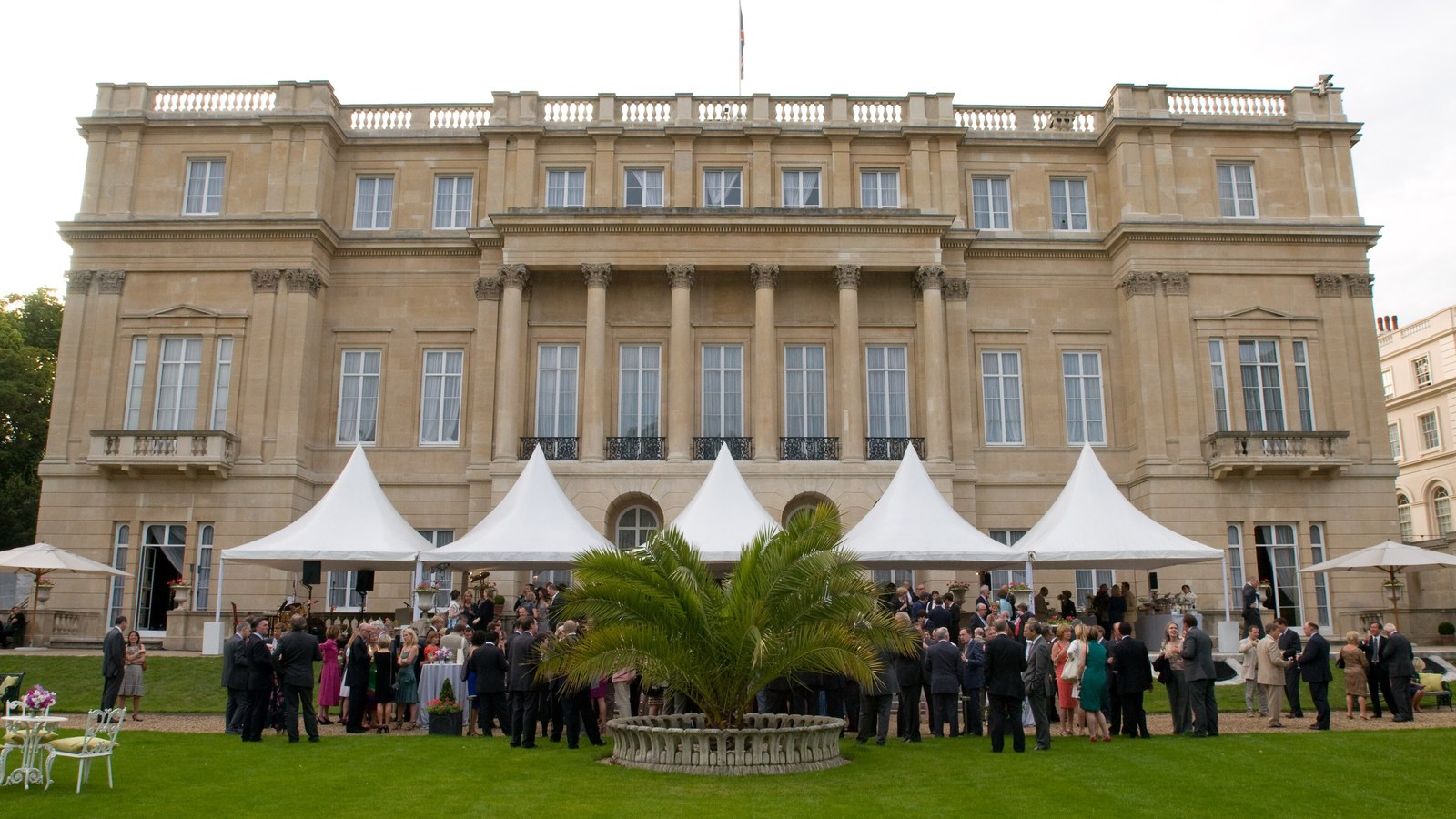
Prime Ministers Harold Macmillan, Konstantinos Karamanlis and Adnan Menderes adopted at Lancaster House, on 19 February 1959, the memorandum setting out the agreed foundation for the final settlement of the Cyprus problem. They took note of the declarations by Archbishop Makarios III and Dr Fazıl Küçük accepting the annexed documents as that foundation. The British conference published the pack as Documents signed and initialled at Lancaster House (Cmnd. 679).
Eight days earlier, in Zürich, Karamanlis and Menderes had initialled the French texts of the Basic Structure of the Republic of Cyprus, the draft Treaty of Guarantee and the Treaty of Alliance. London added the United Kingdom declaration of 17 February on the sovereign base areas, an additional article to the Treaty of Guarantee, the Greek and Turkish foreign ministers' declaration of the same day, the community declarations of the conference day, and the agreed measures to prepare the new arrangements. This is a file of foundations, not a single instrument.
The Lancaster House form is signature and initialling of a political-legal pack, not the DONE of the 1960 treaties. The Treaty of Guarantee, the Treaty concerning the Establishment of the Republic of Cyprus and the Treaty of Alliance were signed at Nicosia on 16 August 1960, with the proclamation of independence (UNTS 5475 and 5476). The Guarantee entered into force on the date of signature; the authentic texts are English and French, deposited at Nicosia.
The Basic Structure provided for a presidential republic: a Greek president elected by the Greek community, a Turkish vice-president elected by the Turkish community, Greek and Turkish as official languages, a Council of Ministers with three Turkish portfolios out of ten, and separate majorities in the House of Representatives for electoral, municipal and fiscal laws. The basic articles of the constitution could not be amended. This is not a communal-conflict handbook.
The draft Treaty of Guarantee — later executed at Nicosia — bound the Republic of Cyprus to maintain its independence, integrity and constitution and to prohibit union with any other State or partition of the island. Greece, Turkey and the United Kingdom recognised and guaranteed that state of affairs. Article IV reserved, if common or concerted action should not prove possible, the right of each guaranteeing Power to take action with the sole aim of re-establishing the state of affairs created by the treaty; it is not a military-intervention handbook.
The Treaty of Alliance provided for defence cooperation among Cyprus, Greece and Turkey, with a tripartite headquarters. The United Kingdom retained sovereignty over the Akrotiri and Dhekelia areas, as set out in the British declaration on the bases and in the Treaty of Establishment. Independence came with the Nicosia treaties; the constitutional crises of 1963 and the events of 1974, when Turkey invoked Article IV, are not part of the Lancaster House act.
Cover: the façade of Lancaster House in London — the photograph is of the building, not of the signing table. Wikimedia Commons, free licence.
Sources consulted: London and Zürich Agreements; Conference on Cyprus: Documents signed and initialled at Lancaster House.











0 Comments
No comments on this article yet. Be the first!