


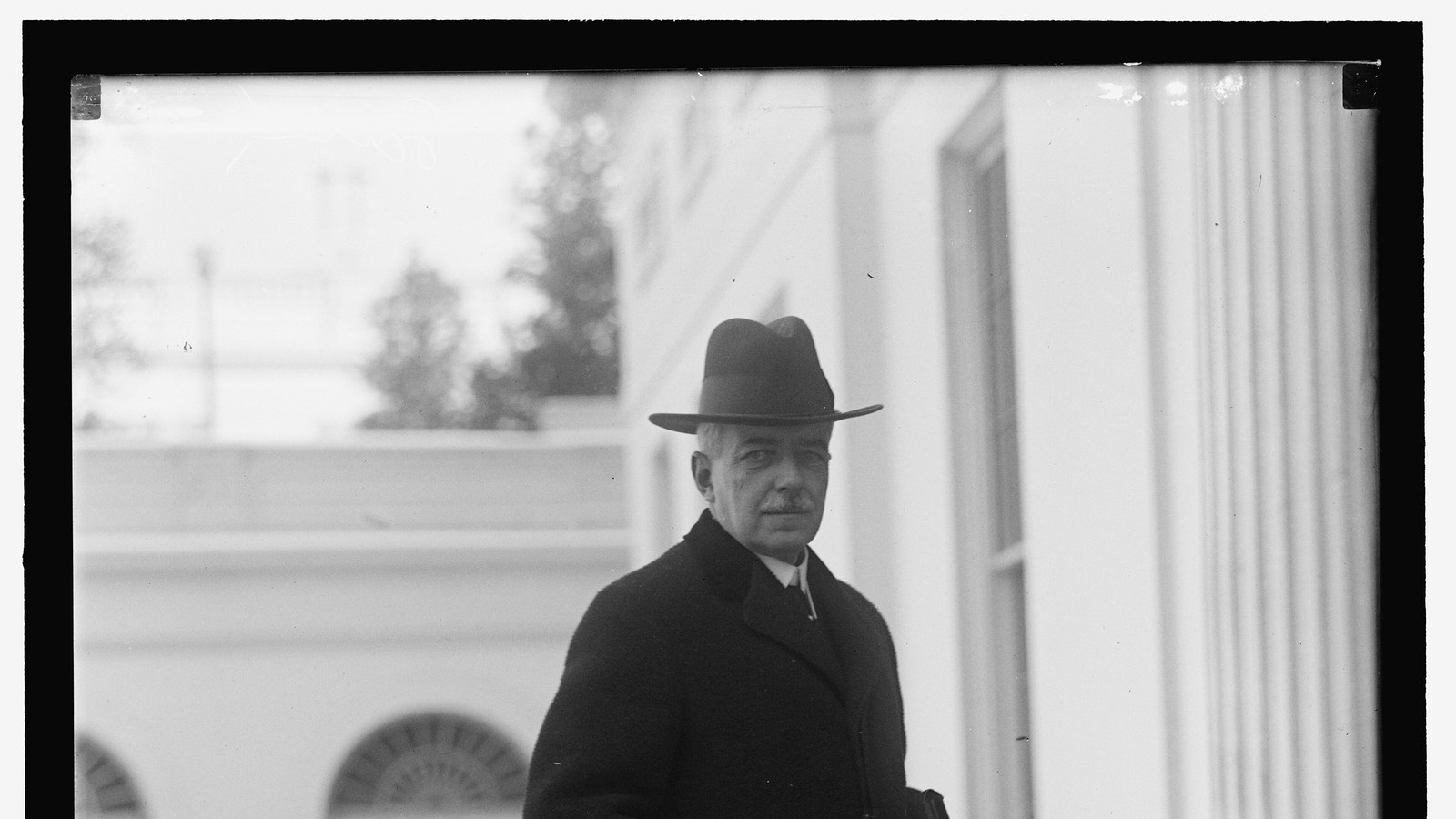
In Washington, Secretary of State Robert Lansing and Sir Cecil Arthur Spring-Rice, His Britannic Majesty’s ambassador extraordinary, sign the convention for the protection of migratory birds in Canada and the United States. The instrument is dated 16 August 1916. It is not the American implementing statute of 1918, and it is not the convention with Mexico of 1936.
The preamble records that many species, in their annual migration, traverse parts of the Dominion of Canada and of the United States; that they are of value as food and as destroyers of insects injurious to forests, forage and crops; and that they are in danger of extermination for lack of protection in the nesting season and on passage. The two powers want a uniform system against indiscriminate slaughter. The full powers, found in due form, open nine articles.
Article I divides the birds covered into three: migratory game birds (Anatidae — ducks, geese, swans and brant; Gruidae — little brown, sandhill and whooping cranes; Rallidae; Limicolae — shorebirds; Columbidae); migratory insectivorous birds (from bobolink and flycatcher to woodpecker and wren, plus all other perching birds that feed entirely or chiefly on insects); and other migratory nongame birds (auks, herons, gulls, loons, fulmars, gannets, terns).
Article II sets close seasons, except for scientific or propagating permits. For game birds the close season runs between 10 March and 1 September, except that for shorebirds in the Maritime Provinces of Canada and in Atlantic states lying wholly or in part north of Chesapeake Bay it runs between 1 February and 15 August; Indians may take scoters for food, not for sale. The hunting season is further restricted to a period not exceeding three and one-half months, as each party may define. Insectivorous birds are closed throughout the year. Other nongame birds likewise, except that Eskimos and Indians may take, at any season, auks, auklets, guillemots, murres and puffins, and their eggs, for food, and their skins for clothing, but not for sale.
Article III places, for ten years from the coming into force, a continuous close season on band-tailed pigeons, the three cranes, swans, curlew and all shorebirds except the black-breasted and golden plover, Wilson or jack snipe, woodcock and the greater and lesser yellowlegs; British Columbia may nonetheless set its seasons for cranes, swans and curlew within the general dates of the convention. Article IV requires special protection for the wood duck and the eider duck, by a close season of at least five years, by refuges, or by other regulations.
Article V prohibits taking nests or eggs, except for scientific or propagating purposes. Article VI prohibits shipment from any state or province during its close season, and international traffic in birds taken contrary to the law of the place; every package crossing the border must bear the shipper’s name and an accurate statement of contents on the outside. Article VII allows permits to kill when, under extraordinary conditions, a species becomes seriously injurious to agriculture; the permits lapse when the exigency has passed, and birds so killed may not be shipped or sold.
Article VIII binds the parties to take, or to propose to their law-making bodies, the measures needed to execute the convention. Article IX requires ratification by His Britannic Majesty and by the President of the United States, by and with the advice and consent of the Senate. The exchange is at Washington as soon as possible; the convention remains in force for fifteen years and, if neither party gives twelve months’ notice before that term, it continues from year to year.
The Senate advises on 29 August, the President ratifies on 1 September, Great Britain on 20 October, and the exchange of instruments is at Washington on 7 December 1916; the American proclamation follows on 8 December. The signatures, in duplicate, read “Cecil Spring-Rice” and “Robert Lansing”.
Image: Robert Lansing, Secretary of State; Harris & Ewing, 1916; public domain, Library of Congress / Wikimedia Commons. Cropped to 16:9.
Source consulted: Migratory Bird Treaty. Treaty text: Convention for the Protection of Migratory Birds, Washington, 16 August 1916.











0 Comments
No comments on this article yet. Be the first!