


On 30 October 1943, in Moscow, Foreign Ministers Cordell Hull, Anthony Eden and Vyacheslav Molotov, together with China’s ambassador Fu Bingchang, signed the Joint Four-Nation Declaration on General Security. The conference also adopted a Declaration on Italy, a Declaration on Austria, and a Declaration on Atrocities signed by Roosevelt, Churchill and Stalin. This is not the 1945 Council of Foreign Ministers meeting, also held in Moscow.
The four reaffirm, after the United Nations Declaration of January 1942, war until unconditional surrender. Point 4 recognises the need for a general international organisation, based on the sovereign equality of all peace-loving states, open to large and small alike, to maintain peace and security. Point 6: after hostilities they will not employ their forces in the territories of other states except for the purposes envisaged in the declaration and after joint consultation. Point 7 looks to a practicable agreement on the regulation of armaments.
The Declaration on Italy, by the three ministers, requires the destruction of Fascism and democratic institutions. The seven measures: inclusion of anti-Fascist representatives in the government, freedom of speech, worship, the press and public meeting, suppression of Fascist organisations, purge of the administration, amnesty for political prisoners, democratic local government, and arrest of Fascist chiefs and generals suspected of war crimes. While operations continue, the Commander-in-Chief sets the timing. The Italian people ultimately choose their form of government.
The Declaration on Austria, also by the three, treats Austria as the first free country to fall victim to Hitlerite aggression. The annexation imposed by Germany, dated in the text 15 March 1938, is null and void. They wish to see a free and independent Austria, but remind her of responsibility for participation in the war on Germany’s side; the final settlement will take account of her own contribution to her liberation. China is not a party to this text.
The Declaration on Atrocities, signed by the three heads of government, not the ministers, states that German officers, men and Nazi Party members responsible for or consenting to the crimes will be sent back to the countries of the deeds, under lists covering the Soviet Union, Poland, Czechoslovakia, Yugoslavia, Greece including Crete, Norway, Denmark, the Netherlands, Belgium, Luxembourg, France and Italy. Offences with no particular geographical localisation will be punished by joint decision of the Allied governments.
The London Charter of 8 August 1945, which established the Nuremberg Tribunal, is a later instrument. The European Advisory Commission, seated in London, was a separate conference decision, not the fourth declaration. The declarations do not fix German frontiers and are not the 1947 peace treaty with Italy.
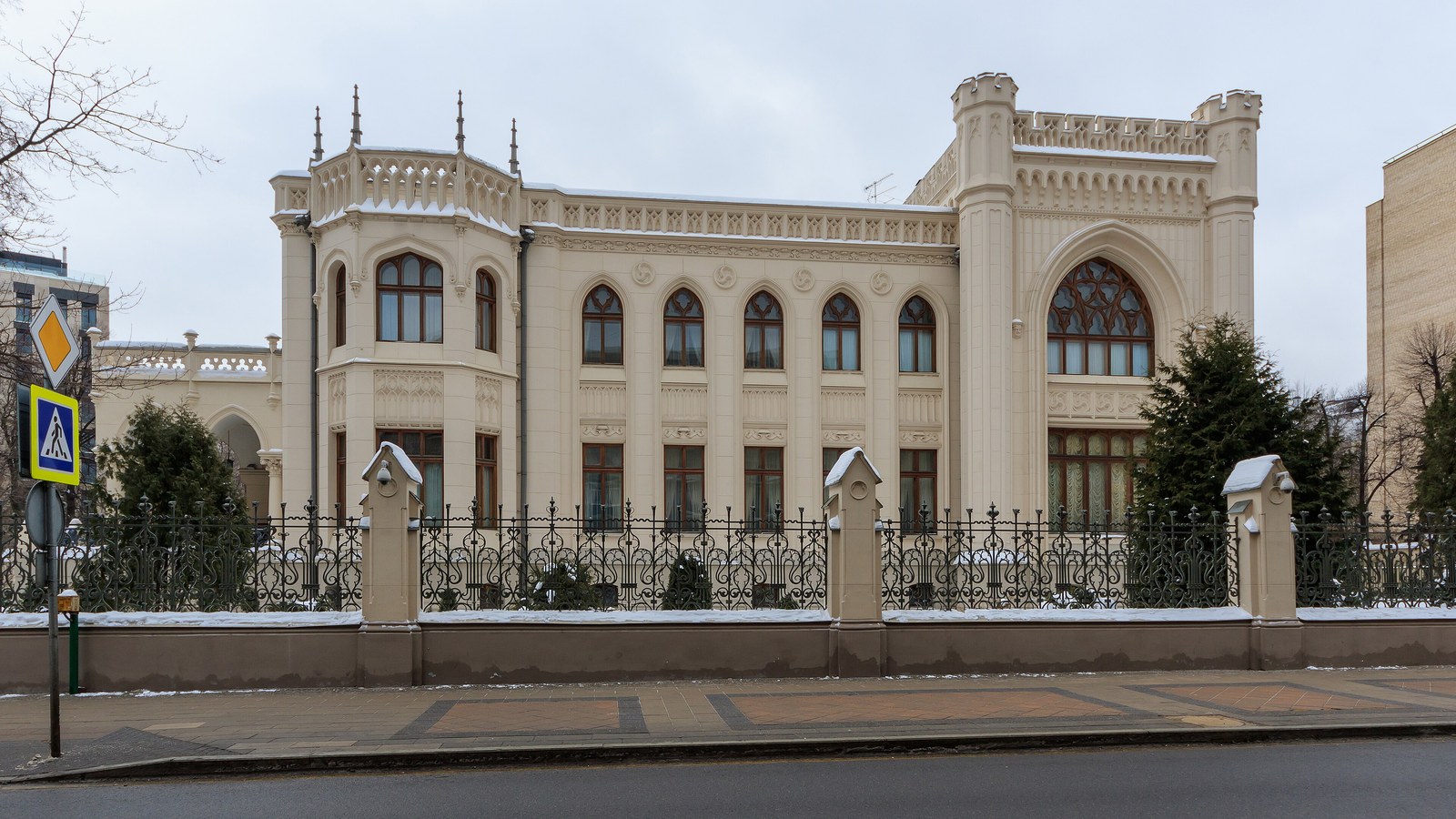
Image: Morozova mansion (Zinaida Morozova), Spiridonovka 17, conference venue; A. Savin, 19 January 2017; Free Art License, Wikimedia Commons. Cropped to 16:9.
Source consulted: Moscow Declarations. Treaty text: The Moscow Conference, October 1943: Four-Nation, Italy, Austria and Atrocities declarations.











0 Comments
No comments on this article yet. Be the first!