


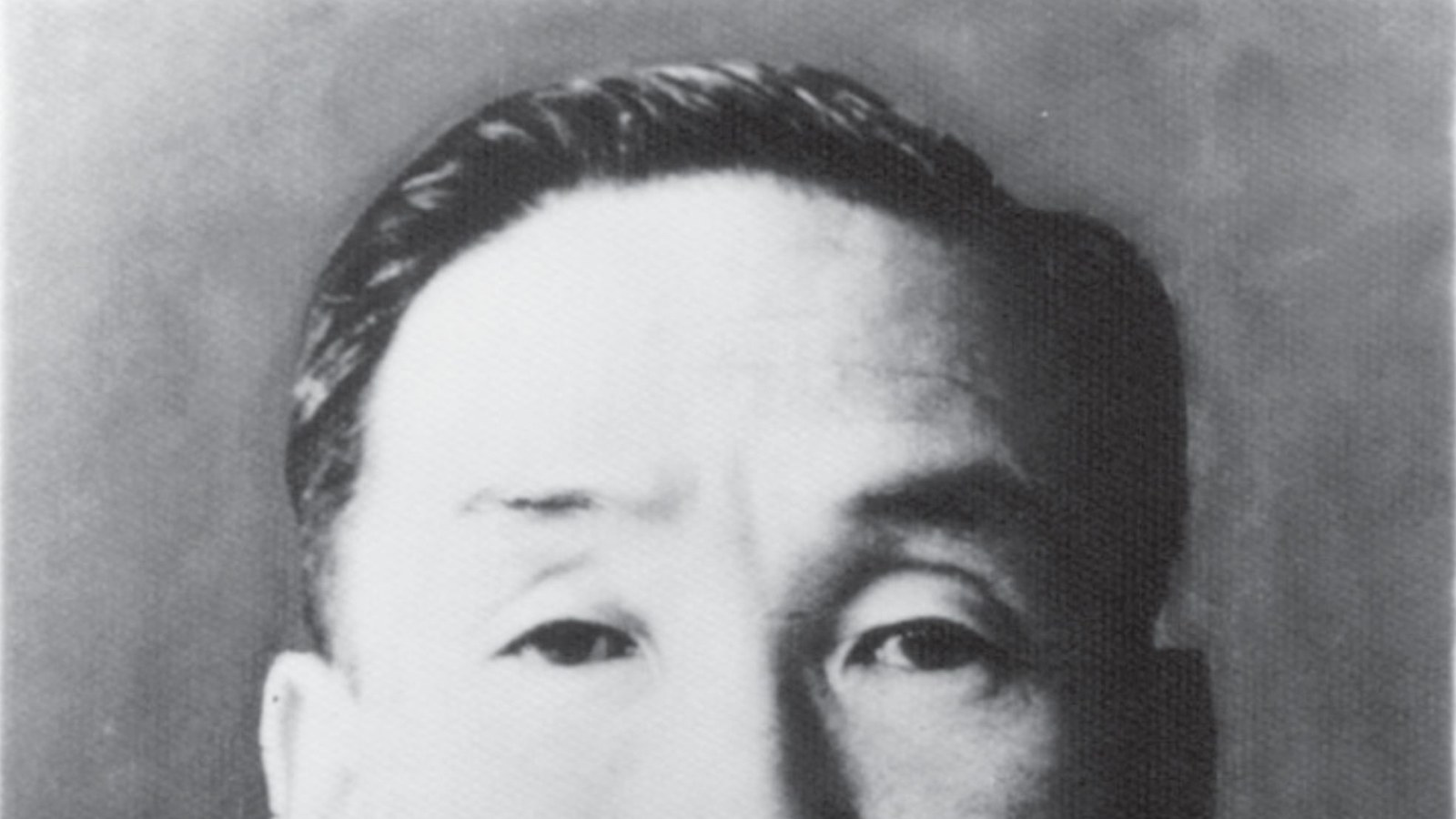
In Washington, John Foster Dulles, Secretary of State of the United States, and Byeon Yeong-tae (Y. T. Pyun), Foreign Minister of the Republic of Korea, sign the Mutual Defense Treaty, in English and Korean. The date of the instrument is 1 October 1953. It is not the Korean Armistice Agreement of 27 July 1953, and it is not the initialing of the draft at Gyeongmudae on 8 August 1953.
The preamble reaffirms the desire to live in peace with all peoples and all governments and to strengthen the fabric of peace in the Pacific area. The Parties declare publicly their common determination to defend themselves against external armed attack, so that no potential aggressor could be under the illusion that either of them stands alone in the Pacific. They wish to strengthen collective defense pending a more comprehensive regional system.
Article I: the Parties settle international disputes by peaceful means, without endangering peace, security and justice, and refrain from the threat or use of force inconsistent with the Purposes of the United Nations or with obligations assumed toward the United Nations. Article II: they consult whenever, in the opinion of either, the political independence or security of either is threatened by external armed attack; separately and jointly, by self-help and mutual aid, they maintain appropriate means to deter armed attack.
Article III: each Party recognizes that an armed attack in the Pacific area on either of the Parties in territories now under their respective administrative control, or hereafter recognized by one of the Parties as lawfully brought under the administrative control of the other, would be dangerous to its own peace and safety; it declares that it would act to meet the common danger in accordance with its constitutional processes.
Article IV: the Republic of Korea grants, and the United States of America accepts, the right to dispose United States land, air and sea forces in and about the territory of the Republic of Korea as determined by mutual agreement. Article V: ratification in accordance with their respective constitutional processes; the Treaty comes into force when instruments of ratification have been exchanged at Washington.
Article VI: the Treaty remains in force indefinitely; either Party may terminate it one year after notice has been given to the other. The understanding of the United States Senate — communicated to the Republic of Korea on 28 January 1954 and acknowledged on 1 February 1954 — is not one of the six signed articles: neither party is obligated under Article III except in case of an external armed attack; nothing in the Treaty requires the United States to give assistance except in the event of an armed attack against territory recognized by the United States as lawfully brought under the administrative control of the Republic of Korea.
The National Assembly of the Republic of Korea gives its consent on 15 January 1954. The United States Senate gives its advice and consent on 26 January 1954. The President ratifies on 5 February 1954, subject to the understanding. The instruments are exchanged on 17 November 1954; the Treaty then takes effect. It is not the 1882 treaty with the Joseon dynasty. A later status-of-forces agreement is not this text.
The signed text does not name North Korea and does not fix a troop figure. Later troop numbers and later statements do not change the six articles.
Image: Byeon Yeong-tae, Foreign Minister of the Republic of Korea, 1951; Ministry of Foreign Affairs / National Archives of Korea; public domain, Wikimedia Commons. Cropped to 16:9.
Source consulted: Mutual Defense Treaty (United States–South Korea). Treaty text: Mutual Defense Treaty, October 1, 1953 (Avalon).











0 Comments
No comments on this article yet. Be the first!