


The Second Sudanese Civil War had run since 1983. The Intergovernmental Authority on Development held the table, with a donor troika: the United States, the United Kingdom and Norway. The Machakos Protocol, 20 July 2002, set the broad principles of government. Then came the Agreement on Security Arrangements, 25 September 2003; the Agreement on Wealth Sharing, 7 January 2004; the protocols on power-sharing, Abyei, Southern Kordofan and Blue Nile, 26 May 2004; the Permanent Ceasefire, 30 October 2004; the Implementation Modalities, 31 December 2004. All of them at Naivasha, in Kenya, except Machakos.
The Comprehensive Peace Agreement was signed on 9 January 2005, also at Naivasha, by the Sudan People’s Liberation Movement and the Government of Sudan. The south received six years of autonomy, then a secession referendum. Oil revenues were to be shared evenly. Jobs were split 70 to 30 in the central administration, in Khartoum’s favour; 55 to 45 in Abyei, Blue Nile and the Nuba Mountains. Islamic law remained in the north; in the south the elected assembly would decide. If the referendum chose unity, the forces would merge into a 39,000-strong Joint Integrated Units. The SPLM National Liberation Council ratified on 24 January; the National Assembly by 29 January.
UNMIS was established on 24 March 2005; observers arrived on 28 April. The Ceasefire Political Commission followed on 30 August. The three-member presidency was sworn in on 9 July: Omar al-Bashir as President, John Garang as First Vice-President, Ali Osman Taha as Vice-President. Garang died in a helicopter crash on 30 July; Salva Kiir took the post. The Interim Constitution came into force on the same 9 July. The legislature convened on 31 August: NCP 234 of 450 seats, SPLM 126.
On 11 October 2007 the SPLM left the government of national unity: Khartoum had not withdrawn more than 15,000 troops from the southern oilfields and had not applied the Abyei protocol. It returned on 13 December, with a symbolic Juba–Khartoum rotation every three months. Northern troops left the south on 8 January 2008. The referendum, 9–15 January 2011, gave 98.83% for independence. The Republic of South Sudan appeared on 9 July 2011. Consultations in Southern Kordofan were suspended; the Abyei referendum was postponed indefinitely.
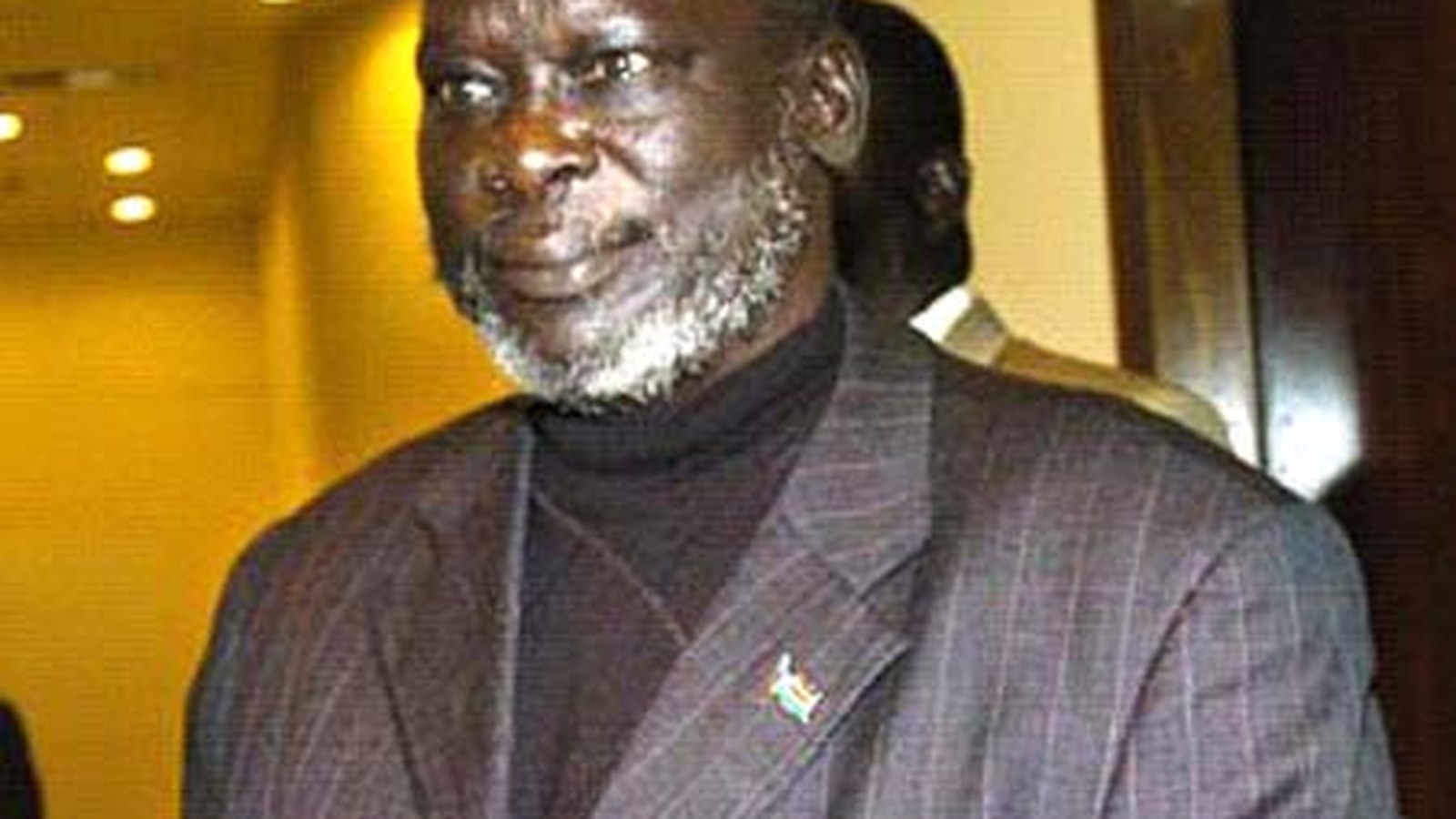
The photograph, in the public domain, shows Garang, the SPLM leader who signed and was sworn in as First Vice-President.
The agreement stopped the war between north and south. Darfur, which diplomacy was watching in parallel, remained outside the text.
Sources: Comprehensive Peace Agreement; Peace Accords Matrix, University of Notre Dame, Sudan Comprehensive Peace Agreement.






0 Comments
No comments on this article yet. Be the first!