
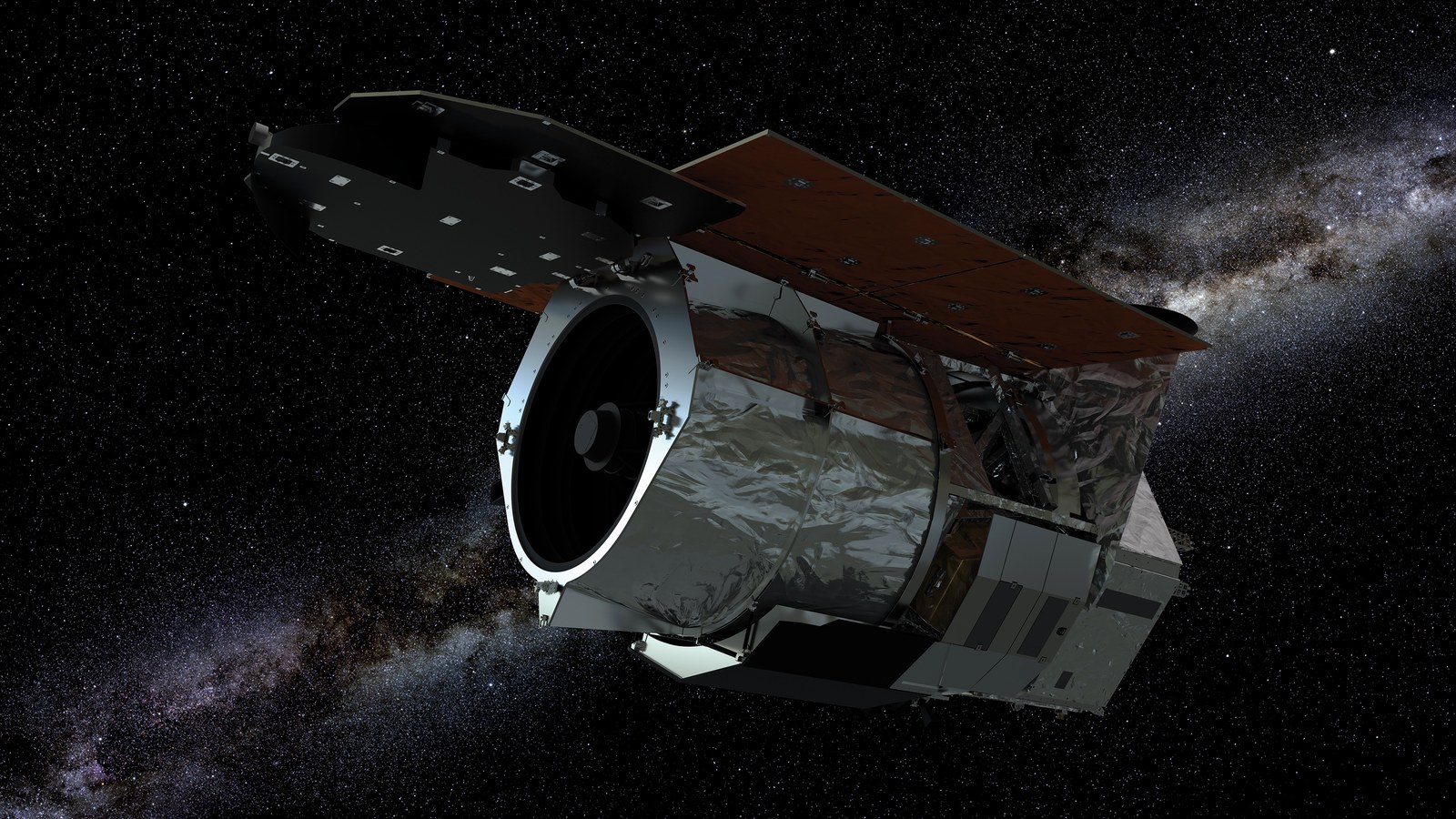
NASA’s Nancy Grace Roman Space Telescope, launched on 30 August 2026 from Kennedy Space Center’s Launch Complex 39A on a Falcon Heavy, is in its on-orbit checkout. Liftoff was at 7:26 a.m. Eastern Daylight Time. The mission has not yet moved to full science operations.
The observatory is designed to map the structure of dark matter and to study dark energy across wide areas of sky. NASA says a single Roman frame covers a field at least a hundred times larger than Hubble’s. The mission complements Hubble and the James Webb Space Telescope; it does not replace them.
After launch comes commissioning and a cruise to the Earth–Sun Lagrange point L2. The agency estimates about 90 to 100 days until the telescope reaches the vicinity of that point. Until then, teams are checking subsystems, optics and instruments.
The name honours astronomer Nancy Grace Roman, who helped shape the Hubble programme. The mission combines a telescope of about 2.4 metres with a technology-demonstration coronagraph for direct images of some exoplanets. Scientific results will follow if checkout succeeds.
NASA’s 30 August 2026 release describes a roughly three-month cruise to L2. The agency anticipates first images in early 2027, after calibrations. Until then, accurate reporting is that the observatory is in checkout, not that cosmic mapping has already begun.
For the public, Roman will produce wide surveys useful both to cosmology and to studies of the galaxy. Complementarity with existing observatories is part of the design, not a slogan. Technical details remain those published by NASA on the mission page.
Image: NASA / NASA-GSFC, illustration of the Nancy Grace Roman Space Telescope, 20 May 2020, public domain, Wikimedia Commons. An artist’s concept, not a 2026 on-orbit photograph. Cropped to 16:9.
Source consulted: NASA’s Dark Universe-Seeking Nancy Grace Roman Space Telescope Launches — NASA.








0 Comments
No comments on this article yet. Be the first!