


At Washington, on 7 July 1911, the Convention between the United States, Great Britain, Russia and Japan for the Preservation and Protection of Fur Seals was signed by Charles Nagel, Secretary of Commerce and Labor, and Chandler P. Anderson, Counselor of the Department of State, for the United States; James Bryce, ambassador, and Joseph Pope, Under Secretary of State of Canada for External Affairs, for Great Britain; Baron Yasuya Uchida, ambassador, and Hitoshi Dauké, director of the bureau of fisheries, for Japan; Pierre Botkine, envoy extraordinary, and Baron Boris Nolde, of the foreign office, for Russia. The original is in English, in quadruplicate. Taft, George V, the Emperor of Japan and the Tsar did not sign.
The 1911 Convention is not the Interim Convention of 9 February 1957, nor the Fur Seal Act of 1966, nor the Marine Mammal Protection Act of 1972, nor the bilateral American–British treaty of 7 February 1911, which Article XV supersedes where they conflict. It has 17 articles.
Article I: pelagic sealing is prohibited in the North Pacific Ocean, north of the thirtieth parallel, including the Seas of Bering, Kamchatka, Okhotsk and Japan; the person or vessel may be seized, tried only by its own nation. Article II: ports shall not be used for pelagic operations. Article III: skins from the protected area, of the species Callorhinus alascanus, ursinus and kurilensis, shall not be imported unless taken under the authority of the power to which the breeding grounds belong and officially marked. Article IV: Indians, Ainos, Aleuts and other aborigines on the coast, in canoes of not more than five persons, without firearms, not under contract to deliver skins, are excepted. Article V: sea otters shall not be pursued beyond three miles from the shore.
Article IX: pelagic sealing means the killing, capturing or pursuing of fur seals at sea. Article X: of skins taken by the United States on the Pribilof Islands, 15% gross in number and value to Canada and 15% to Japan; the United States may suspend the taking. Article XI: the United States pays $200,000 to Great Britain and $200,000 to Japan when the Convention goes into effect, as an advance on skins; a minimum of 1,000 skins a year to each, or $10,000 if killing is stopped except for the natives’ food; if the herd falls below 100,000, killing may be suspended without payment. Article XII: Russia, on the Commander Islands, 15% to Canada and 15% to Japan. Article XIII: Japan, on Robben Island, 10% each to the United States, Canada and Russia. Article XIV: if a herd resorts to British shores, 10% to the three.
Article XVI: the Convention goes into effect on 15 December 1911, continues for 15 years, and thereafter until terminated by 12 months’ notice; a conference at the request of any party. Article XVII: ratifications exchanged at Washington. The exchange was on 12 December 1911; Taft proclaimed on 14 December.
The 1911 Convention is not the 1957 convention, nor the Pribilof monument of 2011.
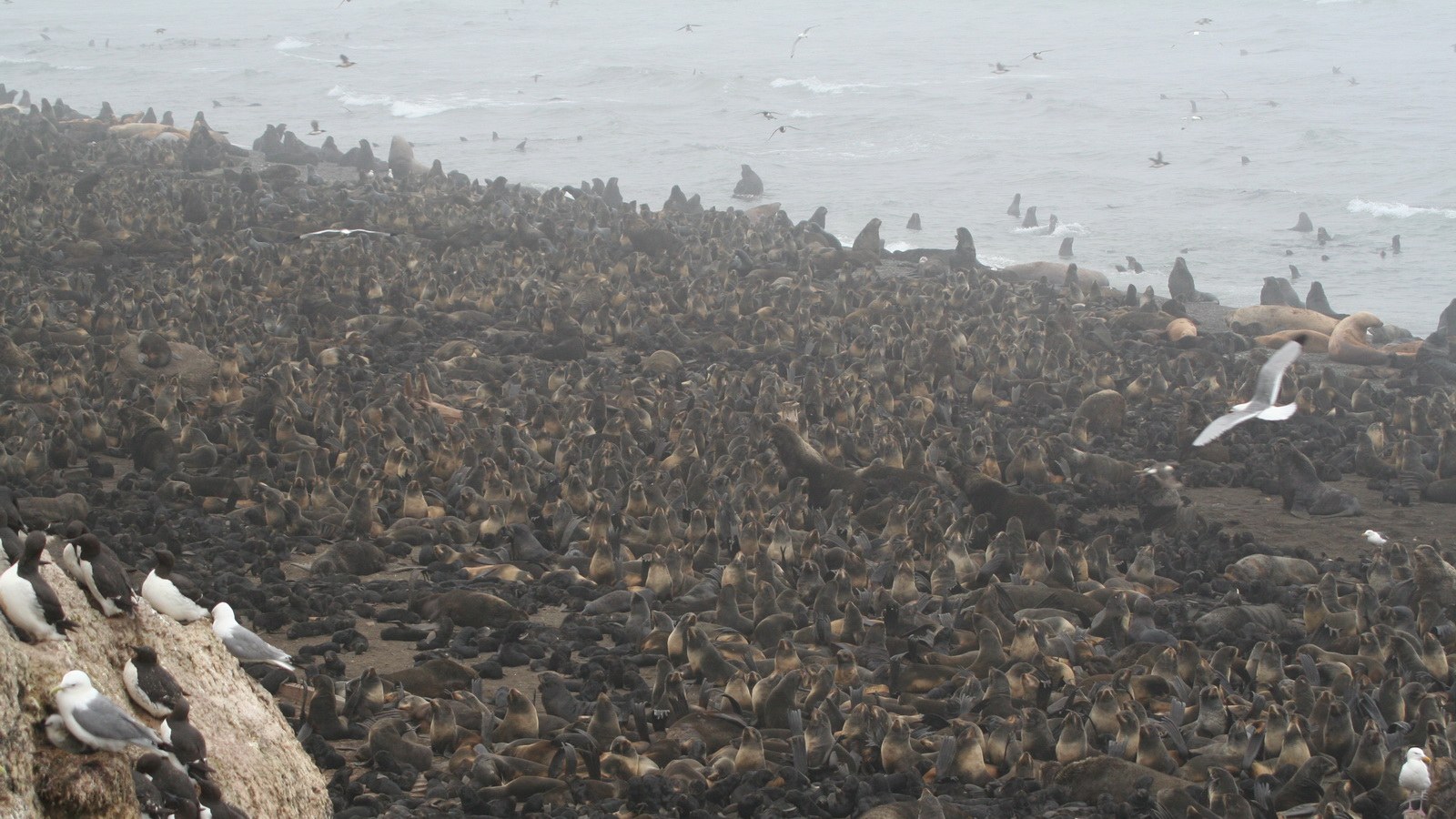
Image: northern fur seal (Callorhinus ursinus) colony on Tyuleny (Robben) Island, 7 February 2008; Wldland, CC BY 2.0, Wikimedia Commons. Cropped to 16:9. The island is named in Article XIII.
Source consulted: North Pacific Fur Seal Convention of 1911. Treaty text: FRUS 1911: Convention for the Preservation and Protection of Fur Seals, Washington, 7 July 1911.











0 Comments
No comments on this article yet. Be the first!