


The International Convention for the Suppression of the Circulation of and Traffic in Obscene Publications was opened for signature at Geneva on 12 September 1923, remaining open until 31 March 1924, in French and English, both authentic, in two originals: one in the League of Nations archives, the other with the French Government. The conference, convened by France under League auspices, had opened on 31 August to examine the 1910 draft. It is not the Paris Agreement of 4 May 1910, nor the Lake Success Protocol of 12 November 1947, which later amended the convention.
Article 1, at high level: the parties agree to discover, prosecute and punish anyone who, for trade, distribution or public exhibition, makes, possesses, circulates, imports, exports, deals in or advertises obscene writings, images, films or other objects. Article 2: courts of the place where the offence or any constitutive element occurred have jurisdiction and, if domestic law allows, so do the courts of the offender’s nationality; non bis in idem remains available. Article 4: parties whose legislation is not yet adequate undertake to complete it.
Article 3 provides for letters rogatory by judicial, consular or diplomatic channel, free of taxes, and without requiring forms of proof contrary to domestic law. Article 5 requires, still at high level, investigation of places where such objects are made or stored and their seizure or destruction. Article 6: if a violation on one party’s territory appears to originate in another, the authority designated under the 1910 Agreement shall send the other the information needed for suitable measures.
Article 8: ratifications are deposited with the Secretary-General of the League, who notifies the parties and sends a certified copy to France; registration follows on entry into force under Article 18 of the Covenant. Article 9: accession after 31 March 1924. Article 10: ratification or accession entails full acceptance of the 1910 Agreement, without invalidating Article 4 of that Agreement for a State that prefers the 1910 text alone. Article 11: the convention enters into force on the thirtieth day after two ratifications — 7 August 1924, after Bulgaria and Italy. Article 12: denunciation takes effect after one year and does not of itself denounce the 1910 Agreement.
Article 13 allows exclusion of colonies and possessions, with separate accession or denunciation. Article 14: a public record at the Secretariat. Article 15: disputes not settled by negotiation go to the Permanent Court of International Justice or to arbitration. Article 16: a revision conference at the request of five parties; the Council considers calling one every five years. Among the plenipotentiaries was Gaston Deschamps, president of the conference, for France, with delegates of dozens of States from Albania to Uruguay.
The text consulted is the certified copy in UN Chapter VIII.3, aligned with League of Nations Treaty Series, volume 27, No. 685. The depositary today is the UN Secretary-General. The convention does not define “obscene” and leaves the offence to domestic law.
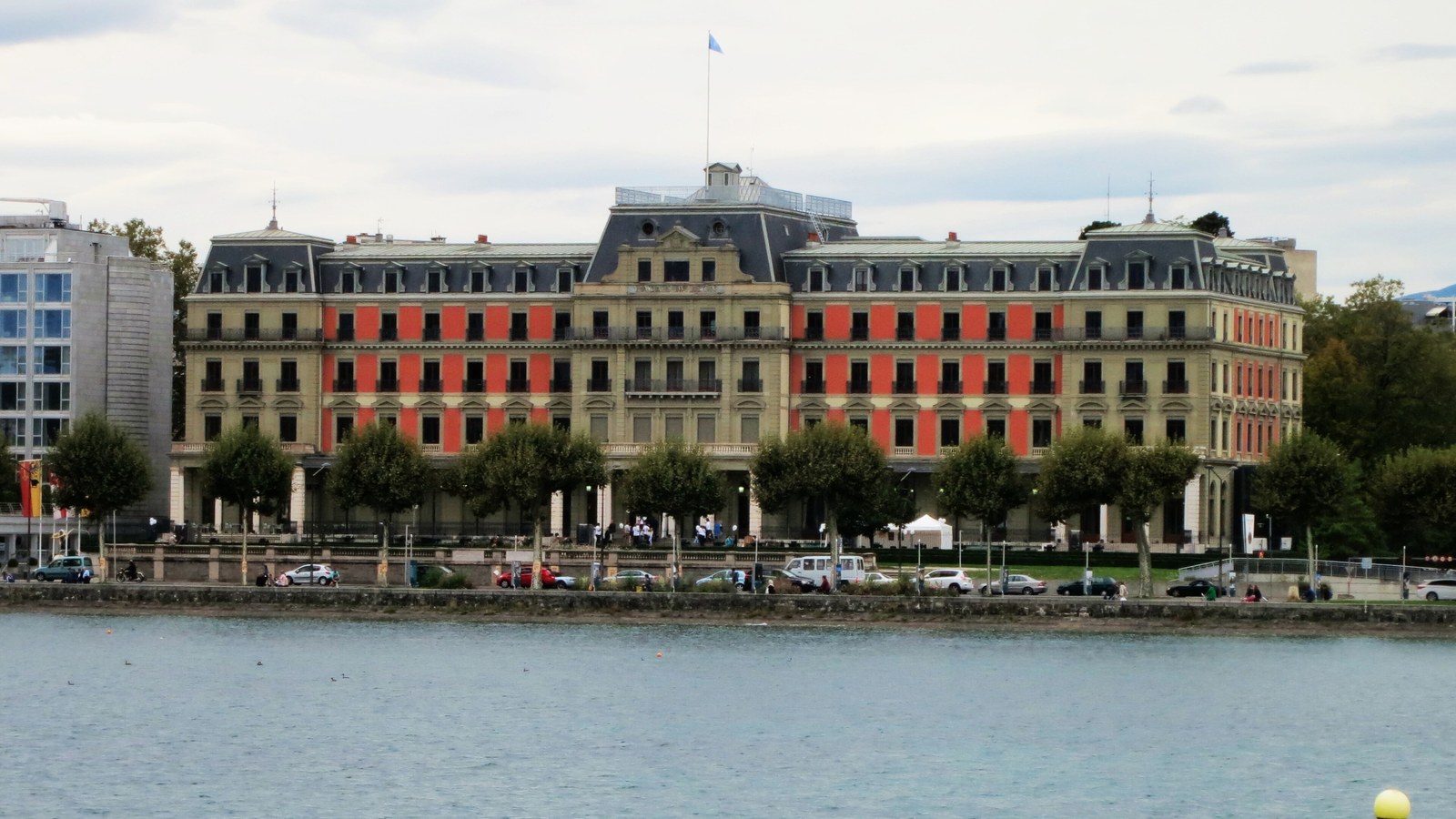
Cover: Palais Wilson in Geneva, the League’s headquarters when signature opened; we do not claim the hall. Wikimedia Commons, free licence.
Sources consulted: Convention for the Suppression of the Circulation of and Traffic in Obscene Publications; International Convention for the Suppression of the Circulation of and Traffic in Obscene Publications (UN Chapter VIII.3).











0 Comments
No comments on this article yet. Be the first!