


Sicard, prince of the Lombard people, promised true peace by land and sea to John, bishop-elect of the holy church of Naples, to Andrew, magister militum, to the people of the duchy of Naples, Sorrento, Amalfi and the other castra they held. The pact is dated on the fourth day of July, the fourteenth indiction, that is 4 July 836, for five completed years. The MGH title is Sicardi principis pactio cum Neapolitanis in quinquennium facta. The surviving text is incomplete, from manuscript 4 of Cava dei Tirreni.
After Sico’s death in September 832 the Neapolitans had stopped the tribute and gone back on the offensive: Liburia, Sarno, Forchia. Sicard, prince from October 832, answered in 835; Andrew II then called in Muslim troops. The July truce restored the customary census for all five years. The text is favourable to Benevento: Nola, a Neapolitan district, already had a Lombard gastald.
Cap. 3: the Neapolitans were not to buy a Lombard or sell him over the sea. Cap. 4: tertiatores sold by a Lombard were not to be put on a ship or sold trans mare. Merchants of both sides might run their negotium without seizure. Navigation on the rivers of the Capuan country — the Patria, Volturno and Minturno — was open to merchants, envoys and milites. If a boat was wrecked, the prince waived the lex naufragii: the goods went back to their owner.
Cap. 8: a man with a suit was to go once and again with a letter of his prince or judge; if justice was not done, he might take a pledge inside the city, then outside it, against Lombards, inquilini or any person. Cap. 14: no new public burdens were to be laid on tertiatores beyond ancient custom: the responsaticum, angariae, calcarias, dues and one yearly exenium to the duke. Many chapters survive only as titles; several again concern the tertiatores of Liburia.
The Lombards bound themselves to prevent and give notice of attacks, to give no support to attackers and to make no requisitions; the same, symmetrically, bound the Neapolitan side. The rules protected free men who had taken refuge in Benevento, Lombard exercitales and Neapolitan milites. This is not the Pactum Warmundi of 1123, not Arechis II’s pactiones de Liburia, and not the 851 division of the duchy between Radelchis and Siconulf.
The five years were not kept. Between 836 and 838 Sicard himself broke the truce: sieges of Sorrento and Amalfi, taken out of Neapolitan lordship. Amalfi was captured by sea. After the prince’s death the city escaped the Lombards but did not return under Naples. Sicard had already drawn Amalfitans to Salerno and granted them land at Vietri.
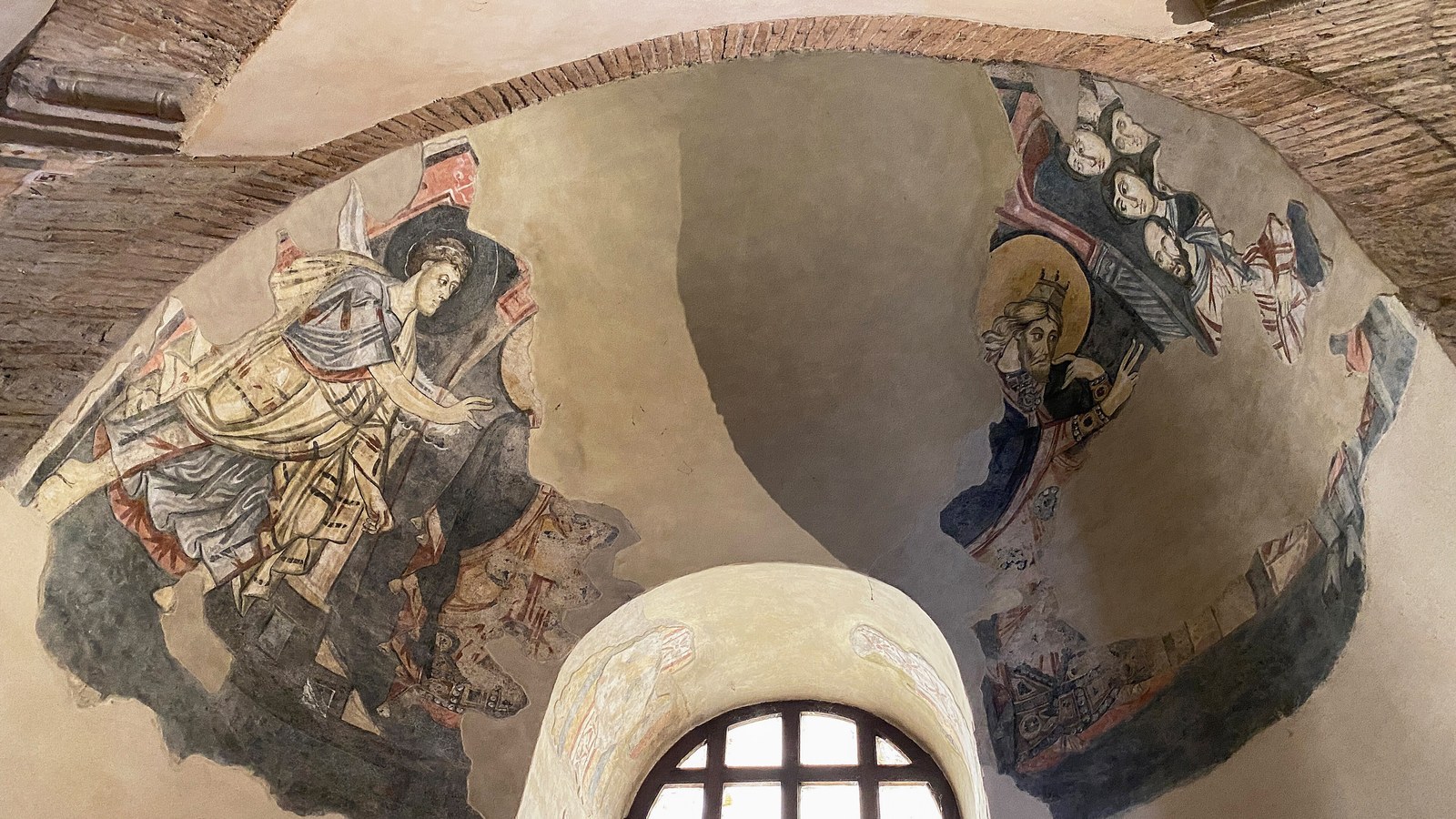
A court conspiracy killed him between July and August 839. The treasurer Radelchis proclaimed himself prince; the brother Siconulf, tonsured and held at Taranto, was freed and proclaimed at Salerno. A ten-year war followed, and the principality split. The cover is Santa Sofia in Benevento, the Lombard princely church, which Sicard also endowed.
Sources: Pactum Sicardi; MGH Leges IV, Sicardi principis pactio cum Neapolitanis (pp. 216–221).











0 Comments
No comments on this article yet. Be the first!