


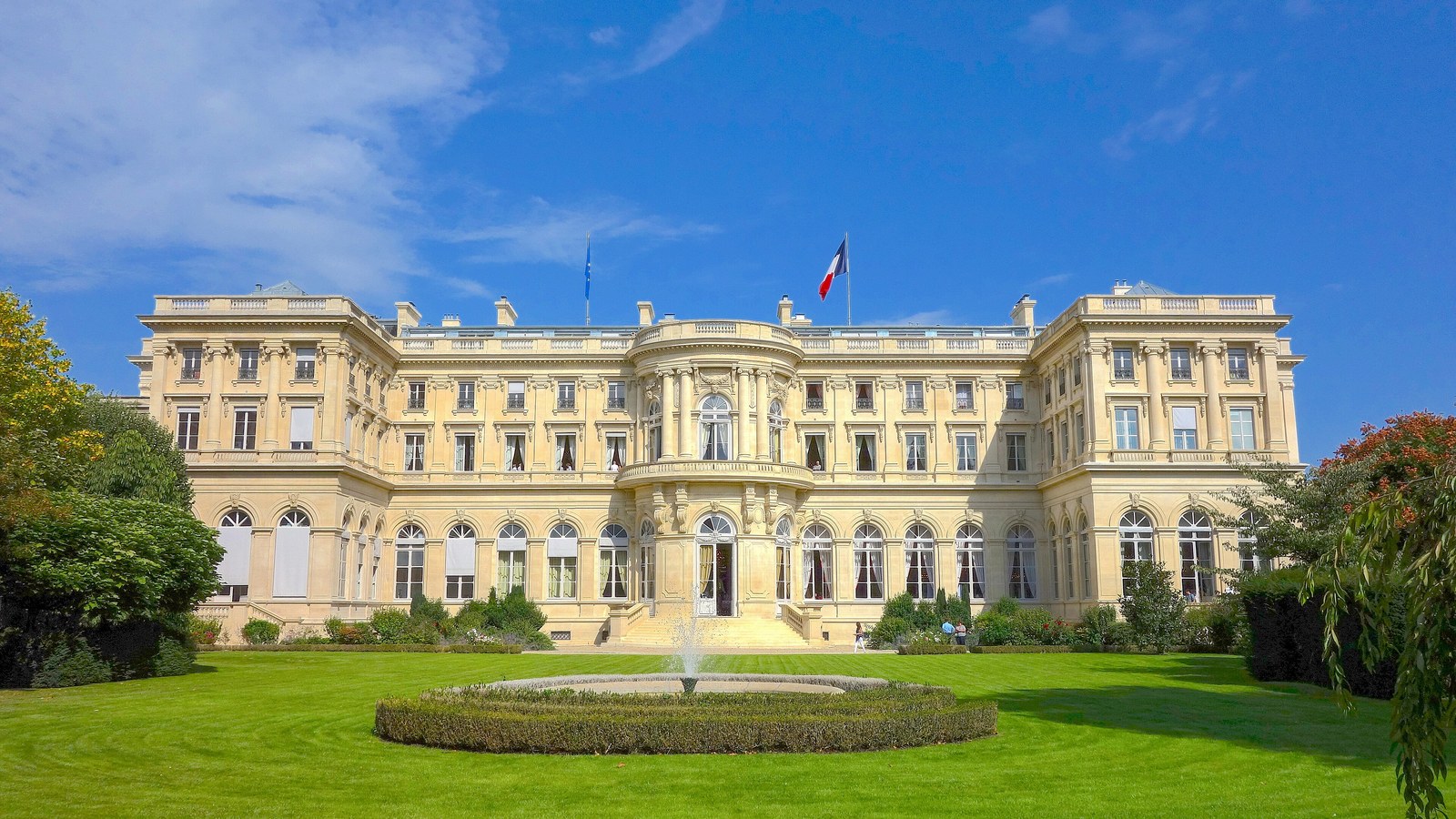
After the diplomatic conference of 1880, eleven states put an end to the isolation of patents and marks. The convention, in French, was signed on 20 March 1883, in Paris. Signatories: Belgium, Brazil, France, Guatemala, Italy, the Netherlands, Portugal, El Salvador, the Kingdom of Serbia, Spain and Switzerland. For France: Paul Challemel-Lacour, foreign minister; Charles Hérisson, minister of commerce; Charles Jagerschmidt. For Belgium, Baron Beyens; for Switzerland, Charles-Édouard Lardy and the engineer J. Weibel. Ratifications were exchanged, still in Paris, on 6 June 1884; the convention entered into force on 7 July.
Article I constitutes a Union for the protection of industrial property. Article II, national treatment: subjects or citizens of each Union state enjoy, in the others, the advantages that local law grants its own nationals, for patents of invention, trade marks and the commercial name, with the same legal remedies, if they comply with local formalities. Article III assimilates persons from outside the Union who are domiciled or have industrial or commercial establishments in a member state.
Article IV is the right of priority, the cornerstone. Anyone who has regularly deposited an application for a patent, model, design or mark in one Union state has, for deposit in the others, a term: six months for patents, three months for designs, models and marks, plus one month for countries beyond the seas. A later deposit, in time, is not invalidated by another deposit, by publication of the invention, by working it or by the sale of copies. (Later revisions lengthened the terms to twelve and six months.)
Article V: the introduction of articles manufactured in another Union state does not entail forfeiture of the patent; the patentee remains bound to work it according to the law of the country. Article VI: a mark regularly deposited in the country of origin is admitted to deposit in the others; it may be refused if contrary to morals or public order. Article VIII: the commercial name is protected without deposit. Article IX: seizure on importation of goods bearing a usurped mark or name. Article XI: temporary protection for inventions, designs and marks shown at official international exhibitions. Article XII: each party is to set up a special industrial-property service and a central dépôt.
Article XIII establishes the International Bureau of the Union, under the high authority of the Swiss administration, with common expenses. The final protocol: industrial property is to be understood in its widest sense, including agriculture (wines, grain, fruit, cattle) and mineral waters; the Bureau’s expenses shall not exceed, as a mean, 2,000 francs per state per year, in six contribution classes. Article XIV provides for periodical revisions; the next conference, at Rome, in 1885. Outside states accede through Switzerland. Denunciation is on one year’s notice and does not break the Union for the others.
The text was revised at Brussels (1900), Washington (1911), The Hague (1925), London (1934), Lisbon (1958) and Stockholm (1967), then amended in 1979. The Bureau, later BIRPI, is administered today by the World Intellectual Property Organization, in Geneva. In August 2025, 181 parties. The cover is the Quai d’Orsay, the foreign minister’s house, one of the French signatories; the 1883 instrument is too small on Commons.
Sources: Paris Convention for the Protection of Industrial Property; WIPO Lex, Paris Convention for the Protection of Industrial Property.











0 Comments
No comments on this article yet. Be the first!