


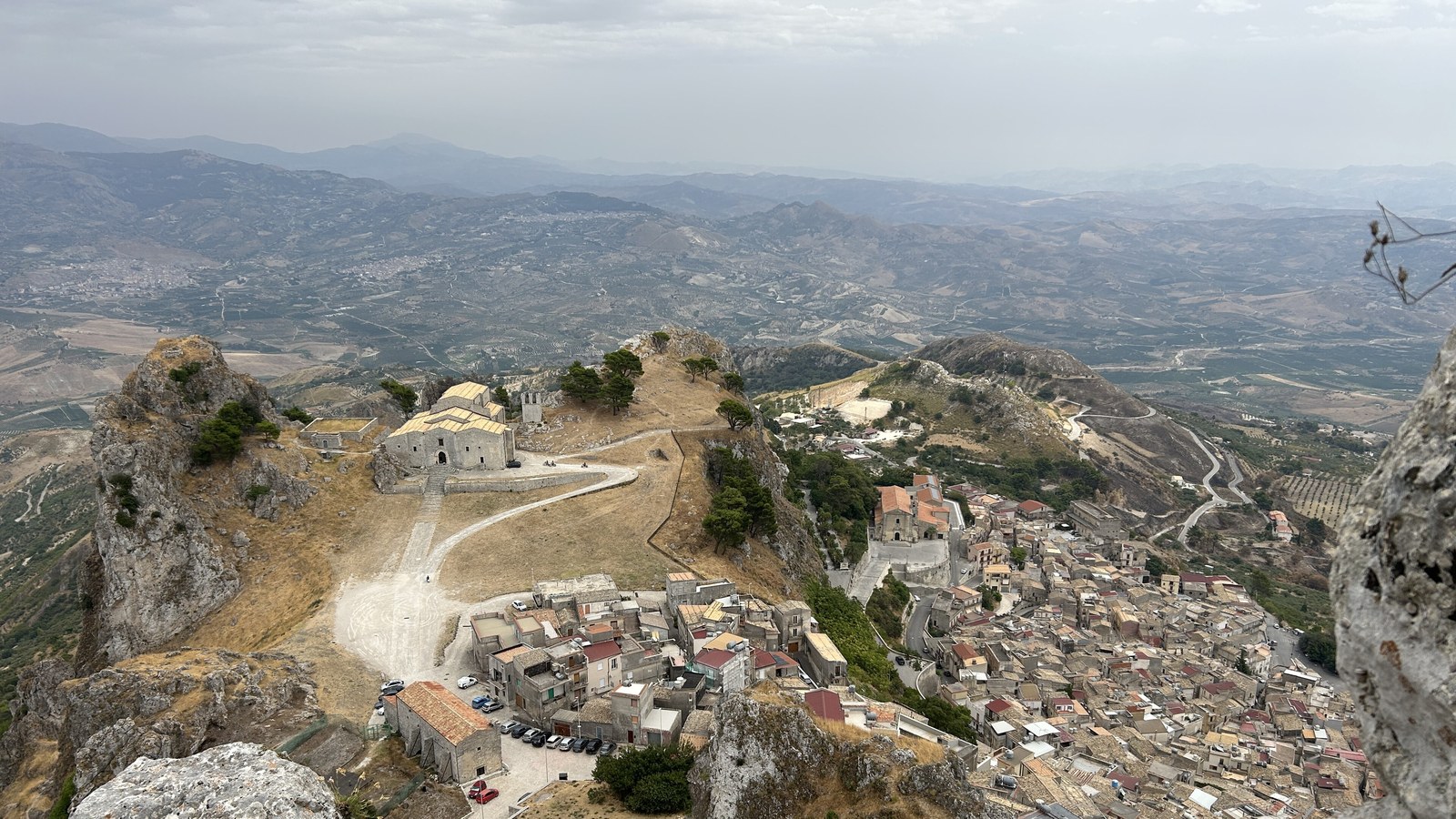
On 31 August 1302, between Caltabellotta and Sciacca, the oath was taken that closed, after twenty years, the first cycle of the War of the Sicilian Vespers. Preliminaries had been accepted on 19 August at Castronovo; three days later Frederick III and Charles of Valois met with a hundred horse each, in ploughmen’s huts, then called in Robert of Calabria. The text was settled on the 29th, the oath on the last day of the month.
Valois, brother-in-law of Charles II of Anjou and captain-general in the island, had come after a winter in Tuscany and the siege of Sciacca, where the host wasted in heat and disease. Frederick sat at Caltabellotta, nine miles from the town. The peace recognized the facts: the island remained to Frederick for life, an absolute sovereign, independent of Naples and the pope, with the title king of the island of Sicily or king of Trinacria, as Charles II preferred.
Charles gave his daughter Eleanor in marriage. Their offspring were to be provided with the kingdom of Sardinia or of Cyprus, or a hundred thousand ounces of gold; they would then have to leave the island. It is not an annual tribute during Frederick’s lifetime. Frederick restored the places he held beyond the strait; the Angevins, those taken in Sicily. The prince of Taranto and all prisoners went free without ransom.
Subjects who had gone over to the enemy were pardoned; feudatories lost fiefs from the prince they had rebelled against, except Roger of Lauria, who kept the castle of Aci, and Vinciguerra Palizzi, with Calanna, Motta di Mori and Messa in Calabria. Church property in Sicily was restored to its state before 1282. Valois was to obtain ratification from the king and the pope.
Boniface VIII was the last to consent. The papal constitution of 21 May 1303, with a single cardinal dissenting, demanded vassalage to the Church, a census of three thousand ounces of gold on St Peter’s day and a hundred lances. Amari notes that the Sicilian parliament never approved the settlement, that Frederick never paid the census, and that within a few years he resumed the title king of Sicily.
This is not the Treaty of Tarascon of 1291, not Anagni of 1295 and not the Vespers rising of 1282. After the peace Roger de Flor took the mercenaries out of the island and into the service of Andronicus II Palaeologus: the core of the Catalan Company. The marriage to Eleanor was celebrated at Messina in the spring of 1303.
Castello dei Luna at Caltabellotta, the ridge fortress above the place of the talks. Photograph: GiovanniPen, Wikimedia Commons, licence CC BY-SA 4.0.
For context: Peace of Caltabellotta. The chapters, after Michele Amari: La guerra del Vespro siciliano, ch. XIX.











0 Comments
No comments on this article yet. Be the first!