


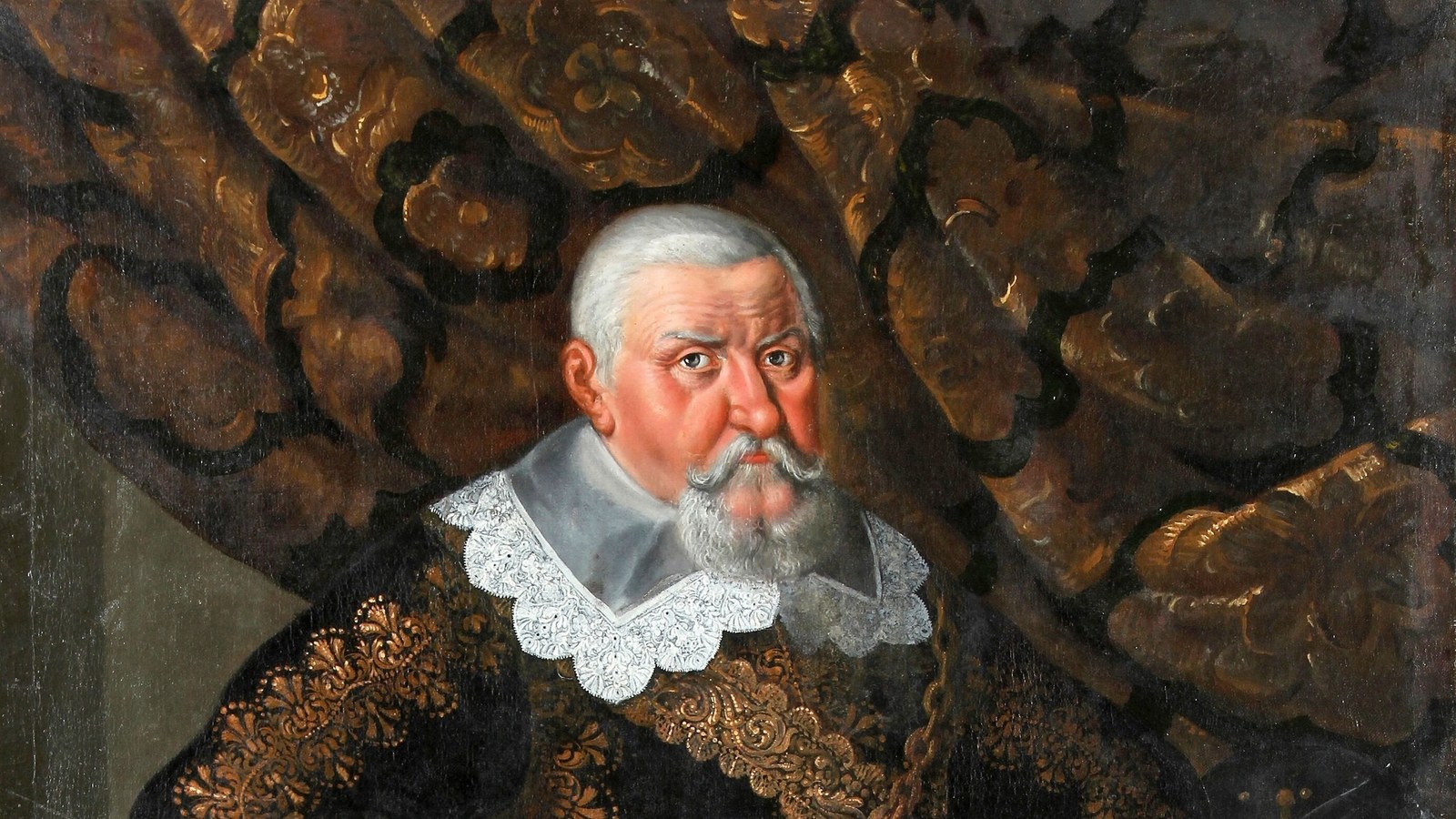
In the Aulic Council chamber of Prague Castle, on 30 May 1635, the imperial envoys Maximilian, Count of Trauttmansdorff, Ferdinand Siegmund Kurz, Baron of Senftenau, and Doctor Justus Gebhardt, together with the Saxon envoys Abraham von Sebottendorf, Doctor David Döring and Doctor Johann Georg Oppel, drew up in two copies the principal peace between Emperor Ferdinand II and Elector John George I of Saxony. Early in June the two princes issued and signed the deeds; the envoys exchanged them on 15 June. The instrument has ninety-six articles, plus recesses for Saxony’s own affairs. The language is German.
The Peace of Prague is not the Edict of Restitution of 6 March 1629, nor the Battle of Nördlingen of 5–6 September 1634, nor France’s declaration of war on Spain of 19 May 1635, nor the Peace of Westphalia of 1648. It is not the Defenestration of 1618 either, though the talks were held in the same castle.
Articles 1–20 fix the possession of church property as of 27 November 1627, for forty years, and thereby suspend the 1629 edict. For immediate foundations taken after 1555, that date is the norm. A parity commission is to begin work within ten years; if after forty years there is no settlement, the normal year stands. August of Saxe-Weissenfels receives, for life, the administration of the Archbishopric of Magdeburg (Art. 15). The Emperor, as territorial lord, grants liberty of worship neither to Bohemia nor to the Habsburg hereditary lands (Art. 25).
The justice articles require confessional parity at the Imperial Chamber Court. Amnesty covers those who fought Imperial troops, except the descendants of the former “Winter King” Frederick V of the Palatinate. Alliances among estates of the Empire, or with outside powers, are forbidden: the Catholic League and the Heilbronn League dissolve. In principle the armies of the estates are to be unified into the Army of the Holy Roman Empire.
On 12 June 1635 the Emperor issued the publication patent: the text is to be made known, and the estates have ten days after publication to accept the peace and join their troops to the Imperial army. Brandenburg, Mainz, Cologne, Hesse-Darmstadt, Hamburg, Bremen, Frankfurt, Nuremberg and Ulm, among others, acceded. Württemberg is expressly excluded. Strasbourg did not accede. William V of Hesse-Kassel first accepted the peace, then allied with France and fell under the imperial ban.
France subsidises Sweden. The Thirty Years’ War does not stop here; the Swedish–French phase is harsher for the Empire. The Peace of Prague is not Westphalia. Many of its internal rules, above all the normal year, nevertheless pass into the 1648 instruments.
Image: John George I, Elector of Saxony (1585–1656); unknown artist, circa 1650, Schloss Bad Homburg, public domain, Wikimedia Commons. Cropped to 16:9.
Source consulted: Peace of Prague (1635). Treaty text: TU Darmstadt: Prager Frieden, 30 May 1635.











0 Comments
No comments on this article yet. Be the first!