


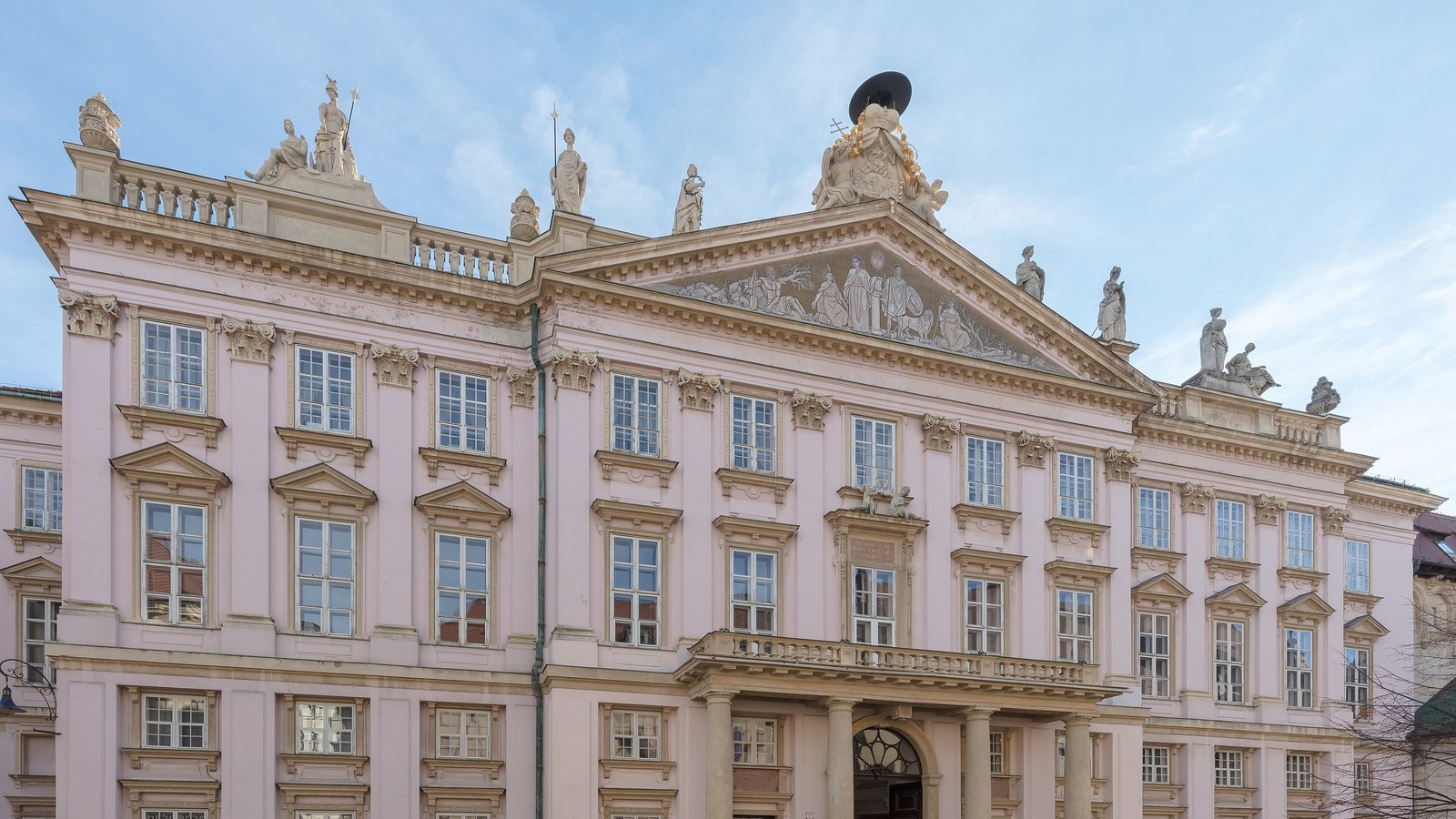
On 26 December 1805, at Pressburg (today Bratislava), in the Primate’s Palace, the Treaty of Peace is signed between the Emperor of the French, King of Italy, and the Emperor of Germany and of Austria. 5 Nivôse, Year XIV. For Napoleon: Charles-Maurice Talleyrand-Périgord, Minister of Foreign Relations. For Francis II: Prince Johann of Liechtenstein and Count Ignác Gyulai. The Battle of Austerlitz, 2 December; the armistice, 4 December. The Third Coalition breaks on land. Trafalgar is already behind them.
Article 1: perpetual peace and amity between the two houses, states and subjects. Article 2: France continues to possess, in ownership and sovereignty, the duchies, principalities and territories beyond the Alps already united with the French Empire or ruled by French law. Article 3: Austria recognizes the arrangements for Lucca and Piombino. Article 4: Austria renounces the portion of the Venetian states ceded to it at Campo Formio and Lunéville; it is united forever with the Kingdom of Italy. Article 5: Austria recognizes Napoleon as King of Italy; the crowns of France and Italy are to be separated, as declared at his Italian coronation, and Francis will recognize the successor Napoleon gives himself.
Article 6: the peace is common to the Electors of Bavaria, Württemberg and Baden and to the Batavian Republic, allies in the war. Article 7: the Electors of Bavaria and Württemberg have taken the title of king without leaving the Germanic Confederation; Austria recognizes them as such.
Article 8: Austria cedes to Bavaria the margraviate of Burgau, the principality of Eichstätt, the Passau strip between Bohemia, Austria, the Danube and the Inn, the county of Tyrol including the principalities of Brixen and Trent, the Seven Lordships of Vorarlberg, Hohenems, Königsegg-Rothenfels, Tettnang, Argen and Lindau. To Württemberg: the five Danube towns (Ehingen, Munderkingen, Riedlingen, Mengen, Saulgau), Hohenberg, Nellenburg, Altdorf (Constance excepted) and a Breisgau enclave. To Baden: the rest of the Breisgau, the Ortenau, Constance and the commandery of Meinau. Article 13: Bavaria may occupy Augsburg; Württemberg, the county of Bondorf.
Article 10: Salzburg and Berchtesgaden, belonging to Archduke Ferdinand, are incorporated in the Austrian Empire, but with the title of duchy only. Article 11: Napoleon undertakes to obtain from Bavaria the principality of Würzburg for Ferdinand; the electoral title moves with it. Article 12: the Grand Mastership of the Teutonic Order, with Mergentheim, becomes hereditary in a prince of the House of Habsburg. Article 14: Bavaria, Württemberg and Baden enjoy, in their old and new lands, the fullness of sovereignty, as Austria and Prussia do in their German states. Article 15: Austria renounces all suzerainty over those states and, generally, over the circles of Bavaria, Franconia and Swabia.
Article 17: Napoleon guarantees the integrity of the Austrian Empire in the condition that follows from the treaty. Article 18: the independence of the Helvetic Republic, under the Act of Mediation, and of the Batavian Republic. Article 19: prisoners of war within forty days of the exchange of ratifications. Article 22: evacuation of Pressburg within five days, then Moravia, Bohemia, Hungary, Styria; Braunau remains a French depot for one more month. Article 23: Venice and the lagoons within fifteen days; Istria, Dalmatia, the mouths of Cattaro and the Adriatic islands within six weeks. Article 24: ratifications within eight days.
Separate article: Austria pays forty million francs, metallic value, in redemption of uncollected contributions. Eight million at the exchange of ratifications; the rest in monthly bills on Hamburg, Amsterdam, Augsburg, Frankfurt, Basel and Paris. The same signatures. In the months that follow, the Confederation of the Rhine; on 6 August 1806 Francis lays down the crown of the Holy Roman Empire.
Image: Diego Delso, Primate’s Palace, Bratislava, 1 February 2020, CC BY-SA 4.0, Wikimedia Commons. Cropped to 16:9.
Source consulted: Peace of Pressburg (1805). Treaty text: Traité de paix de Presbourg (de Clercq, Recueil des traités de la France, vol. 2).











0 Comments
No comments on this article yet. Be the first!