


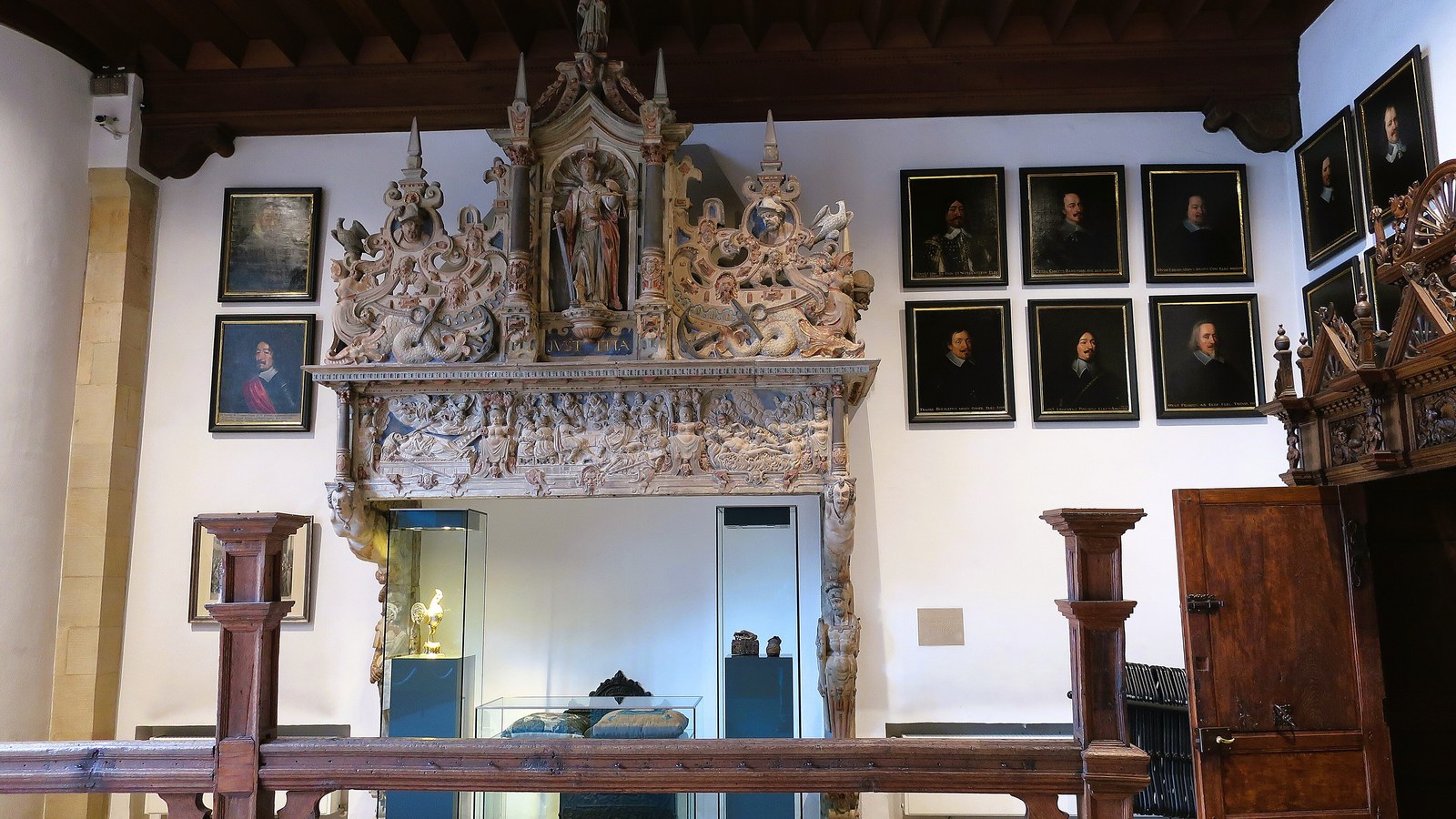
On 24 October 1648 the two instruments that make up the Peace of Westphalia were signed in Münster and Osnabrück. They ended the Thirty Years’ War in the Holy Roman Empire. They are not the same document as the Peace of Münster of 30 January 1648, between Spain and the United Provinces.
The talks lasted years. France negotiated with the emperor in Münster; Sweden did so in Osnabrück, a city with a Lutheran majority. The 109 delegations never met in a single plenary. Plenipotentiaries arrived and left between 1643 and 1649.
The Instrumentum Pacis Monasteriensis was concluded between Emperor Ferdinand III and France, whose king, Louis XIV, was still a minor, with Cardinal Mazarin as regent. The Instrumentum Pacis Osnabrugensis bound the same emperor to Sweden. The language of the acts is Latin.
The text preserved in the Avalon collection, a translation of the treaty between the emperor and the king of France, opens with a “Christian and Universal Peace” and a mutual amnesty for deeds committed in the war. Restitution of estates, fiefs and rights is set as the rule, with exceptions to be judged later. The wording is legal, not a military scorecard.
In the Empire, Calvinism received recognition alongside Catholicism and Lutheranism. The emperor’s power relative to the Imperial estates has been reinterpreted; newer work warns that Ferdinand III’s loss of influence was often overstated. The Diet and the Aulic Council remained central institutions.
The Thirty Years’ War cost, on current estimates, between 4.5 and 8 million dead. The figure is a range, not a census. The peace stopped the fighting in the Empire; the Franco-Spanish conflict continued outside this frame.
The idea that Westphalia “gave birth” to the sovereignty of modern states is a nineteenth- and twentieth-century reading. The treaty remains an act of 1648, read in Latin and in the archives, not a theory of international relations.
Image: Aquamunda, the Peace Hall (Friedenssaal) in Münster’s historic town hall, 16 June 2026, CC BY 4.0, Wikimedia Commons. Cropped to 16:9.
Source consulted: Peace of Westphalia. Treaty text: Treaty of Westphalia — The Avalon Project.











0 Comments
No comments on this article yet. Be the first!