


On 26 January 1855, at Hahdskus — Point No Point, Suquamish Head, Washington Territory — Isaac I. Stevens, governor and superintendent of Indian affairs, concludes articles of agreement with the chiefs, headmen and delegates of the S'Klallam villages (Kah-tai, Squah-quaihtl, Tch-queen, Ste-tehthon, Tsohkw, Yennis, Elhwa, Pishtst, Hunnint, Klat-la-wash, Oke-ho) and of the Skokomish, To-anhooch and Chem-a-kum tribes, occupying lands on the Strait of Juan de Fuca and Hood Canal. The council had begun the day before. About 1,200 people. The text, already written, is translated from English into Chinook Jargon. It is not a basis for negotiation.
Hool-hole-tan, a Skokomish sub-chief, asks what they will eat if they sell the land: berries, deer, salmon. He will not sign; take half, leave the rest; he does not like the place chosen for a reserve. L'Hau-at-scha-uk, a To-anhooch, will not leave the mouth of the river, his old home, his burying ground. Others say the price is low, now they know what the land is worth. The other side answers that the land is poor. The next day, under white flags, they put their marks. Among the signers: Chits-a-mah-han (Duke of York) for the S'Klallam, Dah-whil-luk for the Skokomish, Kul-kah-han (General Pierce) for the Chem-a-kum. Witnesses include M. T. Simmons, territorial secretary C. H. Mason, interpreter Benj. F. Shaw, George Gibbs.
Article 1: cede, relinquish and convey to the United States all right to the country occupied, from the mouth of the Okeho River, along the Makah line to the Cascade summit, then the Satsop, the lands already ceded by the Nisqually, the Black Hills, Wilkes’ Portage, the Duwamish-Suquamish line, Suquamish Head, Admiralty Inlet, the Strait of Juan de Fuca, and back. Article 2: a reserve of six sections, 3,840 acres, at the head of Hood Canal, to be marked later. No white man without permission. Roads, if needed, with compensation. The President may place other friendly tribes there.
Article 3: removal to the reserve within a year of ratification. Article 4: the right of taking fish at usual and accustomed grounds, in common with citizens, of erecting temporary houses for curing, of hunting and gathering on open and unclaimed lands. Not from shell-fish beds staked by citizens. Article 5: $60,000 over 20 years, on a descending scale, spent at the President’s discretion. Article 6: a further $6,000 for removal, fencing and breaking land.
Article 7: the President may remove or consolidate tribes, and allot lots on the Omaha-treaty model. Article 8: annuities shall not pay private debts. Article 9: dependence on the government, peace with citizens, no war except in self-defence, delivery of offenders. Article 10: ardent spirits on the reserve withhold a share of the annuity. Article 11: an agricultural and industrial school for 20 years at the Puget Sound agency, a blacksmith, carpenter, farmer, a physician, vaccination — paid by the United States, not from the annuities. Article 12: free all slaves now held, and acquire no others. Article 13: no trade at Vancouver Island or elsewhere outside the United States.
Article 14: the treaty binds once ratified by the President. The Senate ratifies on 8 March 1859. Proclamation: 29 April 1859. The Skokomish reserve remains at the head of Hood Canal. The fishing right in Article 4 will be read, a century later, in the Boldt decision.
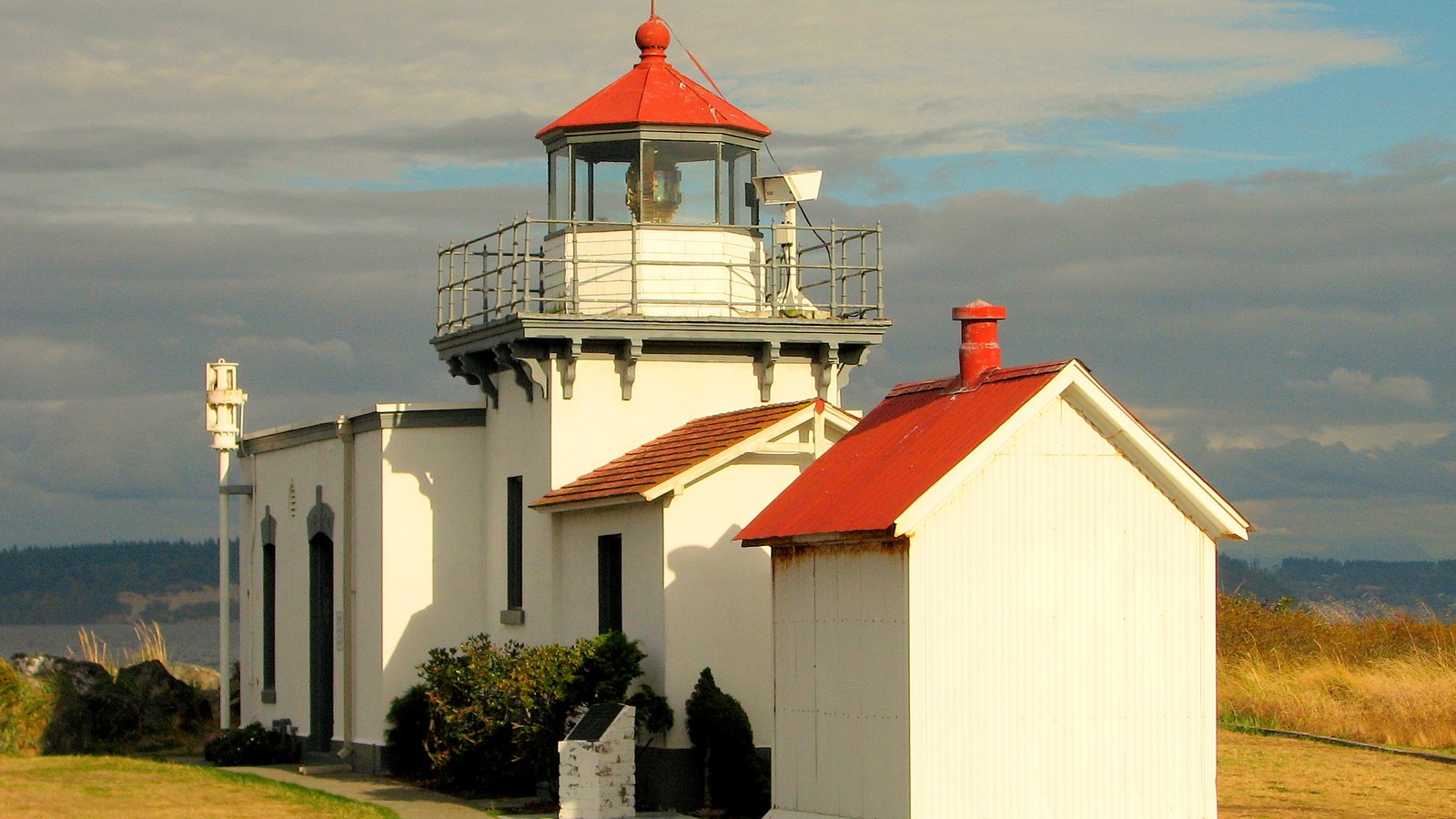
Image: Jan Tik, Point No Point Light, 9 October 2005, CC BY 2.0, Wikimedia Commons. The lighthouse dates from 1879. Cropped to 16:9.
Source consulted: Point No Point Treaty. Treaty text: Treaty with the S'Klallam, 1855 (Jamestown S'Klallam Tribe).











0 Comments
No comments on this article yet. Be the first!