


On 16 December 1990, in Lisbon, seven states signed the Portuguese Language Orthographic Agreement. The signatories were José Mateus de Adelino Peixoto, Secretary of State for Culture, for the People's Republic of Angola; Carlos Alberto Gomes Chiarelli, Minister of Education, for Brazil; David Hopffer Almada, Minister of Information, Culture and Sport, for Cape Verde; Alexandre Brito Ribeiro Furtado, Secretary of State for Culture, for Guinea-Bissau; Luís Bernardo Honwana, Minister of Culture, for Mozambique; Pedro Miguel de Santana Lopes, Secretary of State for Culture, for Portugal; and Lígia Silva Graça do Espírito Santo Costa, Minister of Education and Culture, for São Tomé and Príncipe. The text is in Portuguese, in seven equally authentic copies. The unified-orthography draft had been approved on 12 October 1990 by the Lisbon Academy of Sciences, the Brazilian Academy of Letters and delegations of the same states, with observers from Galicia. East Timor did not sign: it was then under Indonesian occupation.
Article 1 approves the Agreement as Annex I, under the designation Acordo Ortográfico da Língua Portuguesa (1990), accompanied by the explanatory note as Annex II. Article 2 requires the signatory states to take, through the competent institutions, the necessary steps for a common orthographic vocabulary of the Portuguese language, by 1 January 1993, as complete and as normalizing as desirable, especially as regards scientific and technical terminology.
Article 3 provides that the Agreement shall enter into force on 1 January 1994, after the instruments of ratification of all the signatory states have been deposited with the Government of the Portuguese Republic. Article 4 requires appropriate measures for effective respect of that date. Those conditions were not met on the 1990 timetable. It is not the amending protocol signed in Praia on 17 July 1998, which withdrew the deadline, and not the second amending protocol, signed in São Tomé in 2004, which allowed East Timor to accede and reduced the threshold to three ratifications.
Annex I contains twenty-one bases. Base I sets a twenty-six-letter alphabet, including k, w and y, used mainly in foreign proper names, derivatives, acronyms and units of measure. Base IV regulates the sequences cc, cç, ct, pc, pç and pt: they are kept when invariably pronounced in cultivated speech, dropped when invariably silent (ação, ótimo), and optional when they oscillate (facto/fato, aspeto/aspecto).
Base IX suppresses, among other marks, the acute accent on the diphthongs ei and oi in paroxytones (ideia, assembleia) and the circumflex on forms of the voo type. Base XIV abolishes the diaeresis (pinguim, frequente, not pingüim). Bases XV to XVII regulate the hyphen in compounds, prefixes and enclisis. Base XIX distinguishes lower and upper case. Base XXI leaves unchanged, on request, signatures, firms, company names and trademarks.
Annex II, the explanatory note, sets out the reasons for unifying the two official norms, the European-African and the Brazilian, and estimates that the change affects a small part of the vocabulary. Double spelling remains where cultivated pronunciation differs (anónimo/anônimo, económico/econômico).
It is not the Orthographic Agreement of 1945, applied in Portugal and unsuccessful in Brazil. It is not the Portuguese reform of 1911, and not the Rio de Janeiro convention of 1986.
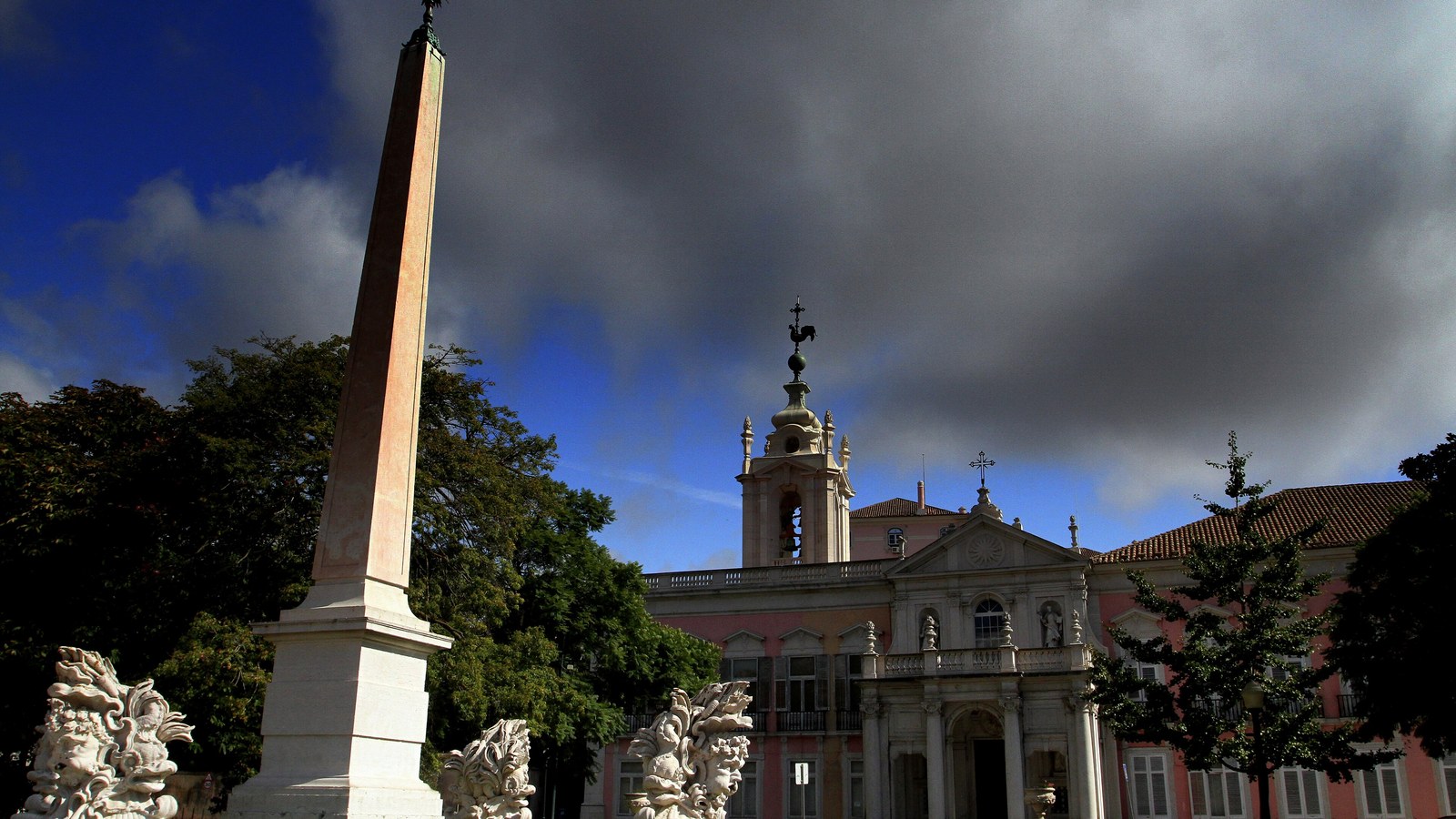
Image: Palace of Necessidades, Lisbon; Joaomartinho63, 24 September 2011; CC BY-SA 3.0, Wikimedia Commons. Cropped to 16:9.
Source consulted: Portuguese-Language Orthographic Agreement of 1990. Treaty text: Portuguese Language Orthographic Agreement, Lisbon, 16 December 1990.











0 Comments
No comments on this article yet. Be the first!