


On 2 November 2022, at Pretoria, Republic of South Africa, the Government of the Federal Democratic Republic of Ethiopia and the Tigray People’s Liberation Front (TPLF) signed the Agreement for Lasting Peace through a Permanent Cessation of Hostilities. One original, in English. It comes into effect at 00:00 hours East Africa Time on 3 November 2022. It is not a treaty between States; Eritrea is not a party. It is not the Nairobi Declaration of the senior commanders of 12 November 2022.
The preamble places the violent conflict that erupted on 3 November 2020 in the Tigray Region within the federal Constitution and invokes the African Union’s Agenda of Silencing the Guns by 2030. Host: South Africa. The AU High-Level Panel: Olusegun Obasanjo, Uhuru Kenyatta, Phumzile Mlambo-Ngcuka. The Chairperson of the AU Commission, Moussa Faki Mahamat, also signs as a witness. Political problems, the text says, can only be sustainably resolved by political means.
Article 3 declares an immediate and Permanent Cessation of Hostilities and the disengagement of forces or armed groups under the Parties’ control: overt and covert acts of violence, laying of mines, sabotage, airstrikes, subversion, use of proxies, collusion with any external force hostile to either party, plus all forms of hostile propaganda, rhetoric and hate speech. The Parties agree to restore federal authority in Mekelle and an expeditious, smooth, peaceful and coordinated entry of the Ethiopian National Defence Force (ENDF) and other federal institutions, through the commanders’ open channel.
Article 6 recognises that Ethiopia has only one defence force and a comprehensive DDR programme for TPLF combatants, consistent with the Constitution. An open channel between senior commanders within 24 hours; a meeting of senior commanders within five days; priority disarmament of heavy armaments within ten days of that meeting, extendable; overall disarmament, including light weapons, within 30 days of signature. Article 7: the TPLF shall respect federal constitutional authority, refrain from supporting armed groups, refrain from conscription for conflict, and halt unconstitutional correspondence with foreign powers. The Government shall halt military operations targeting TPLF combatants, restore essential services, facilitate lifting of the TPLF’s terrorist designation by the House of Peoples’ Representatives, and expedite unhindered humanitarian assistance.
Article 4: protection of civilians and the international humanitarian-law instruments to which Ethiopia is a party; condemnation of sexual and gender-based violence and of recruitment of child soldiers. Article 5: humanitarian aid, family reunification, return of internally displaced persons and refugees when security permits; aid used only for humanitarian purposes. Article 8: ENDF along Ethiopia’s international boundaries; federal control of airspace, federal facilities, ports and major highways in Tigray. Article 10: an Interim Regional Administration by political dialogue, after article 7(2)(c), until elections under the National Election Board; a national transitional-justice policy consistent with the Constitution and the AU framework.
Article 11: a Joint Committee — one representative of each Party, one from IGAD, chaired by the AU through the Panel; a team of African experts, not more than ten, with a six-month mandate from deployment. Article 13: good faith. Article 15: amendments by mutual written consent, signed. Casualty tallies are not given here, nor is the later fate of the agreement treated as a fact of the day’s instrument.
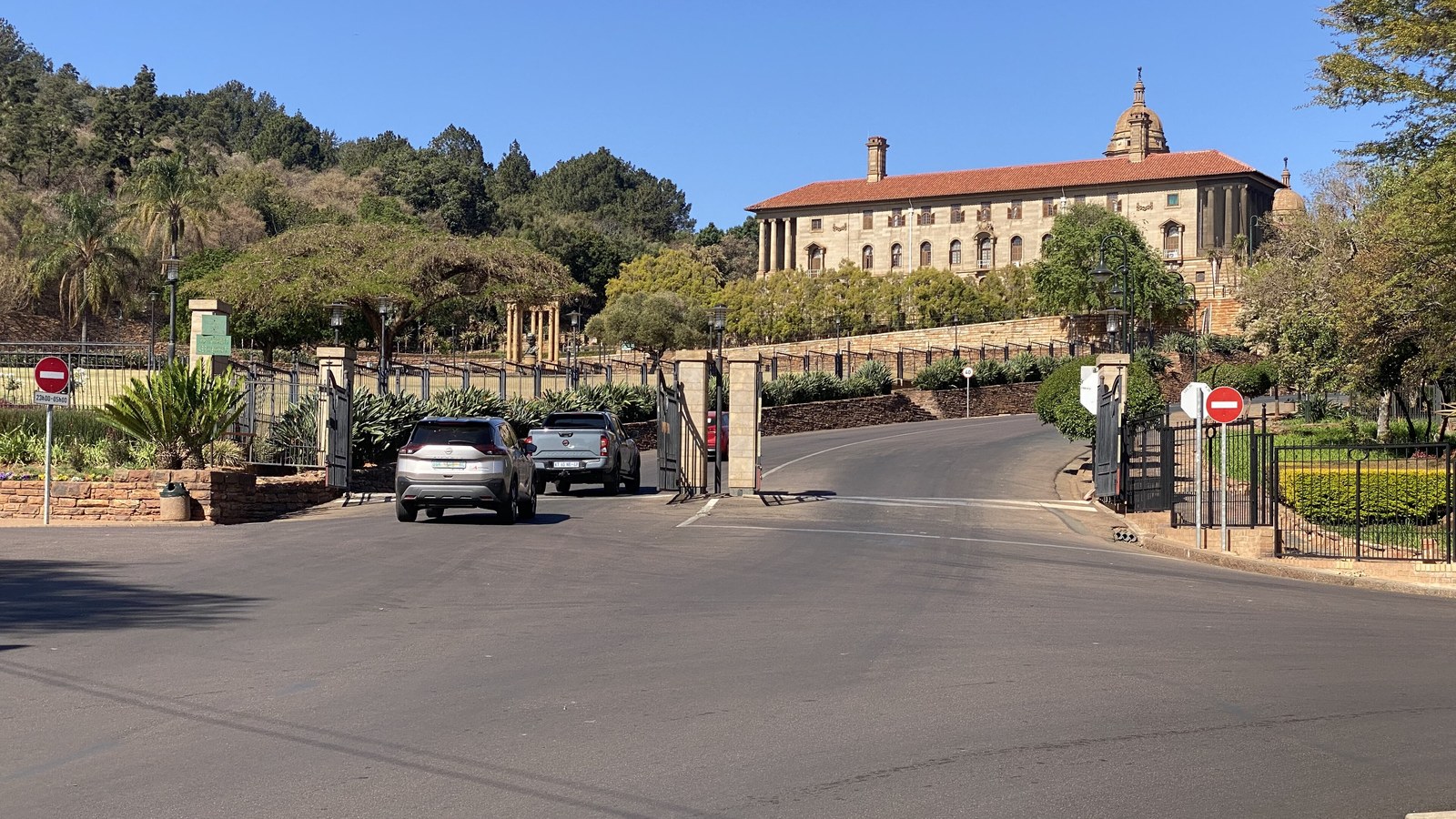
Union Buildings, Pretoria. A protocol landmark of the host capital, not the confirmed negotiating hall. Wikimedia Commons, CC BY 4.0.
For context: Ethiopia–Tigray peace agreement. The text: Agreement for Lasting Peace through a Permanent Cessation of Hostilities.











0 Comments
No comments on this article yet. Be the first!