


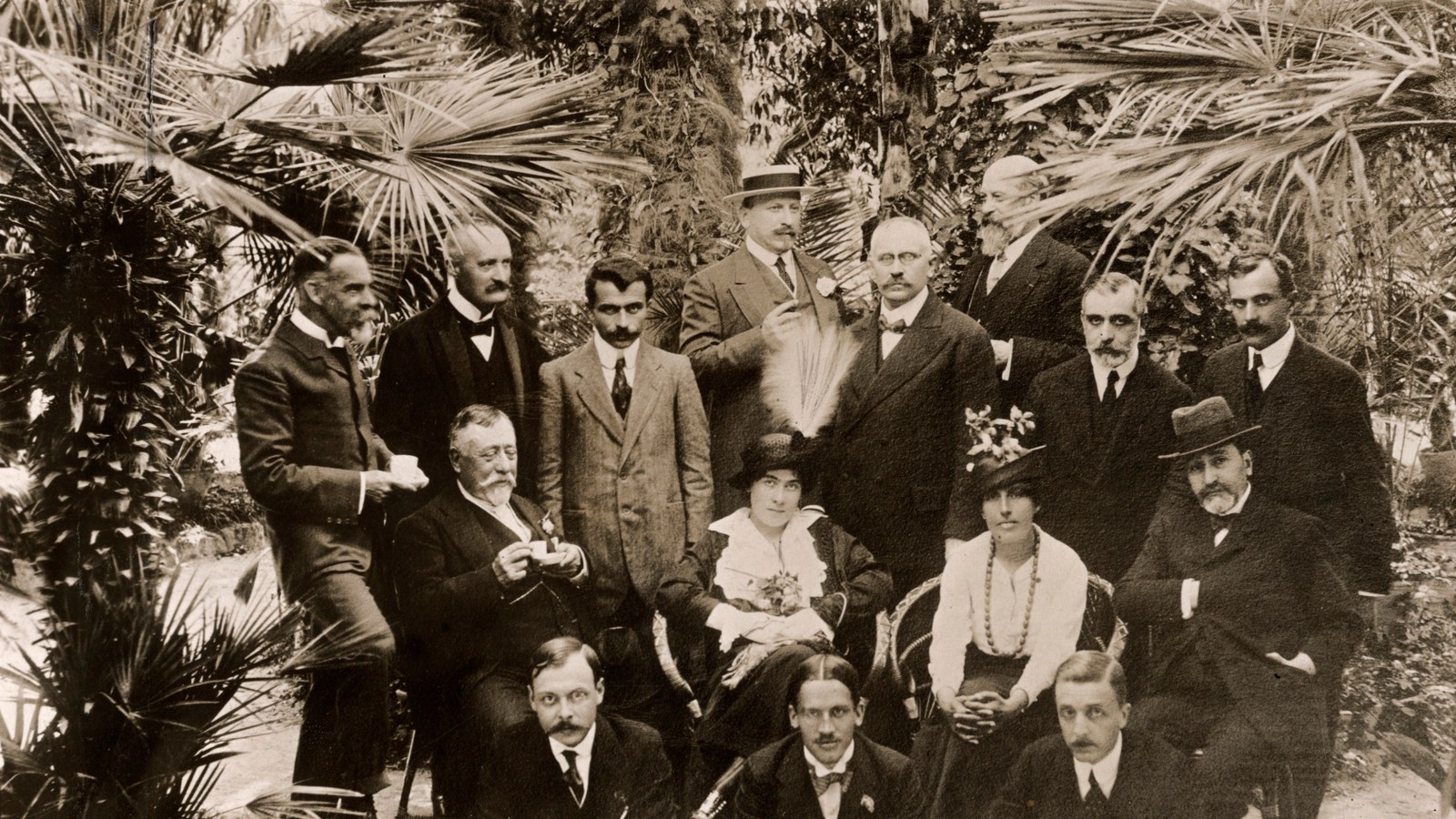
In Corfu, on 17 May 1914 (5 May in the Julian calendar), the International Commission of Control signed, with the Northern Epirote delegates, the protocol that recognises the autonomy of the two southern prefectures — Korytsa (Korçë) and Argyrokastro (Gjirokastër) — under the sovereignty of Prince William of Wied. For the commission the British plenipotentiary Lamb signed, together with consuls-general Wiggel, Kral, Kraszewski, Petroff and Lauro, vice-consul Sachtein and, as Albania’s special representative, Mehdi Frashëri. For the Provisional Government of Northern Epirus Georgios Christakis-Zografos and Alexandros Karapanos signed, reserving the approval of their electors.
The Protocol of Florence of 17 December 1913 had assigned the region to Albania. On 28 February 1914, at Argyrokastro, the autonomists proclaimed the Autonomous Republic of Northern Epirus. The Corfu act is not that proclamation, nor the London Conference that founded the principality, nor the 1921 annulment by the Conference of Ambassadors.
The commission’s preface states that, to avoid a resumption of hostilities, the text is the fruit of talks with the Epirote delegates and is to be submitted to the Powers it represents and to the Albanian government. Article 1 entrusts execution to the commission: it organises administration, justice and finance; the Albanian government, jointly with the commission, appoints and dismisses governors and senior officials, taking account of the numerical weight of each religious community. Article 2: elected members of the administrative councils are three times as numerous as the ex officio members.
Article 5 establishes a local gendarmerie from elements of the various faiths, in proportion; it may not serve outside the two prefectures except for a fixed period, in a necessity recognised by the commission. The unity of the Albanian gendarmerie, as laid down in London, remains untouched; Dutch officers begin recruiting at once. Article 6 forbids, save in war or revolt, the introduction of non-indigenous troops. Article 8: in Orthodox community schools teaching is in Greek; in the first three primary grades Albanian is added; religious instruction remains exclusively in Greek. Article 9 places Greek and Albanian on an equal footing before all authorities, including the courts.
Article 7 recognises the Orthodox communities as legal persons, with their property and their former hierarchy, pending an agreement between the Albanian government and the Ecumenical Patriarchate. Article 10: the commission takes possession of the districts in the name of the Albanian government; until the local gendarmerie is formed, the Dutch officers, with local elements, keep public order. The provisions also apply to the prefecture of Korytsa, then under Albanian military occupation. Article 12 grants the Epirotes a full amnesty for acts before the occupation. Article 13: the Powers that guaranteed Albania in London also guarantee this protocol.
Article 14 forwards to the Powers Himara’s requests: a foreign captain for ten years, eighteen villages, a flag of its own beside the Albanian one. The Epirote delegates further insisted that the local gendarmerie should never leave the two prefectures and that, for a decade, governors should be foreigners from a neutral state or Orthodox Christians. The Assembly of Delvino accepted the protocol after Eleftherios Venizelos urged it; the Himara delegates found it insufficient. The Powers approved the result on 1 June; the Albanian government on 23 June.
The terms were never fully applied: after the war broke out the prince left Albania in September 1914, and the Greek army re-entered in October. The Protocol of Corfu is not that reoccupation, nor the definitive award of the region to Albania by the Conference of Ambassadors in 1921, when the act was annulled.
Image: members of the International Commission of Control in talks with the Epirote delegates, 1914; public domain, Wikimedia Commons / Nationaal Archief. Cropped to 16:9.
Source consulted: Protocol of Corfu. Treaty text: Provisions of the Protocol of Corfu, 5/17 May 1914.











0 Comments
No comments on this article yet. Be the first!