


The Protocol of Peace, Friendship and Cooperation and Additional Act between the Republic of Colombia and the Republic of Peru were signed in Rio de Janeiro on 24 May 1934 by plenipotentiaries Roberto Urdaneta Arbeláez, Guillermo Valencia and Luis Cano for Colombia and Víctor M. Maúrtua, Víctor Andrés Belaúnde and Alberto Ulloa for Peru, under the presidency of Afrânio de Melo Franco, in two copies. It is not the Salomón–Lozano Treaty of 24 March 1922, which it reaffirms, not the Geneva understanding of 25 May 1933, which it executes, and not the 1942 Rio Protocol between Peru and Ecuador.
The preamble affirms the duty to outlaw war, to settle differences politically or juridically and to prevent conflicts, especially among the states of the American community. Article 1: Peru sincerely deplores the events after 1 September 1932 that disturbed relations with Colombia; the two republics restore relations and simultaneously accredit their legations in Bogotá and Lima. Article 2: the 1922 boundary treaty, ratified on 23 January 1928, remains a legal bond and may be modified only by mutual consent or by a decision of international justice, on the terms of Article 7.
Article 3: negotiations continue through normal diplomatic channels, observing the principles of the protocol. Article 4: in the Amazon and Putumayo basins the parties adopt special agreements on customs, commerce, free navigation of the rivers, protection of settlers, transit and frontier policing, at framework level; a customs or patrol handbook is not set out here. Article 5 provides for study of a frontier demilitarization agreement, according to the normal requirements of security, through a mixed technical commission; it is not a military protocol.
Article 6 creates a three-member commission appointed by Peru, Colombia and Brazil, with a Brazilian president, for four years, seated in the frontier region; it has no police powers, administrative functions or judicial competence. Disputes not settled by the governments within ninety days may be decided by the commission, with appeal within thirty days to the Permanent Court of International Justice. Article 7: the parties bind themselves not to make war and not, directly or indirectly, to employ force; if diplomacy fails, either may have recourse to the Court, whose jurisdiction is not excluded or limited by reservations to the optional clause.
Article 8: the protocol and the Article 4 agreements are to be submitted to legislative ratification, without prejudice to the immediate application of measures that, under each state's constitutional law, do not depend on that approval. Article 9: exchange of instruments of ratification, together with the additional act, was to take place as soon as possible before 31 December of the current year. The additional act, an indivisible whole with the protocol, governs freedom of river navigation and transit, a special customs régime and, at the level of principle, protection of inhabitants, including indigenous tribes; labour, settlement and sanitary-inspection clauses are not transcribed as a handbook.
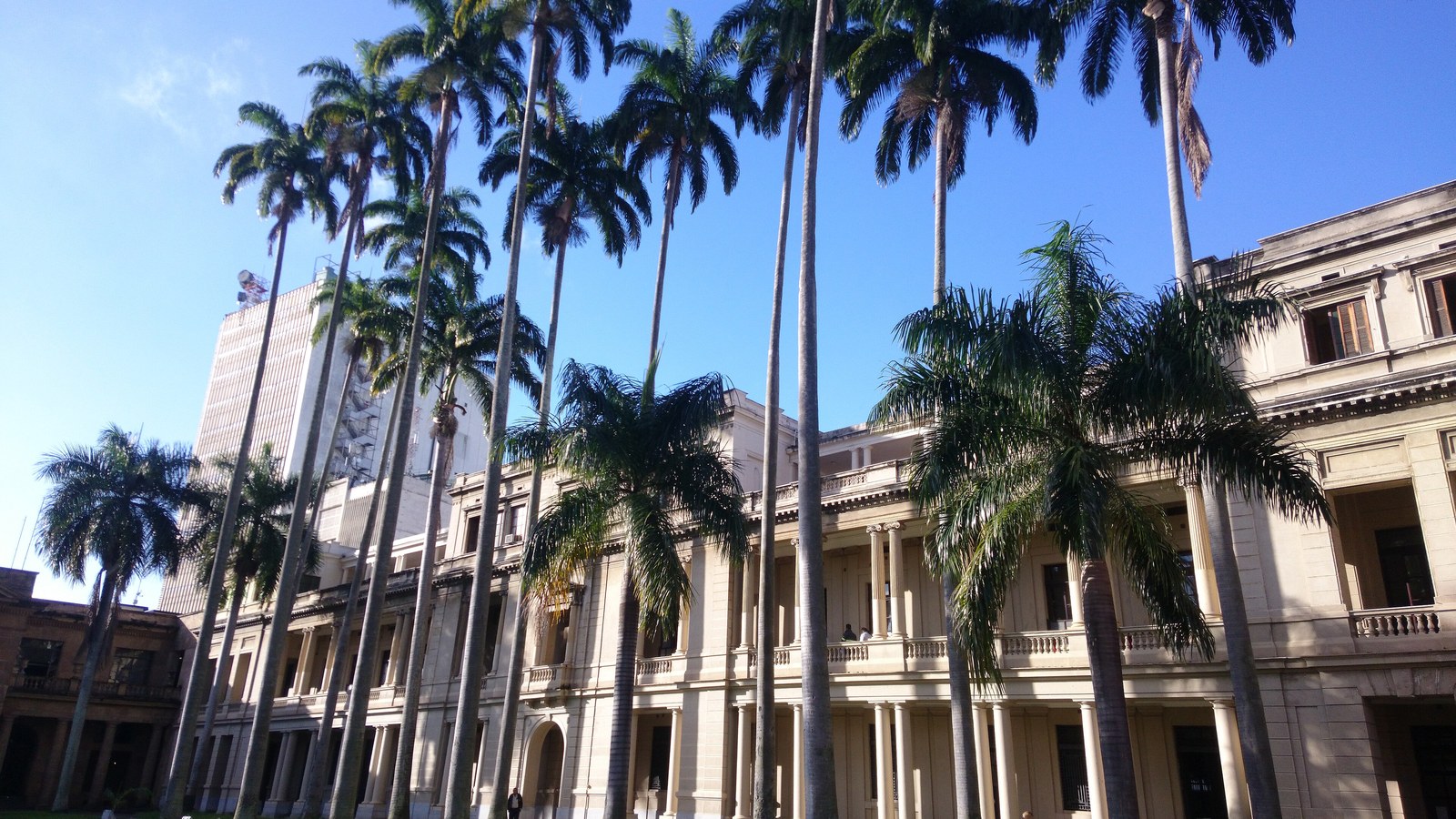
Cover: Palácio Itamaraty in Rio de Janeiro, then the seat of Brazilian diplomacy; we do not claim the signing room. Wikimedia Commons, free licence.
Sources consulted: Rio Protocol (1934); Protocol of Peace, Friendship and Cooperation and Additional Act (FRUS 1934, vol. IV, doc. 463).











0 Comments
No comments on this article yet. Be the first!