


On 21 November 2006, at Buenos Aires, the Argentine Republic and the Republic of Chile signed the Memorandum of Understanding on the Conservation of the Ruddy-headed Goose (Chloephaga rubidiceps). The original is in Castilian; the working language is likewise Castilian. The depositary is the Secretariat of the Bonn Convention of 23 June 1979. Signatories: Ambassador Roberto García Moritán and Ambassador Luis Maira Aguirre. It enters into force at the moment of signature, for three years, renewable automatically for a similar term unless one Party gives three months prior written notice of termination. It does not cover the sedentary population of the Falkland Islands/Islas Malvinas; it covers only the migratory mainland population.
The Parties take account of the Special Additional Protocol on the Conservation of Wild Flora and Fauna shared between Argentina and Chile, signed on 2 May 2002, Article II paragraph a, which requires a memorandum for conservation programmes. The Bonn Convention, Article IV paragraph 4, invites Parties to conclude agreements for shared migratory populations. The species is listed on Appendices I and II. The mainland population is in imminent danger of extinction because of its small size, restricted range and the threats it faces on breeding grounds in the Magallanes Region (Chile), northern Tierra del Fuego (Argentina and Chile) and wintering grounds in southern Buenos Aires province. By forming mixed groups with other geese treated as pests and therefore subject to legal hunting, it suffers persecution by farmers and sporting or commercial hunting in parts of Patagonia.
Article 1: effective protection of the mainland population, restoration to levels appropriate for survival, and identification and conservation of habitats essential throughout the range, in accordance with Article III paragraphs 4 and 5 of the Convention and Appendix I. Article 2: identify and monitor detrimental factors — illegal hunting, predation by the grey fox, environmental destruction — and recommend measures to regulate them. Article 3: an Action Plan, with the support of the Scientific Council, within not more than three months after entry into force. Article 4: apply the Plan, with evaluation and reporting to the Secretariat and the Scientific Council.
Article 5: exchange of scientific, technical and legal information and co-operation with specialists and international organisations. Article 6: each Party designates a competent authority as contact point. Article 7: a report at least annually to the Convention Secretariat and to the Argentina–Chile Sub-Commission for the Environment under the Treaty of 2 August 1991 on the Environment. Article 8: meetings alternately in the territories of the Parties, starting with Argentina; the country hosting the next meeting serves as interim Secretariat. Article 9: disagreements not resolved in the Sub-Commission are submitted to the procedures of the 1984 Treaty of Peace and Friendship. Amendments to the Memorandum only by consensus; Action Plan amendments affecting only one Party must be reported immediately to the Secretariat.
Done at Buenos Aires, 21 November 2006, originally in Castilian.
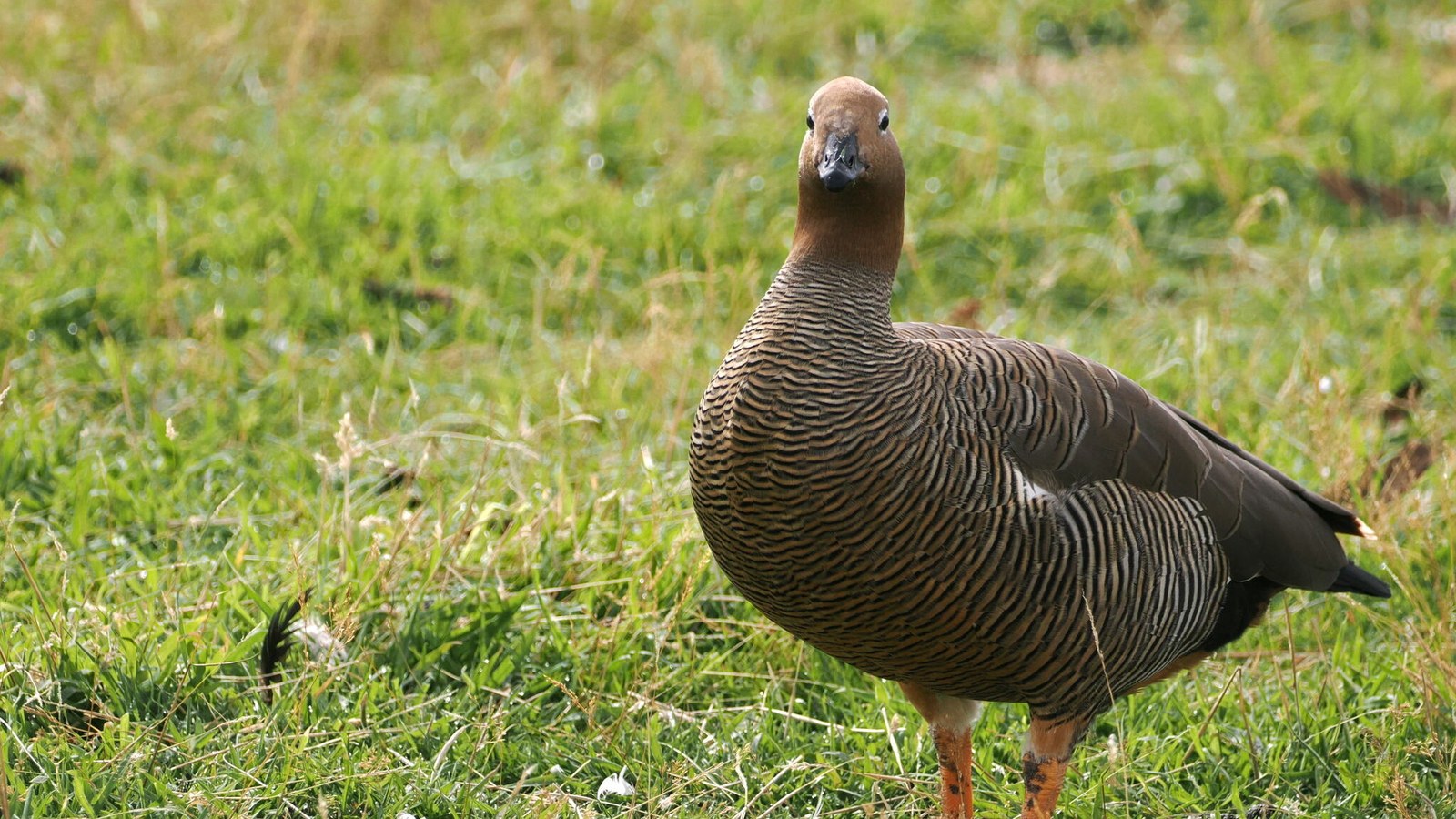
Ruddy-headed goose (Chloephaga rubidiceps), the species covered by the memorandum, not the signing scene. Wikimedia Commons, CC0.
For context: Ruddy-headed Goose Memorandum of Understanding. The text: CMS, Memorándum de entendimiento sobre el cauquén colorado.











0 Comments
No comments on this article yet. Be the first!